Simple Ways to Encourage Imaginative Play
 Cordelia Cross
Jul 27, 2026 02:37
0
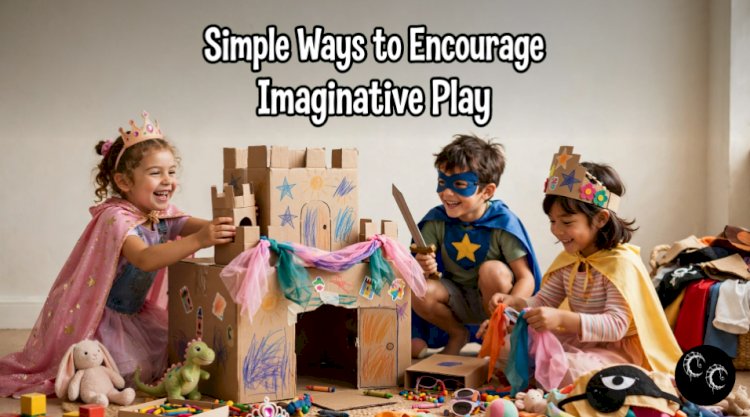
A cardboard box becomes a rocket ship. A pile of blankets turns into a secret cave. A stuffed bear suddenly needs a checkup, a snack, and a bedtime story. If you have ever watched a child transform an ordinary afternoon into an extraordinary adventure, you already know the magic of imaginative play.
Imaginative play gives children the freedom to explore ideas, experiment with different roles, and make sense of the world around them. It encourages creativity, communication, problem solving, and emotional expression, all while giving kids the chance to have fun without worrying about getting anything right.
The best part? You do not need an expensive playroom, a house full of toys, or an elaborate activity schedule to encourage it. Often, the simplest opportunities lead to the most creative adventures.
1. Let Everyday Objects Become Something New

One of the easiest ways to encourage imaginative play is to give children ordinary objects and let them decide what those objects could become.
A cardboard box might be a submarine, a castle, or a tiny grocery store. A kitchen towel could become a superhero cape. Empty containers might turn into a pretend restaurant, while wooden spoons become microphones for a living room concert.
Instead of immediately explaining what an object is supposed to be used for, leave room for your child to invent a new purpose.
You can create a small collection of safe household items for open ended play, such as:
-
Cardboard boxes and paper tubes
-
Scarves, fabric scraps, and old hats
-
Plastic cups and empty containers
-
Wooden blocks and large building pieces
-
Paper, crayons, and washable markers
Choose items that are appropriate for your child's age, and supervise play when objects could present choking or other safety risks.
You might be surprised by how long a child can stay engaged when the possibilities are not already decided for them.
2. Create a Dress Up Corner

Children love trying on different identities. One afternoon, your child might want to be a veterinarian. The next day, they could become a famous chef, a jungle explorer, or a person who travels between planets.
A dress up corner makes it easy to explore those ideas. You do not need elaborate costumes. A few hats, scarves, old shirts, bags, and accessories can inspire plenty of stories.
Keep the items somewhere your child can reach them independently. This allows them to choose their own adventure rather than waiting for an adult to organize one.
You can occasionally add a new item to spark curiosity. A toy stethoscope might inspire a pretend animal hospital, while a simple notebook could become the essential equipment of a detective.
The goal is not to create the perfect costume. It is to give children an opportunity to imagine what it feels like to be someone else.
3. Follow Your Child's Ideas
It can be tempting to guide pretend play toward a particular story or outcome. Maybe you suggest building a castle, but your child decides it should be a bakery for dinosaurs. Before you know it, the dinosaurs are arguing over who gets the biggest cupcake.
Let the dinosaurs have their bakery.
Following your child's lead shows them that their ideas are worth exploring. It also gives them room to make decisions, change directions, and discover unexpected possibilities.
Try asking open ended questions such as:
-
What do you think happens next?
-
Who else might live in this place?
-
What could we use to solve that problem?
-
What would happen if everything changed?
-
What should we call this character?
These questions invite children to think creatively without telling them what the answer should be.
Sometimes, the best thing you can do is sit nearby, listen to the story, and let your child take the lead. You do not have to turn every play session into a teaching moment.
4. Turn Reading Time Into Storytelling Time

Books are wonderful starting points for imaginative play, especially when children are encouraged to go beyond the words on the page.
After reading a story, ask your child to imagine what might happen next. What if the main character visited a different country? What if the friendly dragon was afraid of heights? What might happen if the story took place in your neighborhood?
You can also invite your child to act out a favorite scene, invent a new character, or create a different ending.
If you are reading a story about animals, gather a few stuffed animals and let your child build their own version of the adventure. If the book features a magical forest, use pillows and blankets to create one in the living room.
There is no need to follow the original story closely. In fact, changing the details is part of the fun.
For children who are not yet reading independently, storytelling allows them to express ideas without needing to write them down. They can tell the story aloud, draw it, act it out, or combine all three.
5. Make Room for Boredom
Boredom has an unfair reputation. Adults often feel pressure to fill every quiet moment with an activity, especially when children announce that there is absolutely nothing to do.
But a little unstructured time can create space for imagination to grow.
When children are not constantly being entertained, they have a chance to notice their surroundings, revisit favorite toys, invent games, and develop ideas of their own.
This does not mean you should never offer suggestions. Sometimes a gentle starting point helps, particularly when a child is tired or overwhelmed. You might say, "I wonder what would happen if these blocks became a town," and then let your child decide where the idea goes.
Try setting aside a small amount of time each day when there is no planned activity. Put away screens if that works for your household, make a few simple materials available, and allow your child to decide what to do.
At first, they may need some help getting started. Over time, they may become more comfortable creating their own entertainment.
6. Bring Imagination Into Everyday Routines

Imaginative play does not have to happen during a designated playtime. Everyday routines can become opportunities for creativity with very little extra effort.
Getting ready in the morning might turn into a mission to prepare for a polar expedition. Folding laundry could become a sorting game for a clothing store. Grocery shopping might inspire a pretend market where your child helps choose ingredients for an imaginary feast.
Even simple chores can become more engaging when children are invited to invent a story around them.
You could ask your child to help deliver socks to their proper homes, rescue toys from a pretend jungle, or prepare a special meal for a collection of stuffed animals.
Keep the experience lighthearted. If the imaginative element makes a routine more stressful, there is nothing wrong with returning to the ordinary version.
The purpose is to add moments of fun to daily life, not to turn every task into another production.
7. Encourage Outdoor Adventures

Nature offers an endless supply of imaginative possibilities. A fallen branch can become a wizard's staff, a patch of grass can be an undiscovered island, and a collection of leaves might become ingredients for a pretend woodland feast.
Outdoor play also gives children different textures, sounds, spaces, and objects to explore.
You can encourage these adventures by visiting a park, walking along a nature trail, exploring the backyard, or simply spending time outside together.
Invite your child to imagine what might live beneath a rock, where a winding path might lead, or what kind of creatures could inhabit a patch of trees. Let them invent a treasure hunt, build a pretend campsite, or create a story about the clouds overhead.
Of course, outdoor exploration should be age appropriate and supervised when needed. Teach children not to eat unknown plants or mushrooms, and be mindful of traffic, water, wildlife, and other hazards.
You do not need a wilderness adventure to inspire creativity. Sometimes, a short walk around the neighborhood provides more than enough material for a new story.
8. Use Art Materials Without Giving Too Many Instructions

Art and imaginative play naturally complement each other. Drawing, painting, building, and crafting give children ways to bring their ideas into the physical world.
The trick is to leave room for their own interpretation.
Instead of asking children to copy a specific picture, offer a few materials and invite them to create something of their choice. They might draw an animal that does not exist, build a city for tiny creatures, or invent a machine that can travel through time.
You can make materials available in a simple basket containing paper, crayons, washable paint, child safe scissors, glue sticks, and recycled cardboard.
If your child announces that a drawing is a map to a hidden planet, resist the urge to correct the unusual shapes or ask why the planet has three suns. Ask them to tell you about it instead.
Creative work does not need to look realistic or recognizable to be meaningful. The process of imagining, experimenting, and making choices is where much of the value lies.
9. Join the Play Without Taking Over

Children often enjoy having adults participate in their imaginary worlds. You might be invited to a pretend tea party, asked to become a customer at a toy shop, or assigned the role of a dragon who guards a pile of cushions.
Accept the invitation when you can. Your participation can help extend the story and show your child that you value their interests.
However, try to let your child direct the action.
If they are running a restaurant, let them decide what is on the menu. If they are building a spaceship, allow them to choose the destination. If they have invented a game with unusual rules, follow along unless something becomes unsafe or unfair.
You can contribute by asking questions, responding to the story, and occasionally introducing a small surprise. You do not need to supply every idea.
It is also perfectly fine to say that you are available to play for a little while before you need to finish another task. Children can gradually learn that imaginative play is something they can enjoy both with other people and independently.
10. Let Children Explore Feelings Through Pretend Play
Imaginative play can give children a comfortable way to explore experiences and emotions that may be difficult to explain directly.
A child might pretend that a stuffed animal is nervous about its first day at school, that a toy character is upset because a friend will not share, or that a superhero is trying to be brave in a scary situation.
These stories can create opportunities to talk about feelings without putting a child on the spot.
You might ask, "What do you think the little bear needs right now?" or "How could the characters work things out?"
Children can experiment with different responses, consider another character's perspective, and practice expressing emotions through play.
Try to avoid assuming that every pretend story is a direct reflection of something happening in your child's life. Sometimes a dragon is simply a dragon. If a child does choose to share a real concern, listen calmly and offer reassurance without forcing the conversation to continue.
The aim is to create a space where feelings and ideas can be explored safely and naturally.
11. Celebrate Creative Ideas Instead of Perfect Results
Children may come up with ideas that seem strange, impractical, or wonderfully chaotic. A blanket fort might collapse three times. A pretend recipe might combine every toy food in the house. A handmade robot might look nothing like a robot to anyone else.
That is all part of the process.
When encouraging imaginative play, focus on the thinking and effort behind the idea rather than whether the final result looks impressive.
Instead of only saying, "That is beautiful," you could say, "I love how you figured out a way to make the tower stand," or "You thought of such an interesting ending for that story."
This kind of encouragement helps children recognize their own creativity and become more comfortable experimenting.
It also gives them permission to make mistakes. When a plan does not work, they can try another approach rather than feeling that they have failed.
Most importantly, avoid turning imaginative play into a competition. Children do not need to produce the most original story, the biggest structure, or the most elaborate pretend world. Their ideas can be valuable simply because they are exploring them.
A Simple Weekly Plan for Imaginative Play
If you are not sure where to begin, try introducing one small opportunity each day. Keep the activities flexible, and feel free to repeat the ones your child enjoys most.
Monday: Cardboard Creations
Gather boxes, paper, and tape. Invite your child to build anything they can imagine.
Tuesday: Pretend Play
Set up a pretend animal hospital, restaurant, school, or shop using toys and household objects.
Wednesday: Make Up a Story
Read a favorite book and invent a new character, setting, or ending.
Thursday: Nature Adventure
Go outside and imagine that an ordinary walk is an expedition to a mysterious land.
Friday: Invent Something
Offer art supplies and invite your child to create an imaginary creature, vehicle, or invention.
There is no need to follow the plan perfectly. If your child spends the entire week building a cardboard castle, that can be a wonderful outcome too.
Final Thoughts
Encouraging imaginative play is less about providing the right activities and more about creating an environment where children feel free to explore their own ideas.
Give them simple materials, make time for unstructured play, follow their lead, and show genuine interest in the worlds they create. Let them change the rules, invent unlikely characters, and turn ordinary moments into extraordinary adventures.
Some days, imaginative play will involve elaborate stories and impressive creations. Other days, it might mean making a stuffed animal talk for five minutes before moving on to something else. Both count.
You do not have to be a naturally creative person to encourage creativity in your child. You simply need to leave a little room for curiosity, be willing to join the fun occasionally, and remember that children often discover their best ideas when adults give them the freedom to surprise us.