TikTok Live for Small Businesses: Is It Worth It?
 Cordelia Cross
May 17, 2026 06:35
0
Cordelia Cross
May 17, 2026 06:35
0
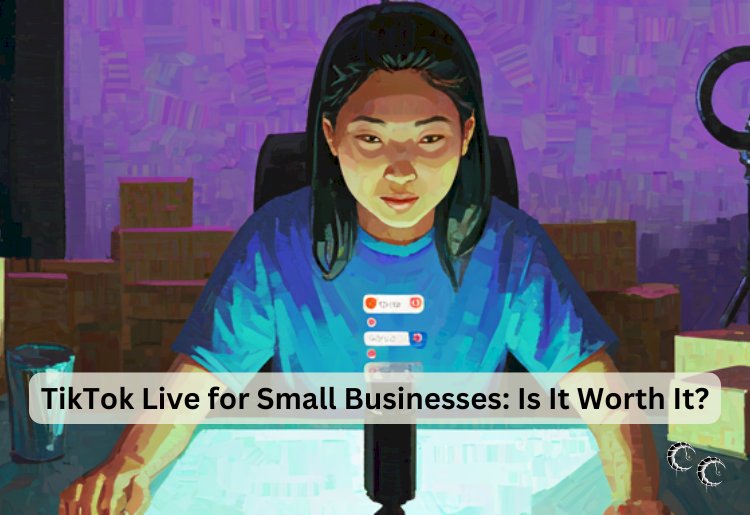
TikTok Live sits in a strange space for small businesses. On one hand, it offers some of the highest real time engagement on the platform. On the other hand, it can feel unpredictable, high pressure, and awkward if it is not structured properly. The real question is not whether TikTok Live works, but when it works, why it works, and how to make it feel natural instead of forced.
Live selling is fundamentally different from short form content. A video is edited, refined, and compressed into its most engaging moments. A live session is unfiltered time. That difference changes everything about pacing, audience behavior, and conversion potential. Instead of capturing attention in seconds, you are now responsible for holding it minute by minute.
One of the biggest advantages of TikTok Live is the engagement spike effect. Lives are often prioritized in the algorithm and surfaced to followers and non followers more aggressively than standard posts. When a live session gains momentum, it can create a feedback loop where viewers join, interact, and keep the stream active, which in turn increases visibility. This makes Live one of the few formats where real time interaction directly influences reach.
But reach alone is not the goal. The real value of TikTok Live for small businesses is conversion density. Unlike passive scrolling, live audiences are more engaged, more present, and more likely to make quick decisions when trust is established. Questions get answered instantly, objections get handled in real time, and product context can be demonstrated without delay. That immediacy shortens the gap between interest and action.
However, this only works if the live session has structure. Without structure, Live can quickly feel awkward, repetitive, or directionless. Viewers join at different times, and silence or uncertainty at the beginning often leads to immediate drop off. The most effective lives are not improvised. They are loosely scripted frameworks that allow for spontaneity within a clear flow.
A strong structure usually starts with a reset loop. Because viewers enter continuously, the host needs a repeating introduction every few minutes. This includes who you are, what you are showing, and why people should stay. Instead of treating this as repetitive, it should be seen as onboarding for new viewers.
After the introduction, the live should move into a rhythm of demonstration and interaction. Products are shown, explained, and contextualized in real use scenarios. Questions are answered as they come in, but always within the larger flow of the session. This balance between structure and responsiveness is what prevents the stream from feeling chaotic.
One of the most important elements is pacing. Many first time hosts rush through content out of nervousness or over explain everything at once. Effective live selling works better when it breathes. Moments of demonstration, moments of silence, and moments of interaction all have their place. The goal is not constant stimulation, but sustained attention.
Awkwardness in live sessions usually comes from uncertainty, not silence. When the host does not know what comes next, viewers can feel it immediately. This is why having a simple roadmap matters more than having a perfect script. Even a basic structure like introduction, product rotation, Q and A, and repeat loop is enough to create stability.
Engagement during Live also behaves differently than engagement on posts. Comments are not just reactions, they are triggers for action. Questions like pricing, availability, or comparisons signal buying intent in real time. A skilled host learns to recognize these signals and respond in a way that naturally guides the viewer toward conversion without forcing it.
Another overlooked factor is energy consistency. TikTok Live does not reward peak energy as much as stable energy. A steady presence builds trust faster than fluctuating performance. Viewers are more likely to stay when the environment feels controlled and predictable, even if the content itself is dynamic.
From a business perspective, TikTok Live is not a replacement for short form content. It is a multiplier. Short videos bring people in. Live sessions deepen engagement and convert interest into action. When both are used together, they form a funnel where discovery and conversion support each other rather than compete.
The real question of whether TikTok Live is worth it comes down to readiness. Businesses that have clear products, simple messaging, and a willingness to engage in real time tend to benefit the most. Those that treat it as a performance rather than a conversation often struggle.
In the end, TikTok Live works best when it feels less like broadcasting and more like hosting. Not a polished advertisement, but a structured interaction. When viewers feel guided rather than sold to, engagement becomes easier, trust builds faster, and conversion happens as a natural extension of the experience.