From Magneto To Ozymandias Why High Stakes Intellectualism Justifies The Ultimate Villain
 Cordelia Cross
Apr 23, 2026 02:08
0
Cordelia Cross
Apr 23, 2026 02:08
0
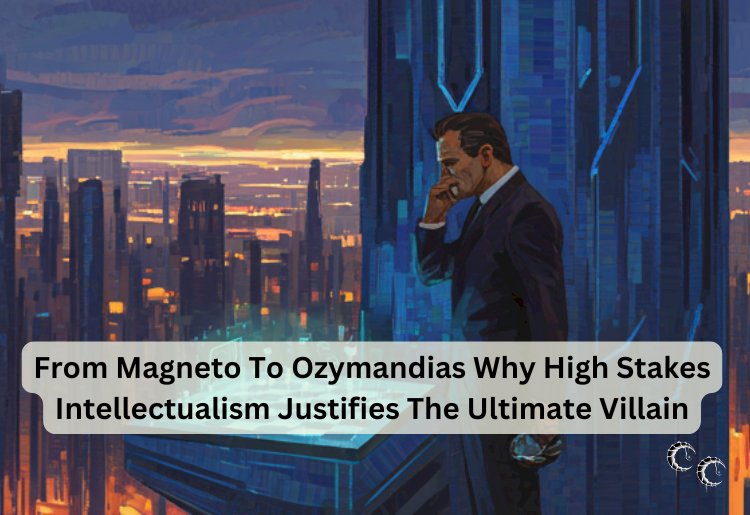
Villains are often defined by what they destroy, but the most compelling ones are defined by what they are trying to save. Characters like Magneto and Ozymandias stand apart because their actions are not driven by chaos or impulse. They are driven by logic. Cold, calculated, and often uncomfortable logic that forces a deeper question. What happens when intelligence is pushed to its limits in a broken world?
At first glance, their choices seem extreme. One seeks dominance to prevent extinction. The other engineers catastrophe to secure peace. These are not small decisions or emotional reactions. They are conclusions reached after examining the world and deciding that conventional solutions are not enough.
The Burden of Seeing Too Much
High intelligence in fiction is often portrayed as a gift, but in these cases it functions more like a burden. Magneto sees patterns of oppression repeating across history. Ozymandias sees humanity locked in a cycle of self destruction. Neither character is reacting to a single moment. They are responding to systems that appear permanent and unfixable.
This awareness creates distance. When a character believes they understand the full scope of a problem, it becomes harder to relate to those who do not see it the same way. That gap leads to isolation. Not because they reject others outright, but because their perspective no longer aligns with the majority.
Over time, that isolation reinforces itself. If no one else can see the problem clearly, then no one else can be trusted to solve it. What begins as insight slowly turns into separation, and from there into justification.
When Logic Overrides Morality
The defining trait of high stakes intellectualism is not just intelligence. It is the willingness to follow logic to its conclusion, even when that conclusion conflicts with moral intuition.
For Magneto, the survival of his people outweighs coexistence. History has shown him what happens when power is not claimed. For Ozymandias, global peace outweighs individual lives. War, in his view, is inevitable unless something drastic interrupts the pattern.
These are not decisions made lightly. They are the result of prioritizing outcomes over principles. If the end result prevents greater suffering, then the method becomes secondary.
This is where the discomfort lies. Their reasoning is not chaotic or irrational. It is structured, consistent, and in many ways understandable. That does not make it right, but it makes it difficult to dismiss.
The Illusion of Necessary Cruelty
Both characters operate under a similar belief. That their actions, however extreme, are necessary. Not ideal, not desirable, but required given the circumstances.
This sense of necessity transforms cruelty into something else. It becomes a tool rather than an impulse. Every decision is measured against a larger goal. Harm is not inflicted for its own sake, but as part of a calculated plan to prevent something worse.
The danger is that necessity is self defined. Once a character believes they are the only one capable of making these decisions, there is no external check on their logic. The system becomes closed. Every action reinforces the belief that they are right.
This is how villainy evolves from intention rather than emotion. It is not about losing control. It is about maintaining control in a way that excludes all other perspectives.
Isolation as a Catalyst
Intellect alone does not create a villain. Isolation is what allows that intellect to operate without resistance.
Magneto’s experiences shape his worldview, separating him from those who still believe in peaceful coexistence. Ozymandias removes himself from society long before executing his plan, operating in a space where his ideas cannot be challenged in real time.
Without opposition, logic becomes absolute. There is no friction to slow it down, no alternative viewpoint to complicate it. The result is a mindset where extreme actions feel not only justified, but inevitable.
This isolation is not always chosen. Sometimes it is the result of trauma, sometimes of perspective, and sometimes of both. But once it takes hold, it creates an environment where difficult decisions become easier to make.
The Uncomfortable Mirror
What makes these characters compelling is not just their intelligence or their plans. It is the way they reflect real world dilemmas.
Large scale problems rarely have simple solutions. Conflict, inequality, and instability often persist despite good intentions. The question of whether extreme measures are ever justified is not limited to fiction. It appears in different forms across history and policy.
Magneto and Ozymandias push that question to its limits. They force us to consider what happens when someone decides that the system cannot be fixed from within. That the only path forward is to break it and rebuild something new.
Their answers are extreme, but the questions they raise are real.
Why We Keep Coming Back to Them
There is a reason these characters remain relevant. They challenge the idea that villains are simply wrong. Instead, they occupy a space where right and wrong are blurred by scale and consequence.
Their intelligence makes their arguments harder to ignore. Their isolation makes their actions more understandable. And their willingness to act makes them dangerous in a way that feels grounded rather than abstract.
They are not seeking destruction for its own sake. They are seeking resolution, even if the cost is something most would never accept.
Final Thoughts
High stakes intellectualism does not excuse villainy, but it reframes it. It shifts the focus from emotion to reasoning, from impulse to conclusion. Characters like Magneto and Ozymandias are not defined by a lack of thought, but by an excess of it.
They represent what can happen when intelligence operates without balance, when logic is allowed to override empathy, and when isolation removes the need for accountability.
In the end, their actions force a difficult realization. The line between hero and villain is not always drawn by intention. Sometimes, it is drawn by how far someone is willing to go when they believe they are the only one who truly understands what is at stake.