Why Naming Emotions Improves Mental Health
 Cordelia Cross
Apr 10, 2026 05:57
0
Cordelia Cross
Apr 10, 2026 05:57
0
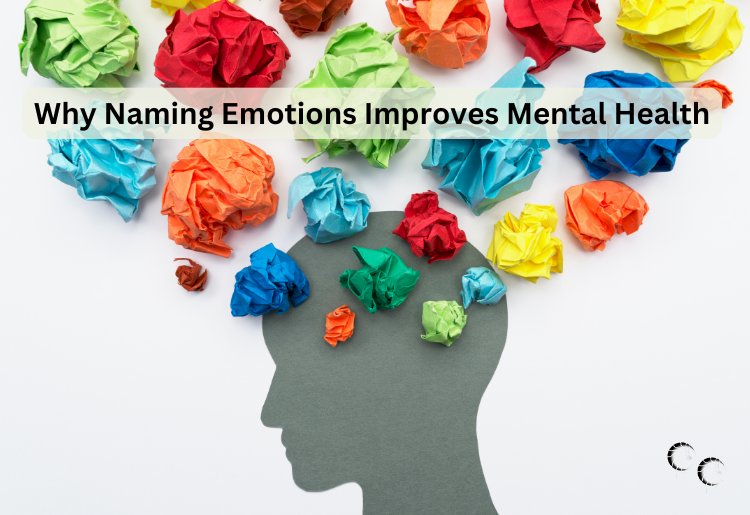
Emotions are often experienced as something immediate and overwhelming, especially when they are intense or unfamiliar. In those moments, it can feel like being inside the emotion rather than observing it. One of the simplest but most effective ways to create distance from that intensity is to name what is being felt. This process, sometimes called emotional labeling, can have a surprisingly strong impact on mental health.
At first glance, naming an emotion might seem too simple to matter. It does not remove the feeling, and it does not change the situation that caused it. But what it does change is how the brain organizes and responds to the experience. Turning a vague internal state into a defined concept shifts it from something abstract and consuming into something more structured and manageable.
When emotions are not clearly identified, they tend to blend together. Stress can feel like frustration, frustration can feel like anxiety, and anxiety can feel like something even less defined. This lack of clarity can amplify distress because the mind struggles to make sense of what is happening internally. Unlabeled emotions often feel larger than they are because they remain unstructured.
Naming an emotion introduces definition. Instead of “I feel bad,” the experience becomes more specific, such as sadness, anger, disappointment, or fear. This specificity matters because the brain responds differently to different emotional states. Identifying what is happening allows for a more appropriate response rather than a generalized reaction.
There is also a neurological element to this process. Research in psychology and neuroscience suggests that labeling emotions can reduce activity in the parts of the brain associated with emotional reactivity, while increasing activity in areas involved in reasoning and regulation. In simple terms, naming what you feel can help shift the brain from reaction to reflection.
This does not mean the emotion disappears. Instead, it becomes less overwhelming. The intensity may soften slightly, making it easier to think clearly and choose how to respond. The experience moves from being purely emotional to being partly observational.
Another important effect of naming emotions is that it improves self-awareness. Many emotional reactions happen quickly, without conscious recognition. A person might feel irritated and act on that irritation before fully understanding where it came from. By pausing to identify the emotion, there is a moment of interruption in that automatic cycle.
That moment creates space. In that space, there is a greater chance of choosing a response rather than reacting impulsively. Over time, this can lead to better emotional regulation and fewer regret-driven reactions.
Naming emotions also helps reduce internal confusion. When feelings are unclear, they can be interpreted in unhelpful ways. For example, anxiety might be mistaken for a personal flaw rather than a temporary state. By clearly identifying what is being felt, it becomes easier to recognize that emotions are experiences, not identities.
It is also important to understand that naming emotions is not about forcing positivity or changing how someone should feel. It is about acknowledgment. Avoiding or suppressing emotions often increases their intensity over time. Recognition, on the other hand, allows them to be processed more naturally.
This practice can be especially helpful during stressful or emotionally complex situations. When multiple emotions are present at once, naming them individually can reduce the sense of being overwhelmed. Instead of a single undefined emotional weight, the experience becomes a set of identifiable parts that are easier to understand.
Over time, this habit can strengthen emotional resilience. People become more familiar with their internal patterns and more capable of navigating difficult experiences without becoming consumed by them. Emotional awareness becomes a form of stability rather than something reactive or chaotic.
The simplicity of naming emotions is part of what makes it powerful. It does not require special tools or long practice sessions. It is a moment of attention, a brief pause to identify what is already present. That small shift can change how the mind relates to experience in subtle but meaningful ways.
In the end, naming emotions does not eliminate difficulty, but it changes the relationship to it. It replaces vagueness with clarity and reaction with awareness. And in that clarity, emotional experiences often become easier to understand, tolerate, and move through.