10 Writing Lessons I Learned From Playing Dungeons & Dragons
 Cordelia Cross
Jul 2, 2026 03:44
0
Cordelia Cross
Jul 2, 2026 03:44
0
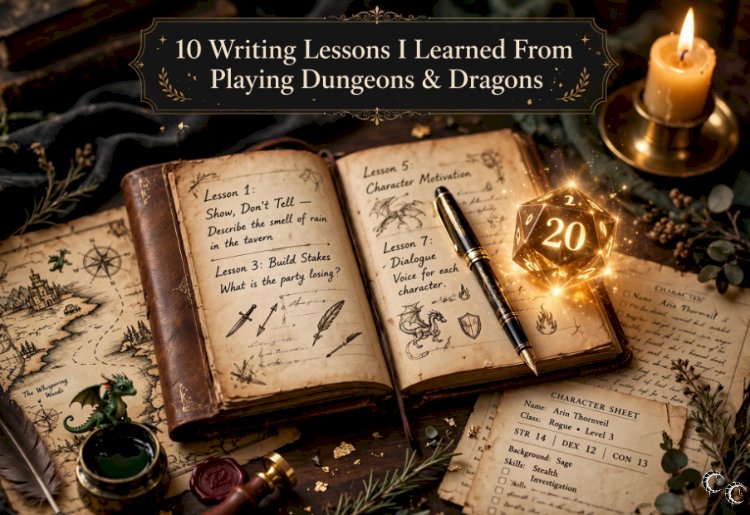
There is something wonderfully strange about sitting around a table with a group of people and creating a story that has never existed before.
One person becomes a fearless warrior. Another becomes a mysterious spellcaster. Someone else decides their character is a charming disaster who somehow survives every terrible decision they make.
Then the dice roll.
Suddenly, the carefully planned story takes a sharp turn.
A villain escapes.
A hero makes a questionable choice.
A simple mission becomes a legendary adventure involving ancient curses, unexpected friendships, and at least one plan that absolutely should not have worked.
That unpredictability is exactly why Dungeons & Dragons is such a powerful storytelling tool.
Beyond the dragons, magic, and questionable character choices, tabletop roleplaying games teach lessons that apply directly to writing. Building worlds, creating characters, and telling stories with other people can reveal what makes a narrative truly memorable.
Here are 10 writing lessons I learned from playing Dungeons & Dragons.
1. Characters Matter More Than the Plot
A great story isn't remembered because of what happened.
It's remembered because of who experienced it.
A massive battle against an ancient monster is exciting, but the emotional impact comes from the characters involved. Were they afraid? Were they protecting someone they loved? Were they trying to prove something to themselves?
Dungeons & Dragons teaches writers that characters are the heart of every adventure.
A perfectly planned storyline can fall flat if nobody cares about the people inside it.
2. Give Characters Goals Beyond the Main Quest
The best D&D characters don't just exist to complete missions.
They have personal goals.
A fighter may be searching for a lost sibling. A wizard might be trying to uncover forbidden knowledge. A rogue may be running from a past they can't escape.
These personal motivations create depth.
In writing, the main plot is only one part of a character's journey. Their fears, dreams, and unfinished business are what make them feel alive.
3. Let Characters Make Mistakes
Perfect characters are boring.
The most memorable moments in Dungeons & Dragons often come from decisions that go completely wrong.
Someone trusts the wrong person.
Someone opens the suspicious chest.
Someone tries a ridiculous plan because "there's no way this could make things worse."
Sometimes it does.
Those mistakes create the funniest moments and the strongest character development.
Writers should allow characters to fail. Struggle creates growth, and growth creates stories people remember.
4. Worldbuilding Should Support the Story
It is easy to get lost creating an enormous fantasy world with detailed histories, political systems, and thousands of years of lore.
That can be fun.
But great worldbuilding isn't just about adding information.
It's about creating meaning.
A haunted forest matters because someone disappeared there.
A ruined castle matters because someone once called it home.
A magical artifact matters because of what it represents.
The best worlds are not just filled with details.
They are filled with stories.
5. The Unexpected Can Be Better Than the Plan
Every Dungeon Master learns this lesson eventually.
Players will always do something unexpected.
They will ignore obvious clues.
They will become friends with enemies.
They will invent solutions nobody considered.
At first, this can feel like a problem.
Then you realize something important.
Unexpected choices often create the best stories.
Writing works the same way. Sometimes the most interesting moments happen when characters surprise you and take the story somewhere you never planned.
6. Dialogue Reveals Personality
In Dungeons & Dragons, every character has a voice.
Some are dramatic.
Some are sarcastic.
Some are overly confident despite having absolutely no reason to be.
Good dialogue does more than deliver information. It reveals personality, relationships, and emotions.
A character's word choices tell the audience who they are.
The way someone speaks can reveal whether they are afraid, hiding something, trying to impress others, or simply making terrible jokes during dangerous situations.
7. Conflict Creates Momentum
Without conflict, stories become descriptions.
Dungeons & Dragons adventures work because something is always creating a challenge.
A monster blocks the path.
A mystery needs solving.
A difficult choice has consequences.
Conflict doesn't always mean fighting. Sometimes the biggest battles are emotional.
A character deciding whether to forgive someone can be just as powerful as a battle against a legendary enemy.
8. The Best Stories Have Emotional Rewards
Loot is exciting.
Magic items are fun.
Victory feels great.
But the moments players remember years later are usually emotional ones.
The friend who sacrificed themselves.
The enemy who became an ally.
The character who finally overcame their greatest fear.
Writing works the same way.
Readers may remember the events of a story, but they connect with the feelings behind those events.
9. Collaboration Creates Better Ideas
Dungeons & Dragons is a shared storytelling experience.
Everyone contributes.
The Dungeon Master creates the world, but players shape what happens inside it.
Writing may seem like a solo activity, but ideas often become stronger through collaboration. Conversations, feedback, and different perspectives can reveal possibilities you never considered.
Sometimes another person's idea is the missing piece your story needed.
10. The Journey Is More Important Than the Ending
Not every Dungeons & Dragons campaign has a perfect conclusion.
Sometimes stories end because people get busy.
Sometimes the final battle never happens.
Sometimes the funniest memories come from moments that had nothing to do with the main quest.
The same is true for writing.
A story isn't only valuable because of its ending.
The small moments matter.
The conversations.
The mistakes.
The unexpected turns.
The quiet scenes where characters become more than words on a page.
The Magic of Storytelling
Dungeons & Dragons is technically a game, but it is also something more.
It is a reminder that stories are created through imagination, choices, and connection.
The best writers understand that characters need room to surprise them. Worlds need room to breathe. And sometimes the most memorable moments come from ideas that were never part of the original plan.
A good story isn't just something you create.
It's something you discover.
Sometimes all it takes is a blank page, a handful of dice, and the willingness to see what happens next.