Christos Anesti! Wishing Everyone a Happy Greek Orthodox Easter
 Cordelia Cross
Apr 12, 2026 01:01
0
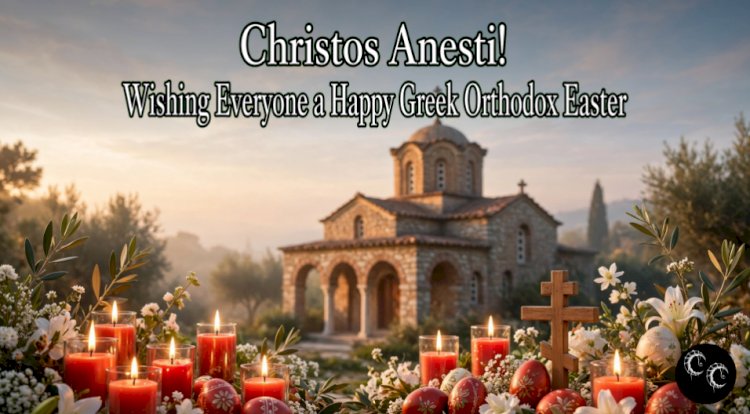
Happy Greek Orthodox Easter to everyone celebrating today!
Easter is one of those holidays that feels especially meaningful in Greek culture, and I thought it would be nice to share a little about how we celebrate it and why it can look a bit different from the Easter traditions some people might be more familiar with.
Greek Orthodox Easter, also known as Pascha, is the most important celebration in the Orthodox Christian calendar. While many people associate Easter with chocolate bunnies, pastel-colored eggs, spring flowers, and Easter baskets, Greek Orthodox Easter has its own beautiful traditions that have been passed down through generations. There's a deep spiritual meaning behind the celebration, but there's also so much family, food, music, and togetherness woven into the holiday.
And if there's one thing Greek culture knows how to do, it's bring people together around a table!
One of the biggest differences people notice is that Greek Orthodox Easter often falls on a different date than Western Easter. Sometimes the dates line up, and sometimes they're several weeks apart. This happens because the Orthodox Church uses the Julian calendar to determine the date of Easter, while most Western Christian churches use the Gregorian calendar. Both traditions celebrate the resurrection of Jesus Christ, but their calculations can lead to different Sundays.
For Greek Orthodox Christians, the days leading up to Easter are also incredibly important. Holy Week is a time of prayer, reflection, and church services that follow the final days of Jesus' life, His crucifixion, and ultimately His resurrection. Good Friday is a particularly solemn day, with services remembering Christ's death and processions honoring the Epitaphios, which represents His burial.
Then comes Holy Saturday, when everything builds toward one of the most beautiful moments of the entire celebration.
At midnight, churches gather for the Resurrection service. The lights are often dimmed, and the priest announces the resurrection with the words "Christos Anesti!" which means "Christ is risen!" The congregation responds with "Alithos Anesti!" meaning "Truly He is risen!"
There's something incredibly special about that moment. People hold candles, the church fills with light, and everyone shares the greeting with one another. It's a celebration of hope, renewal, and the promise of new life. Even if you've grown up with the tradition, it's one of those things that can still feel moving year after year.
And, of course, we can't talk about Greek Easter without talking about the food!
After the fasting period observed by many Orthodox Christians during Lent, Easter Sunday is a time for gathering with family and enjoying a wonderful feast. Depending on the family and region, you might find roasted lamb, potatoes, Greek salad, spanakopita, tiropita, and all sorts of delicious dishes filling the table. The food is often prepared with love, shared generously, and enjoyed over hours of conversation.
Greek Easter is not usually a quick meal where everyone eats and rushes off to do something else. It's about sitting together, catching up, laughing, telling stories, and enjoying the company of the people who matter to you. And if you've ever been around a Greek family gathering, you probably know that leaving hungry is rarely a concern!
One of the traditions I think is especially fun is the cracking of the red eggs.
Eggs are dyed red to symbolize the blood of Christ and the promise of resurrection and new life. Family members take turns tapping their eggs against one another, trying to crack the other person's egg while keeping their own intact. It's a simple tradition, but it can get surprisingly competitive! Everyone wants to have the egg that survives the longest, and there's usually plenty of laughter involved.
Another Easter favorite is tsoureki, a sweet, braided Greek bread that's often flavored with mahleb or other aromatic spices. It may be decorated with a red egg nestled into the braid, making it a beautiful addition to the Easter table. And then there's the magiritsa soup that many families traditionally enjoy after the midnight Resurrection service to break the Lenten fast.
Every family has its own way of celebrating, of course. Some gather for a huge outdoor feast with lamb roasting on a spit, while others celebrate with a smaller meal at home. Some traditions vary by region, and families often add their own little customs that have been passed down through generations.
That's one of the things I love about cultural holidays. They aren't just about following a list of traditions. They're about the memories attached to them, the people who taught us how to celebrate, and the little things that make a holiday feel like home.
Greek Orthodox Easter also carries a message that goes beyond the food and festivities. At its heart, Pascha is about resurrection, hope, faith, and the triumph of life over death. After the solemnity of Holy Week, Easter Sunday is a joyful celebration that reminds believers that sorrow does not have to be the end of the story.
I think that's a beautiful message, regardless of how someone personally celebrates Easter.
So, whether you're celebrating Greek Orthodox Easter with a church service, a table full of traditional food, red eggs, sweet bread, or simply a quiet day with the people you love, I hope your holiday is filled with warmth and happiness.
And if Greek Orthodox Easter isn't part of your own traditions, I hope you enjoyed learning a little about what makes it special. I love the idea of sharing pieces of different cultures with one another, because there's always something beautiful to discover when we take the time to understand how other people celebrate the things that matter to them.
To everyone celebrating, I wish you a wonderful Greek Orthodox Easter filled with love, laughter, delicious food, cherished family memories, and renewed hope for the days ahead.
Χριστός ἀνέστη! Ἀληθῶς ἀνέστη!
Christos Anesti! Alithos Anesti!
Christ is risen! Truly He is risen!
Kalo Pascha to all, and may your Easter be filled with peace, love, and every blessing.