AITA For Telling My Girlfriend Her Singing Voice Is Actually Quite Painful?
 Cordelia Cross
Jun 12, 2026 12:30
0
Cordelia Cross
Jun 12, 2026 12:30
0
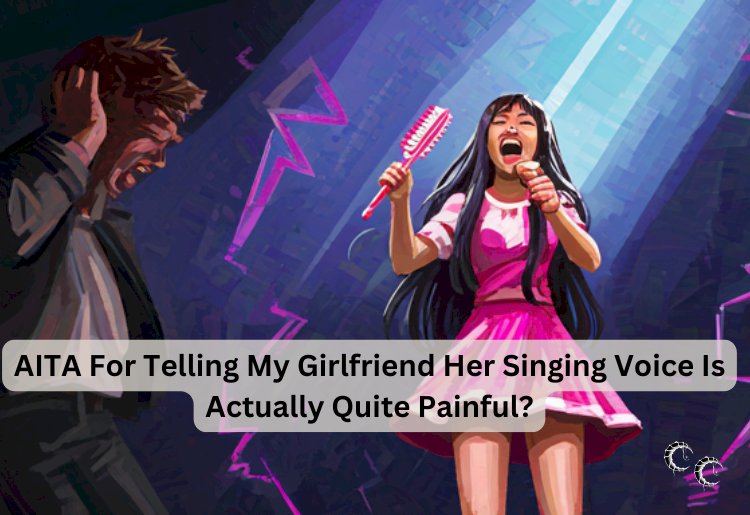
I am a 31M and my girlfriend “Emily” is 29F. We have been together for almost three years, and for the most part, we have a really loving relationship. She is one of the kindest, most supportive people I have ever met. She makes me laugh, she remembers little details about my day, and she has always been someone who encourages me to pursue the things I enjoy.
The problem is that Emily loves to sing.
And I mean she really loves to sing.
She sings while cooking, while cleaning, in the shower, during car rides, and sometimes she will randomly start singing songs when we are just sitting together. She has always said that singing makes her happy and that it helps her feel relaxed.
I have never wanted to take that away from her.
The issue is that she is not a very good singer.
I know that sounds harsh, and I feel awful even writing it, because I do not want to hurt her feelings. But her singing voice is genuinely difficult for me to listen to. She struggles to stay on pitch, she changes melodies, and sometimes she sings with so much confidence that it makes it even harder because she has no idea how off she sounds.
For years, I have just smiled and told her she sounded great.
Whenever she asked me if she sounded good, I would say yes.
I know some people might say that was dishonest, but I did not want to crush something she loved. Singing was never hurting anyone. It made her happy. I figured there was no reason to say anything negative.
Then recently, she decided she wanted to perform at an open mic night.
This is where things became complicated.
Emily has always dreamed of performing in front of people. She signed up for a local event where people can sing, play instruments, or share other talents. She was so excited. She spent weeks practicing and asked me to help her choose a song.
I tried to be supportive, but the closer it got, the more nervous I became.
I knew she was going to get up on stage expecting people to love it, and I was worried she would be embarrassed.
The night before the event, she asked me to record her singing so she could listen back.
I recorded it.
When we played it back, she smiled and said, “I actually sound really good, right?”
I froze.
I did not know what to say.
I felt like I had two choices.
I could continue lying and let her go on stage completely unaware.
Or I could finally be honest.
I chose honesty.
I told her that I love how much passion she puts into singing, but I did not think she was ready to perform publicly. I said her voice was not where it needed to be yet and that she might want to take lessons or practice more before getting on stage.
She immediately looked hurt.
She asked me if I was saying she was a bad singer.
I told her I was trying to be honest without being cruel.
Then I said something I regret.
I told her that sometimes her singing voice is actually quite painful to listen to.
The second the words left my mouth, I knew I had gone too far.
Her face completely changed.
She said she could not believe that I had been letting her sing for years while secretly thinking that. She said she felt humiliated and embarrassed because she had trusted me to be honest with her.
She ended up not going to the open mic.
Since then, things have been tense.
She says she feels like I have been laughing at her for years. I told her that was never my intention, but I understand why she feels hurt.
I tried explaining that I was not making fun of her. I actually admired how confident she was.
She said confidence is not the same thing as talent and that she needed someone who loved her enough to tell her the truth.
That really stuck with me.
Now I am wondering if I did the right thing in the wrong way.
Some friends say I was honest because I cared and that someone needed to tell her before she embarrassed herself publicly.
Other friends say I was cruel because singing was something harmless that made her happy, and I should have supported her instead of criticizing her.
I do feel guilty.
I think about all the times she sang around the house and how happy she looked. I never wanted to take that away from her.
But I also do not want to be the person who lets someone I love walk into a situation where they could be hurt.
So, AITA for telling my girlfriend her singing voice is actually quite painful?
Cordelia’s Response
There are moments when honesty feels like kindness, but the way truth is delivered determines whether it becomes a gift or a wound.
Your girlfriend did not simply ask, “Am I technically a good singer?”
She was sharing something joyful with you.
Singing was not just a skill to her. It was an expression of herself. It was something that made her feel free.
That is why this hurt so deeply.
The painful part was not only hearing that she may not have a naturally strong singing voice. The painful part was realizing that someone she trusted had quietly carried that opinion for years while she continued to share something vulnerable.
Your intention matters.
You were not trying to humiliate her.
You were not trying to make her feel small.
You were trying to protect her from a difficult moment.
But sometimes protection can become a wound when someone is not asking to be protected.
There was a middle ground here.
You could have encouraged her while helping her prepare. You could have suggested lessons. You could have said that confidence is wonderful but performing for an audience is different than singing for yourself.
Instead, the truth arrived all at once, after years of reassurance.
That created a second hurt.
The first hurt was the criticism.
The second hurt was wondering what else you may have been pretending about.
That does not make you a terrible partner.
It makes you someone who avoided an uncomfortable conversation until it became unavoidable.
Now the work is not convincing her that you were right.
The work is rebuilding trust.
Let her know you never laughed at her. Let her know you loved seeing her happy. Let her know that her joy was never something you wanted to take away.
People deserve honesty.
But they also deserve kindness.
OP’s Update
After reading the comments, I realized I needed to apologize.
Not for having an opinion about her singing, because I do think I was trying to look out for her, but for the way I handled it.
I sat down with Emily and told her that I was sorry for letting her believe for years that I thought she was amazing when I actually had reservations.
I told her that I was never making fun of her and that I never thought less of her because of her voice.
She cried.
She said the hardest part was realizing that every time I told her she sounded good, she wondered if I was just being polite.
I honestly had not considered that.
I thought I was protecting her feelings, but I can see how it made her question whether she could trust my compliments.
She told me she wished I had gently encouraged her to improve instead of letting her believe she was ready to perform.
That hurt because I think she is right.
I probably avoided the conversation because I did not want to be the bad guy.
The open mic event has already passed, but she still wants to sing.
She said she does not want to stop because of one painful conversation.
I was relieved to hear that.
I told her I would support her if she wanted lessons or coaching, but I also told her that I hope she keeps singing because she loves it.
She said she appreciated that.
Things are better, but not completely normal.
She still gets embarrassed if she starts singing around me and then remembers what I said.
I hate that I made something joyful feel uncomfortable for her.
Cordelia’s Response
This update shows something important.
You were both hurt because you cared.
Your girlfriend was not devastated because she expected to become a famous singer overnight. She was devastated because something she shared freely suddenly felt unsafe.
And you were not speaking from cruelty. You were speaking from concern.
The lesson here is not that honesty is wrong.
The lesson is that honesty needs timing, compassion, and understanding.
A person who loves something does not always need to be told whether they are the best at it.
Sometimes they need to know whether the thing brings them joy.
If Emily enjoys singing, then the goal should not be removing singing from her life. The goal should be helping her find ways to grow if she wants to improve.
A supportive partner does not have to pretend.
But a supportive partner also does not need to turn every weakness into a verdict.
There is a difference between saying, “This needs work,” and saying, “This hurts to experience.”
One opens a door.
The other closes one.
You have acknowledged your mistake, and that matters.
Now show her through your actions that her happiness was never something you were secretly judging.
OP’s Final Update
I wanted to give one final update because a lot of people asked how things turned out.
Emily started taking vocal lessons.
Not because I pushed her into it, but because she decided she wanted to improve.
The first few weeks were honestly difficult. She was nervous and embarrassed, and I could tell she was worried I was secretly judging her.
I tried to make sure I did not become her critic.
Her vocal coach gives her feedback. My job is to support her.
That distinction helped.
She recently sang at a small gathering with friends, and she was proud of herself.
Was she suddenly an incredible singer?
No.
But she was better.
More importantly, she was happy.
I also apologized again for the phrase I used. Telling someone their voice is painful was unnecessarily harsh. Even if I was trying to be honest, I could have chosen much kinder words.
Emily told me she still feels embarrassed sometimes, but she believes I was trying to protect her.
We are still working through it.
The biggest thing I learned is that honesty without compassion can become cruelty.
I still wonder if I should have said something sooner.
Maybe I should have.
But I also know I cannot undo it.
All I can do now is be someone she trusts again.
Cordelia’s Response
There are no perfect words when we are trying to navigate another person’s heart.
You cannot rewrite the past, but you can choose what kind of partner you become afterward.
You learned a difficult lesson about the difference between honesty and harshness.
Truth is not only about what we say.
It is about whether the person hearing it feels respected.
Your girlfriend’s singing was never just sound.
It was confidence.
It was playfulness.
It was a piece of herself she offered you.
You did not need to love every note to love the person creating it.
The beautiful thing about this story is that neither of you stayed trapped in the hurt.
She did not let embarrassment take away something she loved.
You did not let guilt prevent you from understanding why she was hurt.
Relationships survive moments like this when people are willing to look beyond being right and focus on being kind.
You made a mistake.
You owned it.
And sometimes that is where the strongest trust begins.
Conclusion
Honesty can be one of the greatest acts of love, but honesty without compassion can leave scars. When someone shares something they love, the way we respond matters just as much as the truth we tell.
In this situation, the verdict is ESH. OP was wrong for hiding his true feelings for years and then delivering the truth in a way that was unnecessarily painful. However, his girlfriend’s feelings of hurt do not erase that he was trying to prevent her from facing a difficult public moment. Both sides could have handled the situation with more communication and kindness.
If you have a situation where you are struggling with honesty, relationships, boundaries, or difficult conversations, send your story to [email protected] and put “Advice” in the subject line. Your story may help someone else navigate their own storm.