Why We Love Dark Stories: The Psychology Behind Gothic Fiction
 Cordelia Cross
Jul 15, 2026 03:53
0
Cordelia Cross
Jul 15, 2026 03:53
0
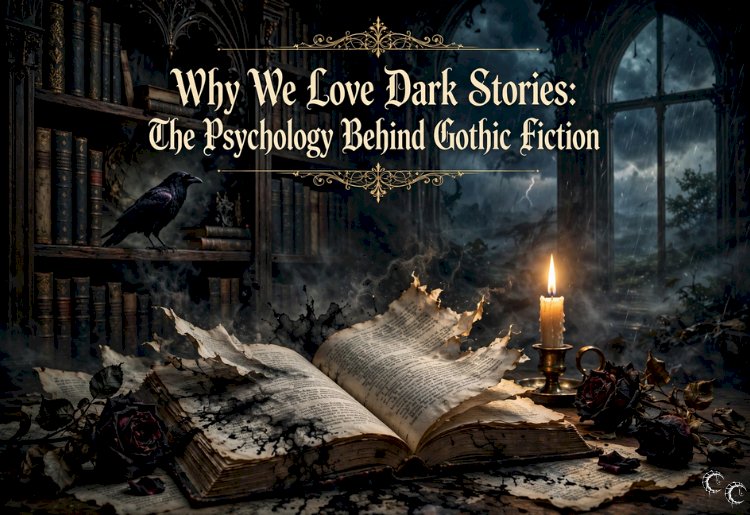
There is something fascinating about a dark hallway.
A creaking floorboard.
A forgotten mansion covered in ivy.
A story that makes us feel uneasy while also making us want to turn the next page.
Gothic fiction has captivated readers for centuries by exploring the things we often try not to think about: fear, loss, mystery, isolation, and the unknown. Yet despite its darker themes, people continue to return to these stories again and again.
Why?
Because Gothic fiction is not really about darkness.
It is about understanding it.
The Attraction of the Unknown
Humans are naturally drawn to mysteries.
We want answers.
We want to know what is behind the locked door, what happened in the abandoned house, or what secrets a character is hiding. Gothic fiction uses that curiosity to create tension and keep readers engaged.
The unknown feels dangerous because our minds naturally fill in the gaps.
A shadow in the corner of a room can become far more frightening than something clearly visible. Our imagination has a remarkable ability to create possibilities, and Gothic stories use that power to their advantage.
Sometimes what we cannot see is what scares us the most.
Why Fear Can Be Enjoyable
It might seem strange that people actively seek out stories designed to make them uncomfortable.
After all, fear is supposed to warn us away from danger.
But when we experience fear through fiction, we are in control.
A horror novel, haunted castle, or supernatural mystery allows us to explore frightening emotions from a safe distance. Our brains can experience the excitement of suspense without the actual threat.
It is similar to riding a roller coaster.
Your heart races.
Your palms sweat.
Your instincts tell you something intense is happening.
Then the ride ends, and you want to go again.
Gothic fiction creates that same emotional experience through storytelling.
The Beauty of Melancholy
One of the most unique elements of Gothic fiction is its relationship with sadness.
These stories often explore grief, loneliness, lost love, and the passage of time. While those themes may sound heavy, they also create a strange sense of beauty.
A ruined building can represent memories that remain after something is gone.
A ghost can represent unfinished emotions.
A forgotten letter can reveal a story that history left behind.
Gothic fiction understands that sadness is not always something to avoid. Sometimes it helps us understand what matters.
Why We Connect With Broken Characters
Many Gothic stories focus on characters who feel like outsiders.
They may be misunderstood, isolated, haunted by their past, or struggling with parts of themselves they cannot accept.
These characters resonate because everyone experiences moments of feeling different.
The supernatural elements may be exaggerated, but the emotions are often very real.
A vampire struggling with loneliness.
A monster searching for acceptance.
A ghost unable to move forward.
These stories use fantasy and horror to explore very human experiences.
The Psychology of Exploring Darkness
Dark stories allow us to examine uncomfortable topics from a safe place.
They give us a way to explore questions about mortality, morality, identity, and fear.
What happens when someone loses control?
What happens when ambition goes too far?
What happens when the past refuses to stay buried?
Gothic fiction doesn't simply show darkness.
It examines why darkness exists.
That exploration is part of what makes these stories so powerful.
The Appeal of Atmosphere
Gothic fiction is famous for creating unforgettable settings.
Ancient castles.
Fog-covered forests.
Abandoned libraries.
Candlelit rooms filled with secrets.
These locations become characters themselves.
The environment creates emotion before the story even begins. A beautiful but decaying mansion tells us something is wrong. A quiet village with strange traditions suggests hidden secrets.
The setting creates a feeling that something is waiting just beyond our understanding.
Why Gothic Stories Never Truly Disappear
Technology changes.
Culture changes.
Entertainment changes.
Yet Gothic fiction continues to find new audiences.
Modern versions appear in books, movies, video games, and digital art. The settings may change, but the core ideas remain the same.
People are still fascinated by mystery.
We are still curious about the unknown.
We still want to understand our fears.
The Gothic genre survives because it explores questions that never become outdated.
Finding Beauty in the Shadows
Dark stories are not popular because people want to be afraid all the time.
They are popular because they allow us to explore emotions that are difficult to discuss directly.
Fear.
Grief.
Loneliness.
Desire.
Change.
Gothic fiction reminds us that darkness is not always the opposite of beauty. Sometimes the shadows reveal things we would never notice in the light.
A forgotten room may hold a secret.
A broken character may hold a powerful story.
A frightening journey may reveal something important about ourselves.
That is the lasting appeal of Gothic fiction.
It does not simply ask us to look into the darkness.
It asks us what we might discover there.