Why Small Businesses Are Seeing Massive Engagement Spikes During TikTok Live Selling Sessions
 Cordelia Cross
Apr 25, 2026 06:39
0
Cordelia Cross
Apr 25, 2026 06:39
0
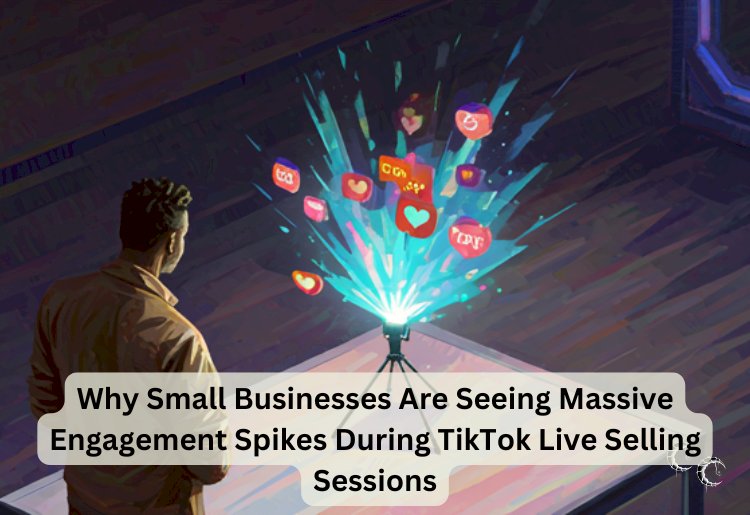
TikTok Live has become one of the most intense environments in modern digital commerce. Unlike short form content, where attention is fragmented and passive, Live selling creates a concentrated attention loop. Viewers are not just scrolling past content. They are entering a shared, real time space where interaction, urgency, and decision making happen simultaneously. That shift is what drives the dramatic engagement spikes small businesses are now experiencing.
The foundation of this effect is psychological rather than technical. Live content removes the safety net of editing and replaces it with immediacy. Everything happens in real time, which changes how audiences process value. Instead of consuming a polished message, viewers are witnessing an unfolding interaction. That rawness creates a sense of authenticity that pre recorded content struggles to replicate.
This authenticity reduces friction. When people feel they are seeing something unfiltered, trust builds faster. There is no perceived staging, no hidden edits, and no artificial refinement. Even simple interactions like answering questions or showing a product live feel more credible because they are happening in the moment rather than being presented as a finished narrative.
Once trust is established, engagement becomes more fluid. Viewers begin to comment, ask questions, and respond in real time. Unlike passive scrolling, where interaction is optional, Live creates a shared environment where participation feels natural. The comment section becomes part of the experience rather than an external reaction to it.
The most powerful driver of engagement spikes in Live selling is urgency. Unlike traditional e commerce, where products sit indefinitely in a catalog, Live introduces temporal pressure. Limited inventory, time sensitive offers, and real time visibility of stock levels create a scarcity loop that intensifies attention.
Scarcity changes behavior because it introduces the possibility of loss. When viewers see an item being discussed and realize it may not be available later, decision making accelerates. This is not just about desire. It is about timing. The combination of limited supply and live presentation compresses the gap between interest and action.
This compression is where engagement spikes emerge. People are not just watching. They are reacting. They are asking about availability, comparing options, and signaling intent in real time. Each interaction reinforces the sense that something active is happening, which keeps more viewers present for longer periods.
Another important factor is social reinforcement. In Live environments, viewers can see other people engaging at the same time. Comments stack, reactions accumulate, and collective attention becomes visible. This creates a feedback loop where participation feels amplified. When people see others engaging, they are more likely to join in, which further increases activity density.
This dynamic often leads to what can feel like bidding war energy, even in non auction based formats. It is not always literal competition, but perceived competition. When multiple viewers express interest in the same item, urgency increases organically. The product becomes more desirable not only because of its features, but because of shared attention.
The algorithm reinforces this cycle. High engagement signals such as comments, watch time, and interaction frequency increase distribution during the Live session. As more viewers enter, the probability of interaction rises, which feeds back into further visibility. This creates a compounding loop where engagement drives reach and reach drives engagement.
However, the most overlooked element is the shift from passive consumption to active participation. In short form content, users remain observers. In Live selling, they become participants in a real time environment. That shift changes emotional investment. People are no longer just evaluating a product. They are part of the moment in which it is being presented.
This sense of participation is what ultimately transforms casual viewers into higher intent audiences. Even if they do not purchase immediately, they have now interacted directly with the brand in a live context. That interaction increases familiarity, reduces uncertainty, and strengthens future conversion potential.
Over time, repeated Live sessions begin to form a community dynamic. Regular viewers recognize each other, return for new sessions, and develop expectations around drops, demonstrations, or product cycles. What begins as transactional attention gradually evolves into behavioral loyalty.
The key takeaway is that engagement spikes during TikTok Live are not accidental. They are the result of compressed attention, real time interaction, scarcity driven urgency, and visible social participation. When these elements align, Live selling stops functioning as a simple broadcast and becomes a high intensity feedback loop between attention and action.
In that environment, engagement is not just a metric. It is a signal of collective momentum.