What Makes a Great Villain? The Psychology Behind Our Favorite Antagonists
 Cordelia Cross
Jun 13, 2026 03:49
0
Cordelia Cross
Jun 13, 2026 03:49
0
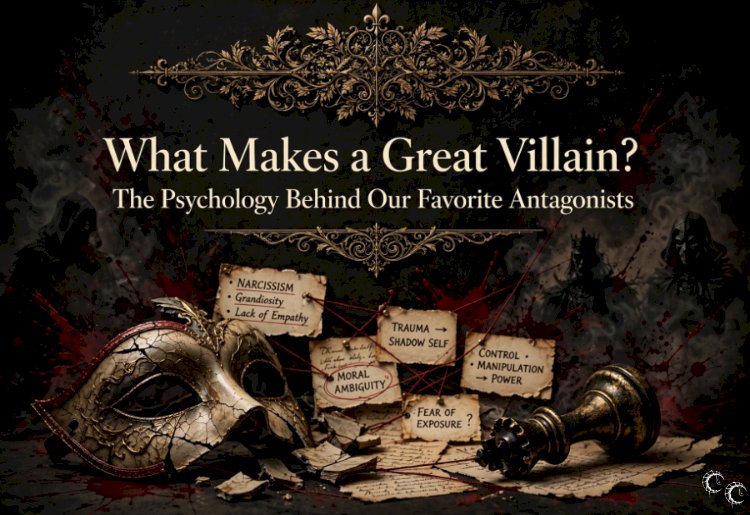
Every great story needs conflict.
Heroes need challenges to overcome. Worlds need dangers lurking beneath the surface. A journey feels more meaningful when something stands in the way.
That something is often a villain.
But the best villains are rarely just evil for the sake of being evil. The most memorable antagonists are the ones who make us uncomfortable because, in some strange way, we understand them.
We may disagree with their choices.
We may hate what they do.
But we can see the path that led them there.
That is what separates a forgettable enemy from a truly fascinating villain.
A Great Villain Believes They Are the Hero
One of the most interesting traits of a compelling villain is that they usually don't see themselves as the villain.
In their own mind, their actions make sense.
They may believe they are saving the world, protecting their people, correcting an injustice, or creating a better future. Their methods might be extreme, but their motivation often comes from a place that feels understandable.
This creates something far more interesting than a simple battle between good and evil.
It becomes a clash between different beliefs.
The hero sees one solution.
The villain sees another.
The audience is left wondering what happens when someone becomes so convinced they are right that nothing can stop them.
Motivation Creates Depth
A villain with no motivation is just an obstacle.
A villain with a reason is a character.
The strongest antagonists usually have something driving them beneath the surface.
Maybe they experienced a betrayal that changed them.
Maybe they lost someone important.
Maybe they believe the world failed them and they are determined to rebuild it in their own image.
Understanding a villain's motivation doesn't excuse their actions. It simply makes them more human.
And humans are complicated.
That complexity is what makes stories memorable.
The Fear of the Villain Comes From Recognition
The scariest villains are often not the ones who feel completely alien.
They are the ones who reflect something familiar.
A villain who wants power.
A villain who fears losing control.
A villain who believes they are protecting people while causing harm.
These ideas are unsettling because they are connected to real human emotions.
A character who represents jealousy, pride, obsession, or fear can feel more threatening than a monster with claws and fangs.
The most frightening villains are sometimes the ones who show us what we could become under the wrong circumstances.
The Power of a Personal Connection
A great villain doesn't just threaten the world.
They challenge the hero personally.
Maybe they were once friends.
Maybe they share the same history.
Maybe they represent everything the hero fears becoming.
This connection raises the emotional stakes.
A hero defeating a random enemy is satisfying.
A hero confronting someone they once loved, trusted, or admired is heartbreaking.
The conflict becomes more than a physical battle.
It becomes a battle of identity, beliefs, and choices.
Villains Need Strengths Too
A villain who is only cruel quickly becomes predictable.
The most memorable antagonists often possess qualities we can admire.
They may be intelligent, disciplined, charismatic, or incredibly determined.
Those strengths are what make them dangerous.
A brilliant villain who uses their intelligence for destruction is far more interesting than someone who simply causes chaos without purpose.
Their abilities make us understand why they became powerful.
Their flaws reveal why they ultimately fall.
The Psychology of a Villain's Fall
Many great villains don't begin as monsters.
They change.
A series of choices, experiences, and beliefs slowly pushes them toward darkness.
This transformation is fascinating because it mirrors real human behavior. People rarely wake up one day and decide to become completely different versions of themselves.
Instead, small decisions build over time.
A compromise here.
A justification there.
Eventually, the person they become is far removed from who they started as.
That gradual change creates tragedy.
Why We Love Complex Antagonists
Audiences are drawn to complicated villains because they create questions.
Could they have chosen differently?
Were they always destined to become this way?
Was there a moment where things could have changed?
These questions stay with us long after the story ends.
A simple villain provides an enemy.
A complex villain provides a conversation.
The Balance Between Evil and Understanding
There is a common misconception that making a villain understandable means making them sympathetic.
That's not always true.
A villain can be understandable and still be completely wrong.
The most powerful stories allow us to recognize the humanity in a character while still holding them accountable for their choices.
That balance creates emotional depth.
It reminds us that understanding someone is not the same as agreeing with them.
The Villains We Remember
The greatest villains stay with us because they represent something bigger than themselves.
They represent ambition without limits.
Justice taken too far.
Pain turned into anger.
Fear transformed into control.
They force heroes to grow, challenge our ideas about morality, and make stories feel alive.
A great villain doesn't just stand in the hero's way.
They reveal who the hero truly is.
And sometimes, the most unforgettable characters in a story are the ones we were never supposed to root for.