Unlock Your Child's Natural Curiosity: Every Day Home Activities For Engaged Learning
 Cordelia Cross
Jun 5, 2026 10:34
0
Cordelia Cross
Jun 5, 2026 10:34
0
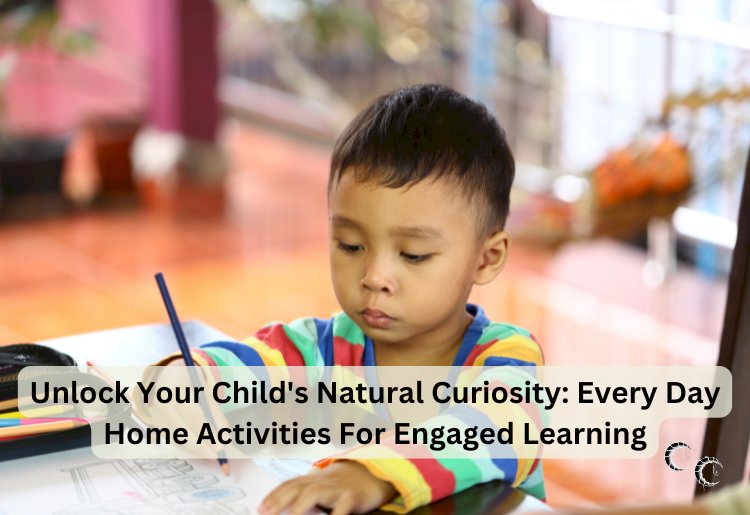
Children are naturally curious. Give them a cardboard box, a flashlight, or a handful of leaves, and suddenly they're scientists, engineers, explorers, or storytellers. That sense of wonder doesn't need expensive toys or elaborate lesson plans. More often than not, it simply needs room to grow.
The best part about engaged learning is that it doesn't have to feel like school. Some of the most valuable lessons happen while baking cookies, planting flowers, building blanket forts, or asking questions that don't always have immediate answers.
Learning begins with curiosity, and home is one of the best places to nurture it.
Why Curiosity Matters
Curiosity is more than just asking questions. It's the spark that encourages children to investigate, experiment, and think creatively.
When children are curious, they're more likely to stay engaged, remember what they've learned, and develop confidence in solving problems on their own.
Instead of focusing only on finding the right answer, curious learners enjoy discovering how things work. That mindset can benefit them long after childhood.
Turn Everyday Moments Into Learning Opportunities
You don't need a classroom to encourage engaged learning.
Cooking together introduces math through measuring ingredients, science through chemical reactions, and reading through following recipes. Even grocery shopping becomes an adventure when children compare prices, count items, or learn where different foods come from.
A simple walk around the neighborhood can become a scavenger hunt for different types of leaves, birds, insects, or interesting rocks.
Sometimes the best lessons are hiding in plain sight.
Encourage Questions Without Having All the Answers
One of the easiest ways to unlock your child's natural curiosity is to welcome their questions, even the difficult ones.
Why is the sky blue?
How do airplanes stay in the air?
Why do cats purr?
You don't need to know every answer.
In fact, saying, "Let's find out together," teaches something just as valuable. It shows children that learning is an ongoing process and that curiosity doesn't end when we become adults.
Exploring answers together also turns learning into a shared experience rather than a lecture.
Create Simple Home Activities for Engaged Learning
Some of the most memorable activities require very little preparation.
Try growing beans in a clear jar and watching the roots develop over time.
Build a tower using only paper and tape to see how high it can stand before it topples over.
Create a weather journal by recording sunshine, clouds, rain, or wind each day for a month.
Read a story together, then invent a new ending.
Even setting up a "question jar" where family members write down interesting questions to explore each week can keep curiosity alive.
The goal isn't perfection.
It's participation.
Let Creativity Lead the Way
Children often learn best when they're creating something.
Drawing, painting, building with blocks, crafting from recycled materials, or inventing imaginary worlds all encourage problem solving and critical thinking.
A cardboard box might become a spaceship today and a bakery tomorrow.
To an adult, it may look like clutter.
To a child, it's unlimited potential.
Giving children the freedom to experiment without worrying about getting everything right helps build confidence alongside creativity.
Celebrate Exploration Over Perfection
It's easy to praise a correct answer or a finished project, but curiosity grows strongest when effort is celebrated too.
Experiments won't always work.
Crafts may end up covered in more glue than expected.
Cookie recipes occasionally become happy accidents.
That's perfectly okay.
Every mistake is an opportunity to ask another question, try a different approach, or discover something unexpected.
Sometimes the best lessons come from things not going according to plan.
Make Learning Part of Everyday Life
Engaged learning doesn't need a schedule filled with worksheets or structured lessons.
Reading before bed, gardening together, visiting a local museum, solving puzzles, listening to music, or simply talking about the stars on a clear evening all encourage children to keep asking questions about the world around them.
When curiosity becomes part of everyday life, learning feels less like a task and more like an adventure.
Small Moments Create Lifelong Learners
Children don't need every answer handed to them. They need opportunities to explore, wonder, and discover.
By creating simple home activities for engaged learning, parents can help nurture the natural curiosity children are already born with. Those everyday moments of asking questions, experimenting, and trying something new often become the experiences they remember long after they've grown up.
After all, curiosity isn't something children have to learn.
It's something we have the privilege of helping them keep.