The Best MMORPG Combat Mechanics Comparison Between Throne and Liberty and New World
 Cordelia Cross
Mar 31, 2026 10:00
0
Cordelia Cross
Mar 31, 2026 10:00
0
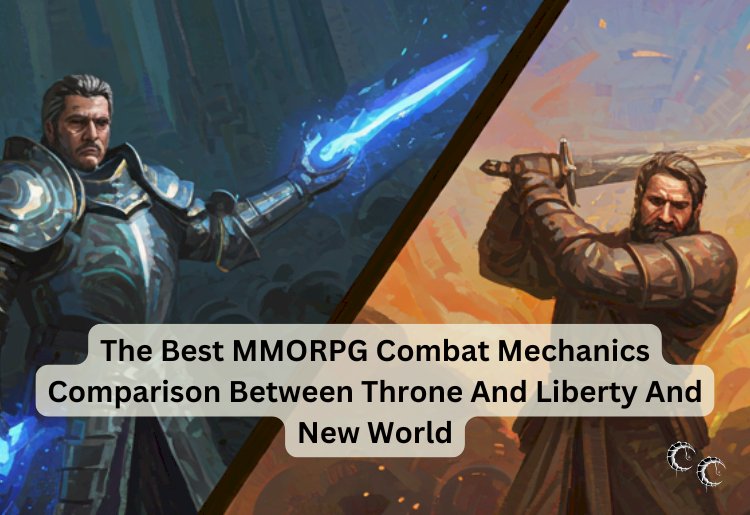
Combat is the heartbeat of any MMORPG. It is the system players return to again and again, whether they are exploring, grinding, or pushing through endgame content. When that loop feels good, everything else falls into place. When it does not, even the most beautiful world starts to feel empty. That is what makes the comparison between Throne and Liberty and New World so interesting. Both aim for immersive, impactful combat, but they approach that goal in very different ways.
At a glance, the difference is clear. New World leans into a fully action oriented system built on manual aiming, timing, and positioning. Throne and Liberty blends tab targeting with action elements, focusing more on skill chaining, cooldown management, and tactical execution. Both systems try to create weight and responsiveness, but the way they deliver that experience changes how the game feels moment to moment.
What Combat Feels Like in New World
New World builds its combat around direct control. Every swing, shot, and dodge depends on player input in real time. Attacks are aimed manually, and there is no locking onto a target in the traditional sense. This creates a system where positioning and awareness matter constantly.
Dodging is a core mechanic. It is not just a defensive option but part of the rhythm of combat. Timing a dodge correctly can avoid damage entirely, and because stamina is limited, every movement decision carries weight. You are not just reacting. You are managing resources while staying aware of your surroundings.
Parrying and blocking also play a significant role. Well timed defensive actions can shift the flow of a fight, especially in player versus player scenarios. This creates moments where skill expression is very visible. A well executed dodge or block feels earned, and mistakes are immediately noticeable.
The overall result is a system that feels grounded and physical. Attacks have weight. Movement has consequence. There is a sense that every action connects directly to the outcome of the fight.
What Combat Feels Like in Throne and Liberty
Throne and Liberty takes a different approach by blending traditional tab targeting with modern action elements. Players can lock onto targets, which reduces the need for precise manual aiming. Instead, the focus shifts toward ability usage, positioning, and timing within a structured system.
Skill chaining is central here. Abilities are designed to interact with each other, creating combos that reward planning and awareness. Instead of relying on raw reaction speed, players are encouraged to think a few steps ahead, setting up sequences that maximize damage or control.
Cooldown management becomes a defining factor. Knowing when to use abilities, when to hold them, and how to rotate through them efficiently is key to success. This adds a layer of strategy that feels different from the immediate responsiveness of action combat.
Movement still matters, but it is less about constant dodging and more about positioning within a larger tactical framework. The system feels smoother and more controlled, with less emphasis on split second reactions and more on consistent execution.
Manual Aiming Versus Target Locking
One of the biggest contrasts between the two systems comes down to how players interact with their targets. New World demands manual aiming, which increases immersion and raises the skill ceiling for precision. Every hit feels intentional, but it also introduces more room for error.
Throne and Liberty simplifies this aspect with target locking. This allows players to focus on ability timing and positioning rather than aiming each individual attack. It creates a more accessible experience while still offering depth through other mechanics.
Neither approach is inherently better. It depends on what kind of engagement a player prefers. Manual aiming creates tension and immediacy. Target locking creates consistency and strategic clarity.
The Role of Weight and Impact
Both games aim to make combat feel impactful, but they achieve it in different ways. New World emphasizes physicality. Animations are deliberate, and there is a clear sense of momentum behind each action. When you swing a weapon or land a hit, it feels substantial.
Throne and Liberty focuses more on flow. Abilities connect smoothly, and the chaining system creates a sense of continuous motion. Impact comes from how skills interact rather than the weight of individual strikes.
This difference shapes the overall experience. New World feels heavier and more grounded. Throne and Liberty feels more fluid and structured.
Mechanical Friction and Player Experience
The idea of mechanical friction is where this comparison becomes especially interesting. In New World, friction comes from execution. Missing an attack, mistiming a dodge, or running out of stamina has immediate consequences. The system demands constant attention and rewards precision.
In Throne and Liberty, friction comes from decision making. Using the wrong ability at the wrong time or failing to manage cooldowns effectively can reduce your effectiveness. The challenge is less about hitting the target and more about using the right tools in the right order.
Both forms of friction create engagement, but they appeal to different playstyles. One tests reflexes and control. The other tests planning and optimization.
Which Combat Loop Feels Better
The answer depends on what you value in an MMORPG. If you enjoy fast paced, skill driven combat where every movement matters, New World offers a more hands on experience. It rewards players who want to feel directly connected to each action.
If you prefer a system that emphasizes strategy, ability synergy, and consistent execution, Throne and Liberty provides a more structured approach. It allows for deeper planning and smoother rotations without requiring constant precision aiming.
Final Thoughts
Throne and Liberty and New World represent two strong interpretations of modern MMORPG combat. One leans into action and physicality. The other blends tradition with tactical depth. Neither is strictly better, but each highlights a different way to make combat engaging.
The evolution of MMORPGs is not about choosing one system over the other. It is about exploring how different mechanics can create meaningful experiences. Whether through the weight of a perfectly timed dodge or the satisfaction of a well executed skill chain, both approaches show that combat is still one of the most exciting spaces for innovation in the genre.