The Brutal Truth of Professional Editing: Cutting My Favorite Characters for the Plot
 Cordelia Cross
Mar 9, 2026 05:27
0
Cordelia Cross
Mar 9, 2026 05:27
0
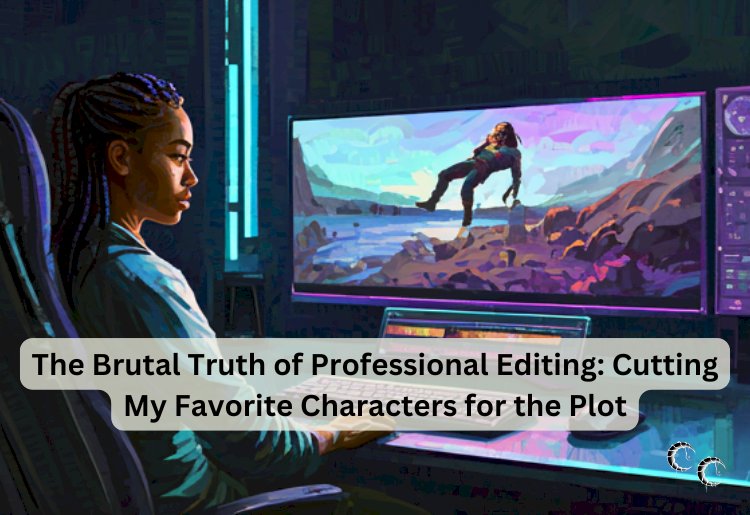
When Great Characters Become Narrative Weight
Every writer eventually encounters a difficult truth. Not every beloved character deserves to survive the editing process. Some characters shine with personality, wit, and emotional depth, yet quietly damage the pacing or focus of the story. What begins as affection for a creative success can slowly become a structural problem.
In early drafts, writers often allow characters to breathe freely. Scenes expand to showcase their voices, quirks, and relationships. These moments can feel alive and vibrant while writing them. Yet during professional editing, the question changes from “Is this character interesting” to “Is this character necessary.”
That shift can feel brutal.
The Collision Between Personality and Structure
Stories require momentum. Every scene must either push the plot forward, deepen the central conflict, or transform the protagonist in some meaningful way. When a character’s presence interrupts that momentum, even brilliant dialogue or memorable personality cannot justify their survival.
A secondary character might dominate scenes with humor or emotional warmth while contributing little to the actual narrative engine. Another may have a beautifully written backstory that never intersects with the central arc.
Individually these moments feel valuable. Structurally they become friction.
Editing forces the writer to see the difference between charm and purpose.
The Painful Process of “Killing Your Darlings”
The phrase “kill your darlings” has echoed through writing advice for generations because it captures this exact moment of sacrifice. Writers must sometimes remove the elements they love most in order to protect the integrity of the story.
That removal can take many forms. Entire characters vanish. Subplots collapse. Carefully written scenes disappear in a single revision pass.
The emotional resistance is real. These characters often represent hours of creativity and imagination. They may even feel like living companions in the writer’s mind. Deleting them can feel like erasing a piece of the creative journey itself.
Yet the story demands it.
Recognizing When a Character Must Go
Professional editing reveals certain warning signs that a character may be harming the narrative.
They appear frequently but never influence the main conflict.
Their scenes repeat information already delivered elsewhere.
They pull attention away from the protagonist’s journey.
Their subplot never intersects with the core storyline.
When multiple scenes exist only to give a character screen time rather than move the story forward, the writer faces a difficult decision.
That character may need to disappear.
Transforming Loss Into Strength
Interestingly, removing characters rarely weakens a story. In most cases it sharpens it.
When unnecessary characters vanish, the remaining cast gains clarity and depth. Scenes tighten. Dialogue becomes purposeful. Emotional beats land harder because they are not competing with distractions.
Sometimes the traits of a deleted character can even be merged into another role. A witty side character’s humor might enrich a protagonist’s voice. A minor mentor’s wisdom might strengthen a primary ally.
The narrative becomes leaner and more focused without losing the creative energy that inspired those characters in the first place.
The Hidden Archive of Lost Characters
Cut characters rarely disappear forever. Many writers keep a separate document where deleted scenes and personalities live on. This “creative graveyard” becomes a resource for future projects.
A character who did not belong in one story may thrive in another. A discarded subplot might inspire a completely new narrative later.
Nothing truly goes to waste in the creative process.
Choosing Story Over Sentiment
Professional editing ultimately demands discipline. Writers must prioritize the experience of the reader over their own attachment to individual elements.
The goal is not to preserve every clever moment. The goal is to build a story that moves with clarity, tension, and purpose.
When a character threatens that balance, the decision becomes unavoidable. Even the most vibrant personalities must sometimes disappear so the narrative itself can live.
It is painful, but it is also proof that the writer is serving the story rather than their own comfort. And in the long journey from draft to finished work, that sacrifice is often what transforms a good manuscript into a powerful one.