Should You Make Your Child Share, Even If They Don’t Want To?
 Cordelia Cross
Mar 26, 2026 06:36
0
Cordelia Cross
Mar 26, 2026 06:36
0
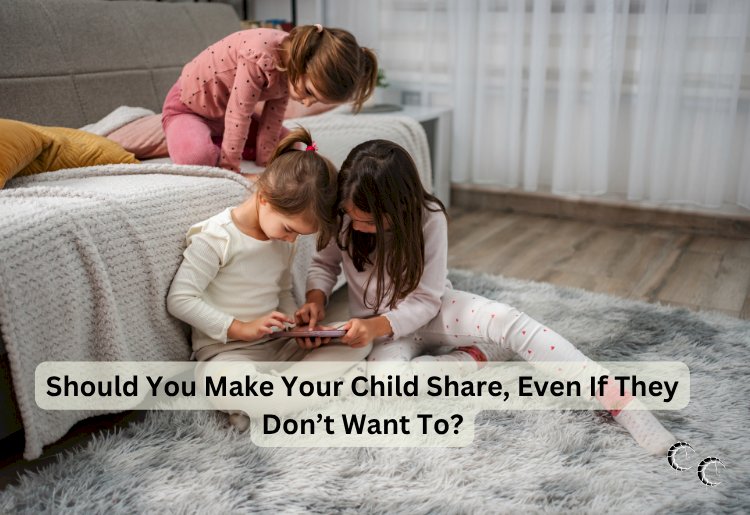
There is a moment that plays out in living rooms, playgrounds, and quiet corners of everyday life. One child holds something tightly, a toy, a snack, a small piece of something that feels entirely theirs. Another child reaches for it. A pause. A look. And then the familiar pressure enters the space.
“Share.”
It sounds simple. It sounds kind. It sounds like the right thing to teach.
But the real answer is no.
You should not force your child to share when they do not want to.
Not because generosity does not matter. Not because kindness should be optional. But because forced sharing does not actually teach the lesson people think it does. It teaches something else entirely, something quieter, something that often goes unnoticed.
It teaches that their boundaries are negotiable.
When a child is told they must give something up simply because someone else wants it, the message is subtle but clear. What belongs to you is not entirely yours. Your comfort, your attachment, your choice can be overridden in the name of being nice. And while the intention behind that lesson may come from a good place, the impact can be more complicated.
Ownership is one of the first ways children begin to understand autonomy. This is mine. This belongs to me. It is a small but significant step in learning how to exist as an individual. When that sense of ownership is consistently dismissed or overridden, it can create confusion. It can blur the line between generosity and obligation.
There is a difference between teaching a child how to share and requiring them to do it on command.
Sharing, in its truest form, is voluntary. It is an act of choice. It comes from a place of willingness, not pressure. When a child decides on their own to offer something to someone else, even if it is small, it carries meaning. It builds empathy. It creates a connection that feels real rather than enforced.
But when sharing is forced, it becomes a transaction.
Give this because you were told to. Not because you want to. Not because you understand why it matters. Just because it is expected of you. Over time, that expectation can strip the act of its value. It turns generosity into compliance.
Consider a simple scenario. A child is playing with a toy they love. They are engaged, focused, completely absorbed in the moment. Another child approaches and wants the same toy. The adult steps in and says, “You need to share.”
What happens next is not generosity. It is interruption. It is the abrupt ending of something meaningful to that child. And while they may hand the toy over, the feeling behind it is often resentment, confusion, or quiet frustration.
That is not the foundation of kindness. That is the foundation of obligation.
There is also something important to recognize about emotional readiness. Children are still learning how to regulate their feelings, how to process attachment, how to navigate the idea of giving something up. Expecting them to do that seamlessly, especially in the moment, can be unrealistic.
Instead of forcing the outcome, there is value in guiding the process.
“You’re still playing with that. When you’re done, they can have a turn.”
It is a small shift, but it changes everything. It respects the child’s current experience while also introducing the idea that others exist within that space. It creates a natural transition rather than an abrupt demand. It allows the child to finish what they started, to feel a sense of completion, and then to make a choice about what comes next.
That is where the real learning happens.
Because eventually, something shifts. A child who feels secure in their ownership becomes more open to sharing. Not because they are forced to, but because they know they have the option not to. That sense of control creates a kind of safety. And within that safety, generosity has room to grow.
It is also worth considering the long term impact. A child who is consistently made to share without choice may begin to associate giving with loss. With being required to give something up in order to be seen as good or acceptable. That association can follow them into later relationships, where boundaries become harder to define.
On the other hand, a child who is allowed to choose when and how they share learns something more balanced. They learn that giving is meaningful, but so is keeping. That their needs matter, and so do the needs of others. That generosity is not about self-sacrifice, but about connection.
This does not mean that children should never be encouraged to share. Encouragement has its place. Modeling has its place. Creating opportunities for shared play, for turn-taking, for cooperative activities can all help build those skills naturally.
But encouragement is different from enforcement.
“You could let them try it if you’re ready.”
“They would really enjoy a turn.”
“You can say no if you’re not done yet.”
These kinds of responses invite the child into the decision. They give them language, perspective, and space. They allow generosity to emerge rather than be demanded.
There is also a broader lesson woven into this approach. Consent.
When a child learns that they have the right to say no, even in small situations, it builds a foundation that extends far beyond toys and snacks. It teaches them that their voice matters. That they are allowed to have preferences, to set limits, to protect what is theirs.
And when they see that same respect extended to others, it creates a balanced understanding. That everyone has boundaries. That sharing is something you offer, not something you take.
Of course, there will be moments where intervention is necessary. Situations where fairness needs to be maintained, where resources are limited, where turn-taking becomes essential. But even in those moments, the approach can remain grounded in respect rather than force.
“We’re taking turns with this. You can have it for a few more minutes, then it’s their turn.”
It is structured, but it is not dismissive. It acknowledges both children. It creates a clear expectation without erasing individual experience.
There is a quiet confidence that develops in children who are allowed to navigate these moments with guidance rather than control. They begin to understand social dynamics in a more nuanced way. They learn how to negotiate, how to communicate, how to consider others while still honoring themselves.
That is a far more valuable skill than simply handing something over on command.
So no, you should not make your child share if they do not want to.
You should teach them how to share.
You should model it, encourage it, create space for it to happen naturally. You should help them understand why it matters without turning it into an obligation. You should respect their boundaries while gently introducing them to the idea that others have needs too.
Because in the end, true generosity is not something that can be forced.
It is something that grows.
And when it grows from a place of choice, it becomes something lasting. Something genuine. Something that a child carries with them, not because they were told to, but because they understand it.