Nanobots in Fiction vs. Medicine Today
 Cordelia Cross
Apr 1, 2026 06:12
0
Cordelia Cross
Apr 1, 2026 06:12
0
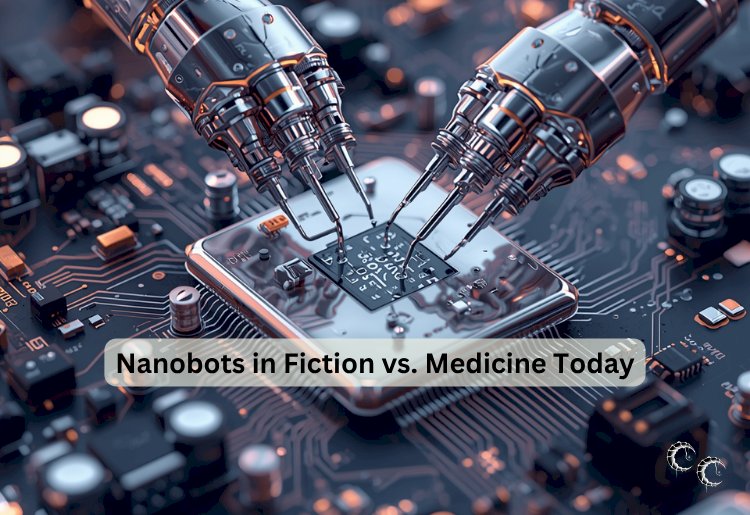
Nanobots have long captured the imagination as tiny machines that can move through the human body, repairing damage, fighting disease, and even enhancing physical abilities from the inside out. In fiction, they often appear as near magical solutions, capable of rebuilding tissue in seconds or eliminating illness with perfect precision. It is an idea that feels both futuristic and strangely plausible. After all, medicine already works on increasingly small scales. So how close are we to anything like nanobots in real life?
To understand that, it helps to first look at what nanobots are supposed to be. In most fictional worlds, they are microscopic robots, often smaller than a single cell, equipped with sensors, power sources, and the ability to make decisions. They travel through the bloodstream, identify problems, and fix them on the spot. It is a compelling vision, but translating that into reality introduces a very different set of challenges.
What Nanotechnology Actually Means Today
In real science, nanotechnology refers to working with materials and systems at the scale of nanometers. A nanometer is one billionth of a meter, which means this field operates at the level of molecules and atoms. At this scale, materials behave differently. They can become more reactive, more flexible, or more efficient in ways that are not seen at larger sizes.
Modern medicine already uses nanotechnology in several ways. Nanoparticles are designed to deliver drugs more precisely to certain parts of the body. Some treatments for cancer, for example, use specially engineered particles that can target tumor cells while reducing damage to healthy tissue. This is not a robot in the traditional sense, but it is a form of controlled, targeted intervention at a very small scale.
The Key Difference Between Nanobots and Nanomedicine
The biggest gap between fiction and reality is autonomy. Fictional nanobots act like independent agents. They sense, decide, and act in real time, often coordinating with each other like a swarm. Real nanotechnology does not work that way.
Most medical nanodevices today are passive or semi active. They are designed with a specific function and respond to certain conditions, such as changes in temperature, acidity, or chemical signals. Once introduced into the body, they follow predictable patterns rather than making complex decisions.
This difference matters because creating true nanobots would require combining several advanced systems into something incredibly small. You would need sensors to detect problems, a way to process information, a power source to keep it running, and a mechanism to move and interact with tissue. Each of these is difficult on its own. Combining them at such a tiny scale is an enormous challenge.
The Power and Control Problem
One of the biggest hurdles in building real nanobots is energy. In fiction, nanobots often run indefinitely or draw power from the body without issue. In reality, providing a reliable power source at the nanoscale is extremely difficult.
Batteries do not shrink well to that size, and alternative methods like harvesting energy from the body are still experimental. Without a consistent energy supply, even the most advanced nanodevice would have limited function and lifespan.
Control is another major issue. Directing millions or billions of tiny machines inside the body requires precise coordination. External control systems, such as magnetic fields or ultrasound, are being explored, but they are still limited in how accurately they can guide microscopic particles through complex biological environments.
Movement Inside the Body
Fiction often shows nanobots moving freely through the bloodstream, navigating with ease to exactly where they are needed. The human body, however, is not a simple or predictable environment.
Blood flow is fast and turbulent. Tissues are dense and varied. The immune system actively looks for and removes foreign objects. Designing something small enough to move efficiently, avoid detection, and reach specific targets without being destroyed is a significant obstacle.
Some experimental approaches use chemical reactions or external fields to guide tiny particles, but these methods are still far from the kind of precise, intentional movement seen in fiction.
What Comes Close Today
While true nanobots do not exist, there are technologies that reflect pieces of the idea. Researchers are developing microscopic devices that can respond to their environment in useful ways. Some can release drugs when they reach a certain type of cell. Others can change shape or behavior based on specific biological signals.
There are also early prototypes of tiny machines that can move in controlled ways under laboratory conditions. These are often powered by chemical reactions or influenced by magnetic fields. They are not yet capable of independent navigation or complex tasks inside the human body, but they show that movement at small scales is possible.
Another promising area is smart drug delivery systems. These systems do not think or move on their own, but they are designed to act with precision, delivering treatment exactly where it is needed and reducing side effects.
Could True Nanobots Ever Exist
The idea of fully autonomous nanobots remains far beyond current capabilities. The challenges are not just technical but also biological. The human body is a highly complex system, and introducing large numbers of artificial devices raises questions about safety, control, and long term effects.
Future breakthroughs in materials science, computing, and bioengineering could bring us closer. Advances in molecular machines and synthetic biology may eventually allow for systems that behave more like the nanobots of fiction. However, if they do become possible, they will likely look and function very differently from what is commonly imagined.
A more realistic future might involve hybrid systems. Instead of tiny robots with full independence, we may see highly specialized particles or devices that perform specific tasks with limited autonomy, guided by external systems or biological cues.
Why the Idea Still Matters
Even if nanobots remain out of reach for now, the concept continues to inspire real progress. The push to work at smaller scales has already transformed medicine in meaningful ways. Treatments are becoming more targeted, less invasive, and more efficient.
The gap between fiction and reality is not a failure of science. It is a reflection of how ambitious the idea truly is. Nanobots represent a vision of perfect precision and control within the human body, and that vision continues to drive innovation.
Final Thoughts
Nanobots in fiction offer a powerful image of what medicine could become. They promise instant healing, flawless intervention, and a level of control that feels almost limitless. In reality, modern medicine is taking slower, more deliberate steps toward similar goals.
True nanobots may not exist today, and they may not look the way fiction suggests even in the future. But the progress being made in nanotechnology and targeted treatments shows that the underlying idea is not entirely out of reach.
The future of medicine may not be filled with swarms of microscopic robots, but it is steadily moving toward something just as remarkable. Precision, adaptability, and the ability to work at the smallest scales are no longer science fiction. They are becoming part of how we understand and treat the human body, one breakthrough at a time.