The Four Giants: Guardians of Termina's Fate
 Cordelia Cross
Feb 22, 2026 12:27
0
Cordelia Cross
Feb 22, 2026 12:27
0
In Majora’s Mask, the apocalypse is not a distant prophecy. It hangs in the sky, visible every moment. The moon looms closer with each passing hour, threatening to crush the world of Termina in three short days.
At the center of this desperate countdown stand the Four Giants, ancient beings bound to the land itself. They are not merely powerful entities. They are the last line of defense between Termina and annihilation.
Understanding the Four Giants means understanding the spiritual backbone of Termina and the deeper themes of loss, friendship, and forgotten promises that define the game.
The Giants in Termina’s Creation Myth
The lore of the Giants is first told by Anju’s grandmother in Clock Town. In this story, the Four Giants once lived among the people of Termina. They were protectors and companions to the land’s inhabitants.
When it came time for them to depart, each Giant traveled to a different corner of the world. Before leaving, they promised the people that they would return if ever called upon in times of great need.
That promise becomes the emotional and narrative foundation of the entire game.
The Giants are not distant gods. They are old friends who left, trusting that their absence would not mean abandonment.
The Four Regions and Their Guardians
Each Giant is tied to one of Termina’s four main regions:
• Woodfall
• Snowhead
• Great Bay
• Ikana Canyon
These regions are not merely geographical divisions. Each is suffering under a curse brought on by the influence of Majora. Rot spreads through Woodfall. Snowhead is locked in endless winter. Great Bay’s waters are poisoned. Ikana Canyon is haunted by restless spirits.
The corruption of each region mirrors the weakening connection between the Giants and the people they once protected.
Only by lifting these curses can the Giants be awakened and reminded of their ancient oath.
The Oath to Order
Central to the Giants’ role is the Oath to Order, a sacred melody that serves as the call for their return. Once Link frees the four regions from their curses, the Giants awaken and respond to this song.
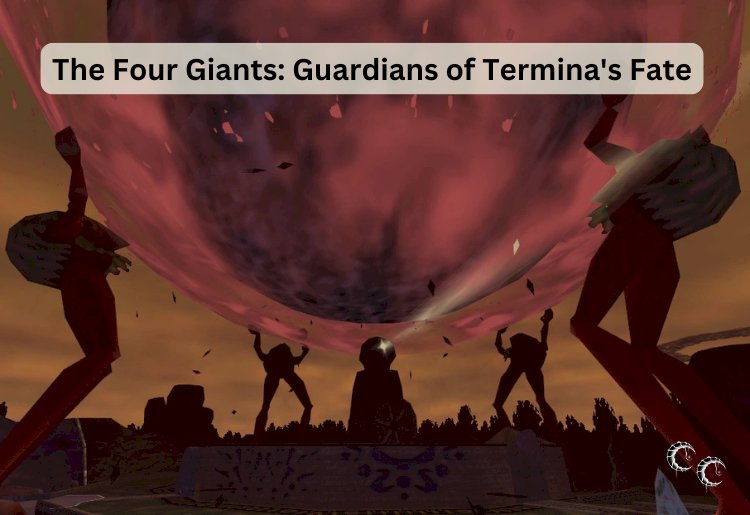
When the moon begins its final descent over Clock Town, Link plays the Oath to Order atop the Clock Tower. One by one, the Giants emerge from the horizons, striding across land and sea to converge beneath the falling moon.
It is one of the most powerful visual moments in the game.
Four colossal figures raise their arms and hold the moon in place, straining against its crushing weight.
They do not destroy it. They simply buy time.
Guardians, Not Saviors
The Giants’ intervention is crucial, but it is not enough to end the threat. They cannot defeat Majora directly. They can only prevent immediate destruction.
This distinction is important.
The Giants represent stability and protection, but they rely on Link to confront the source of chaos within the moon itself. Their strength lies in support and sacrifice rather than direct confrontation.
In that sense, they symbolize guardianship rather than heroism.
They uphold the world so that someone else can save it.
Themes of Separation and Reunion
Majora’s Mask is filled with themes of separation, grief, and longing. Characters are isolated by fear, regret, and time itself.
The Giants’ story mirrors this emotional landscape. They left Termina long ago, trusting that their departure would not break the bond they shared with its people. But when disaster strikes, they answer the call.
Their return is not triumphant in a traditional sense. It is solemn. Heavy. Necessary.
The image of the Giants holding the moon evokes sacrifice and responsibility. They are ancient, patient beings who endure immense strain to protect a world that once knew them personally.
The Giants and Skull Kid
The tragedy deepens when considering Skull Kid.
Long ago, Skull Kid was friends with the Four Giants. When they departed to guard the four regions, he felt abandoned. His loneliness and resentment left him vulnerable to Majora’s influence.
The impending apocalypse is therefore rooted in emotional neglect and misunderstanding. The Giants did not intend to abandon Skull Kid. But in his isolation, he believed they had.
When the Giants appear during the final day, Skull Kid recognizes them. For a brief moment, the story becomes less about world ending catastrophe and more about reconciliation.
The Giants were never truly gone. They were simply waiting to be called.
Symbolism in the Final Stand
The scene of the Giants halting the moon is more than spectacle. It is symbolic resolution.
Throughout the game, Link helps individuals face personal struggles within repeating cycles of time. By freeing each region, he restores balance and reminds its guardian of their promise.
When the Giants unite beneath the moon, it represents unity across division. Four separate corners of the world, once isolated by curse and chaos, stand together in resistance.
It is a visual expression of cooperation against despair.
Guardians of Fate
The Four Giants do not defeat Majora. They do not reverse time. They do not undo suffering.
But without them, there would be no chance at all.
They hold the line.
In a game defined by time slipping away, the Giants give Termina one final moment. A breath. A pause in the inevitable. That pause allows Link to enter the moon and confront Majora directly.
In that sense, the Giants are guardians not just of land, but of possibility.
Conclusion
The Four Giants embody the emotional core of Majora’s Mask. They are ancient protectors tied to the land’s identity. They represent promises kept, bonds restored, and the quiet strength of guardianship.
Their role in the struggle against the falling moon is not simply physical. It is symbolic. They stand as reminders that even in a world facing certain destruction, unity and loyalty can hold back despair long enough for hope to act.
In Termina’s darkest hour, it is not just a hero who rises.
It is four forgotten friends who return to keep their promise.