Retro Gaming Revival: Are Pixelated Worlds Still the Best Escape?
 Cordelia Cross
Feb 27, 2026 01:16
0
Cordelia Cross
Feb 27, 2026 01:16
0
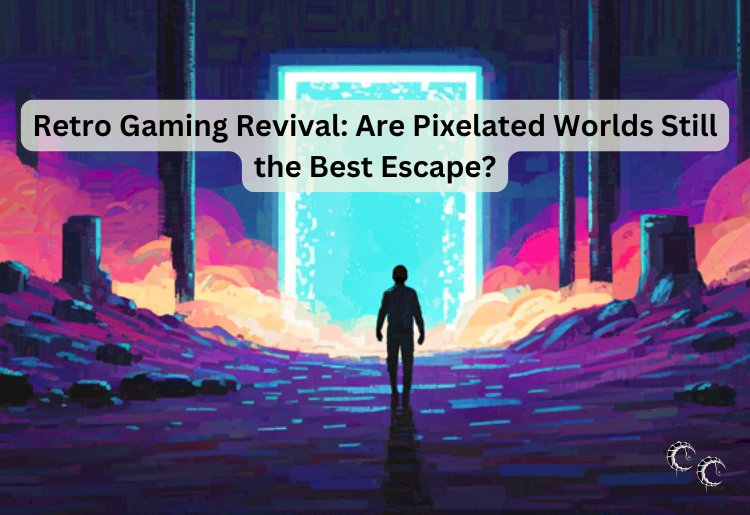
In an era of photorealistic graphics, ray tracing, and massive open worlds, something unexpected has happened. Players keep going back. Back to 16 bit landscapes. Back to chiptune soundtracks. Back to pixelated heroes with square hands and simple faces.
Retro gaming is not just nostalgia anymore. It is a movement.
But the real question is this. Are pixelated worlds still the best escape?
The Comfort of Simplicity
Modern games can be breathtaking. Vast maps. Complex mechanics. Cinematic storytelling.
But with that scale often comes cognitive overload. Skill trees, daily quests, battle passes, live service updates. Playing can sometimes feel like managing a second job.
Retro inspired games strip that away. Movement is direct. Objectives are clear. Controls are tight. The challenge is honest and immediate.
When you boot up something like Super Mario Bros. or The Legend of Zelda: A Link to the Past, you are not buried in systems. You are placed into a focused experience. Jump. Explore. Survive.
That simplicity is not shallow. It is freeing.
Pixel Art as Timeless Design
High resolution graphics age quickly. What looked cutting edge five years ago can already feel dated.
Pixel art, on the other hand, exists in a stylized space. It is not chasing realism. It is embracing abstraction.
Games like Stardew Valley and Celeste prove that pixelated worlds can feel emotionally rich and visually stunning without relying on technical spectacle.
Because pixel art invites imagination, it creates a collaboration between player and game. The mind fills in the gaps. That mental participation can make the world feel more personal and more immersive.
Challenge Without Hand Holding
Retro games built their identity around mastery. Limited lives. Precise jumps. Pattern recognition.
There were fewer tutorials and fewer safety nets. Success came from repetition and improvement.
Modern retro inspired titles carry that spirit forward. Shovel Knight and Dead Cells embrace tight mechanics and meaningful difficulty.
For many players, this kind of challenge feels more rewarding than cinematic progression. You do not just watch your character grow stronger. You grow stronger as a player.
Nostalgia as Emotional Anchor
For some, retro gaming is deeply personal.
The sound of a start up screen from Sonic the Hedgehog or the opening theme of Final Fantasy VI can instantly transport players back to childhood bedrooms, weekend sleepovers, or afternoons at an arcade.
Nostalgia is powerful because it ties gameplay to memory. Pixelated worlds become emotional time machines.
But the revival is not fueled only by older players. Younger audiences who never owned a cartridge console are embracing retro aesthetics. That suggests the appeal goes beyond nostalgia.
Indie Developers and Creative Freedom
The rise of indie development has played a massive role in the retro revival.
Pixel art is more accessible for small teams. It allows developers to focus on gameplay innovation, narrative depth, and unique mechanics without needing blockbuster budgets.
Games like Undertale and Hyper Light Drifter show how minimalist visuals can support deeply emotional and atmospheric experiences.
Retro design has become a creative choice, not a limitation.
Escapism in a Faster World
Modern life is fast. Notifications, streaming content, constant updates.
Pixelated games often feel self contained. They do not demand constant online engagement. They rarely push microtransactions. They allow players to pause and return without missing a limited event.
That slower pace makes them powerful escapes.
A pixel world can feel like a quiet cabin in the woods compared to the bustling metropolis of live service gaming.
Are They the Best Escape?
The answer depends on what you seek.
If you want cinematic realism, expansive multiplayer systems, and cutting edge technology, modern AAA titles deliver that in ways retro games cannot.
But if you want clarity, challenge, creative expression, and emotional simplicity, pixelated worlds still hold unmatched power.
They remind us that immersion is not about graphical fidelity. It is about connection.
The Revival Is Here to Stay
Retro gaming is not a passing trend. It is now woven into the fabric of the industry.
Major studios release retro collections. Indie developers continue to innovate within pixel frameworks. Even modern franchises experiment with throwback modes and visual styles.
The pixel is no longer a relic. It is a statement.
Final Thoughts
Pixelated worlds endure because they focus on what matters most. Strong mechanics. Memorable music. Clear goals. Emotional storytelling.
In a world where games can sometimes feel overwhelming, retro design offers something rare. Space to breathe. Space to master. Space to imagine.
Are pixelated worlds still the best escape?
For many players, the answer is simple.
Yes.