The Shape You Left in the Dark by Cordelia Cross
 Cordelia Cross
Feb 8, 2026 01:28
0
Cordelia Cross
Feb 8, 2026 01:28
0
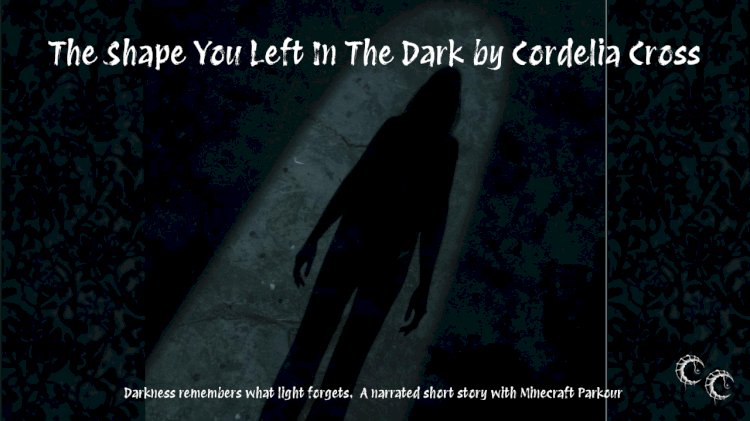
The first time you noticed your shadow wasn’t yours anymore, it was because it hesitated.
You were crossing Main Street just after sunset, the sky bruised purple and gold, storefront lights flickering awake. Your shadow stretched ahead of you on the pavement like it always had, long and thin and obedient. Then it slowed.
You kept walking.
It did not.
For half a second, it lagged behind, pooling near the curb like spilled ink. When you stopped, it snapped back into place, seamless and innocent. If anyone had been watching, they would have seen nothing unusual.
Your heart did not believe that.
In this town, everyone grew up learning the rules. Not from books or warnings, but from watching what happened to other people.
Love left marks here.
Not figurative ones. Not metaphors. Real ones.
When lovers broke each other badly enough, their shadows detached. Not completely. Never completely. They stayed tethered, thin and aching, like something cut but not severed. Most of them clung to their owners, warped and restless, dragging behind like an accusation.
Some wandered.
You had always assumed that only happened to people who deserved it.
The town had a name for shadows that strayed. They called them remnants. They said they fed on unresolved feeling. They said they could not be reasoned with. They said if your shadow ever chose someone else, it meant you had hollowed yourself out too deeply to keep it.
You laughed at those stories once.
That was before your shadow stopped touching your feet.
You walked home faster, boots striking pavement too loud, too sharp. The houses leaned inward as you passed, porches sagging with memory, windows glowing with lives you were not part of. You could feel the space behind you where your shadow should have been heavier, denser.
At your door, you turned quickly.
Your shadow lagged again.
This time, it did not pretend.
It stretched toward the house across the street, thinning, reaching, its edges unraveling like breath in cold air. For one terrifying moment, it did not resemble you at all. It looked taller. Narrower. Hungry.
Then a figure moved inside that house, crossing in front of a window, and your shadow snapped back to your heels like it had been caught doing something unforgivable.
You stood very still.
Across the street lived someone new.
You did not know their name yet. They had arrived quietly a few weeks ago, hauling boxes in the rain, head down, avoiding conversation. You had noticed them only because your chest had done something strange when they smiled at you once, brief and apologetic, like they were already sorry for existing.
You told yourself it meant nothing.
Your shadow disagreed.
Inside your house, the lights felt wrong. Too bright. Too empty. You shut the door and leaned against it, breathing hard. The floorboards creaked under your weight, familiar and disappointed.
“Don’t,” you said aloud.
Your shadow lay pooled at your feet, darker than it used to be, edges soft and unsettled.
It did not respond.
You went to the kitchen, turned on the sink, watched water run until your thoughts thinned out. When you glanced down again, your shadow stretched farther than it should have, its fingers brushing the opposite wall.
That had never happened before.
You thought of the last person you loved.
You thought of the way it ended, not explosively, not dramatically, but with quiet damage. Words chosen carefully to hurt just enough. Silences that lasted too long. The moment you realized neither of you was fighting anymore because fighting meant hope.
The day they left, your shadow had screamed.
Not audibly. Shadows don’t have voices. But it had thrashed, twisted, clung to the doorway like it could anchor itself there. It had taken weeks to settle again. Months before it stopped tugging toward places you could no longer bear to go.
You thought that was healing.
Now you understood it had just been waiting.
That night, you dreamed of standing in the street, watching your shadow peel itself away inch by inch. It stretched across the pavement, slipping beneath the door of the house across from yours like smoke.
When you woke, your feet were cold.
Your shadow was gone.
Not missing entirely. You could still see a faint smear beneath you, thin as pencil shading, barely attached. But most of it was absent, pulled elsewhere by a gravity you could not feel but somehow understood.
Panic rose fast and ungraceful.
You threw on clothes and went outside barefoot, the dawn still pale and unsure. Across the street, the other house was dark. No movement. No sound.
Your shadow stretched toward it anyway.
“Come back,” you whispered.
It did not.
In this town, when shadows chose someone else, there was only one thing to do.
You had to follow it.
You crossed the street slowly, as if sudden movement might tear what little remained of your shadow clean off.
The pavement was cold. The morning smelled like wet leaves and old regret. Your shadow strained ahead of you, thinning as it reached the edge of the other yard, slipping beneath the porch light even though the sun was already climbing. It did not wait to see if you were brave enough to follow.
You were.
The house looked ordinary up close. Too ordinary for the way your chest tightened in its presence. Pale siding. A porch that creaked under your weight. Wind chimes hanging by the door, silent, as if listening instead of singing.
You raised your hand.
Before you could knock, the door opened.
They stood there barefoot, wearing an oversized sweater that looked like it had already learned their shape. Their hair was still sleep rumpled. Their eyes met yours with the precise expression of someone who has already been expecting you.
“Oh,” they said quietly. “It’s you.”
Your shadow surged forward, pooling at their feet like it had finally found its way home.
They looked down.
So did you.
Their shadow was wrong too.
It did not match them perfectly. It was heavier, darker in places where it should have been thin. It twitched when yours touched it, a subtle recoil followed by something dangerously close to relief.
Your throat closed.
“You can see them,” you said.
They nodded once. “Most of us can. Here.”
The word us landed badly.
“You didn’t knock,” they added, not unkindly. “But shadows never do.”
You laughed weakly. “I’m sorry. Mine has been misbehaving.”
Their mouth curved into something that was not quite a smile. “So has mine.”
They stepped aside, opening the door wider.
You hesitated only a second before stepping inside.
The house smelled like fresh paint and old books. Unpacked boxes lined the walls, labeled in careful handwriting. The living room was bare except for a couch and a single lamp, its light casting long shadows that tangled together on the floor like nervous hands.
Your shadow did not return to you.
It lingered near them, stretching, reshaping itself to fit the space between you.
They closed the door softly.
“It started a few nights ago,” they said. “Your shadow. I thought I was imagining it.”
“What did you think it was,” you asked.
“A ghost,” they said. “Or guilt. Or loneliness taking a new form.”
They looked at you then, really looked, as if comparing you to something they had already memorized in silhouette.
“You look tired,” they added.
“So do you.”
They nodded again. “That tracks.”
You stood awkwardly in the center of the room, unsure where to put your hands, your weight, your eyes. Without your shadow anchoring you, everything felt slightly unreal, like you were floating a few inches above yourself.
“I should explain,” you said.
They tilted their head. “I already know why you’re here.”
Your pulse stumbled. “You do.”
“Yes,” they said. “Because something you lost thinks it belongs with something I lost.”
Their shadow shifted at their feet, brushing against yours again. This time, neither pulled away.
You swallowed. “That doesn’t mean we belong to each other.”
“No,” they agreed. “It doesn’t.”
The honesty startled you more than resistance would have.
They gestured toward the couch. You sat. After a moment, they did too, careful to leave space between you. The shadows ignored that courtesy completely, overlapping, darkening where they touched.
“When I moved here,” they said, “I thought I’d outrun it.”
“Outrun what.”
“The person who broke me,” they replied. “Or the version of myself I became afterward. I wasn’t picky.”
You watched the way their fingers twisted together in their lap. Familiar. Too familiar.
“Did it follow you,” you asked.
They shook their head. “No. It stayed. That’s worse.”
Your shadow pulsed faintly, as if offended on their behalf.
“And now,” they continued, “something new has started paying attention to me. Something that doesn’t hurt in the same way.”
You flinched.
“I didn’t invite it,” they said quickly. “I swear. I didn’t even notice it at first. It just started waiting.”
Your chest ached with a sharp, unreasonable jealousy. Not of them. Of your shadow. Of the part of you that had found a way to move forward without asking permission.
“What happens now,” you asked.
They leaned back, staring at the ceiling. “That depends.”
“On what.”
“On whether you’re here to take it back,” they said, “or to understand why it left.”
The shadows thickened, edges blurring together, inseparable.
You realized with a quiet, terrible clarity that this was not a haunting.
It was a courtship.
And you were already losing.
You did not answer right away.
You watched the shadows instead.
They had stopped behaving like reflections entirely. Where they overlapped, they deepened, knitting together in places that felt intentional. Your shadow had learned the curve of their ankle. Their shadow leaned into the familiar slope of your calf as if testing a memory it did not own.
“I didn’t know shadows could choose,” you said finally.
“They don’t,” they replied. “Not really. They follow momentum.”
“That feels worse.”
They smiled at that, small and tired. “It is.”
You shifted on the couch. The space you left between you felt artificial now, a courtesy neither of you believed in. When your knee brushed theirs, neither of you pulled away. The shadows reacted instantly, darkening, tightening, like something exhaling after holding its breath too long.
They noticed.
“So,” they said softly, “that’s what it feels like.”
You swallowed. “I’m sorry.”
They glanced at you. “For what.”
“For bringing my unfinished damage into your house.”
They considered that. “You didn’t bring it. It arrived on its own. Like mine did, once.”
The room felt heavier as they spoke. The lamp flickered, not threatening, just uncertain. You had the sense the house was listening, the way houses in this town always did when something emotional dared to unfold inside them.
“Tell me about them,” you said before you could stop yourself.
They did not ask who.
Their fingers tightened together. “We loved each other loudly at first. Everyone knew. Everyone expected it to last. That was probably the problem.”
You nodded. You understood loud love. You understood how quickly it attracted expectations like mold.
“They didn’t mean to hollow me out,” they continued. “They just kept taking pieces, assuming I had more. I let them.”
Your shadow twitched.
“When it ended,” they said, “they left town. Their shadow stayed. Mine tried to follow and couldn’t. It tore something.”
They gestured vaguely toward their feet. Their shadow shuddered, edges fraying for just a second before smoothing again against yours.
“I thought if I moved somewhere new,” they said, “I could start over. But you can’t start over when part of you refuses to stop loving.”
Your chest tightened. “You think that’s what this is.”
They met your eyes. “What do you think.”
You looked away. At the floor. At the place where your shadow should have been solid and loyal. It was neither.
“I think,” you said slowly, “that I’ve always mistaken escape for growth.”
They laughed quietly. “That sounds expensive.”
“It has been.”
Silence settled, not awkward, just full. Outside, a car passed. Somewhere down the street, a door slammed. Ordinary sounds, grounding and indifferent.
“I didn’t come to claim you,” you said at last. “Or them.”
They raised an eyebrow. “No.”
“I came because something I broke started trying to heal without me,” you admitted. “And I panicked.”
Their expression softened in a way that hurt more than judgment would have.
“That’s honest,” they said.
“I’m trying to be.”
They leaned back, studying the ceiling again. “Do you know what shadows want.”
You shook your head.
“Continuation,” they said. “Not repetition. Not safety. Continuation.”
The word settled between you like a challenge.
“Yours saw me and thought I was a place it could keep becoming,” they continued. “Mine felt it and remembered how.”
Your shadow pulsed, as if in agreement.
“And what if I can’t offer that,” you asked quietly. “What if I just bring more leaving.”
They turned toward you fully now. Close enough that you could see the faint shadows under their eyes. Close enough that the air changed.
“Then it will leave you,” they said gently. “Again. But not for me.”
Your breath caught. “For who.”
“For whoever you become next,” they replied.
The shadows stilled.
You realized then that this was not about rivalry or betrayal. This was about evolution. About the parts of you that had grown tired of waiting for permission.
“May I,” they asked, gesturing toward your hand.
You nodded.
Their fingers brushed yours, tentative, respectful. The contact sent a ripple through both shadows, darkening them into a single pooled shape that looked almost whole.
Almost.
They inhaled sharply. “It hurts less than I thought.”
“It does,” you agreed. “That’s how it tricks you.”
They laughed, breathy and surprised, and for a moment the room felt lighter.
Then their expression shifted.
“There’s something you should know,” they said.
Your stomach dropped. “What.”
They hesitated. The shadows trembled.
“If your shadow fully detaches,” they said, “it doesn’t just choose someone else.”
“It chooses a future that doesn’t include you.”
The words landed like a verdict.
“And once it does,” they continued, “you can’t follow it anymore.”
You looked down at the place where your shadow clung by the thinnest possible connection.
“How much time do I have,” you asked.
They squeezed your hand once, gentle and devastating.
“Not much.”
The town seemed to sense the countdown.
By evening, the air had thickened into something watchful. Streetlights flickered on too early, casting long shadows that bent and stretched in ways that made people hurry their steps. You walked beside them back toward your house, close enough that your arms brushed, far enough that neither of you pretended it was accidental.
Your shadow dragged behind you, resisting. Their shadow kept pace easily, confident in its gravity.
“This is where I stop,” they said when you reached the edge of your yard.
You nodded. You had known they would not cross with you. Some thresholds were not meant to be shared.
“I don’t want to steal it,” they added. “If that helps.”
You believed them. That was the worst part.
“I don’t know how to keep it,” you replied.
They looked down at the ground between you. The shadows were tangled now, indistinct, impossible to tell where one ended and the other began.
“Then maybe,” they said carefully, “you don’t.”
The thought hollowed you out. “You’re asking me to let it go.”
“I’m asking you to let it choose,” they said. “Those aren’t the same thing.”
You wanted to argue. To insist that love was possession, that loss could be negotiated, that you deserved some say in what pieces of you walked away. But the town had taught you better than that.
You had seen what happened to people who tried to chain their shadows.
They turned brittle. Sharp. Half present. Their shadows stayed, but they became cruel things, warped by resentment and fear. No one loved them long after that.
“Come inside,” you said suddenly.
They hesitated. “I thought—”
“Please,” you interrupted. “Just for a little while.”
They searched your face, then nodded.
Your house felt different with them in it. Smaller. Warmer. The walls seemed to lean in, curious. When you turned on a lamp, the light revealed dust motes spinning like constellations you had never bothered to learn.
You sat at opposite ends of the couch this time. It felt ceremonial.
Your shadow strained toward them, thinning further, stretching like taffy pulled too far. The connection to your feet was barely visible now, a faint gray thread trembling under the effort.
“If it leaves,” you said, “what happens to me.”
They did not answer right away.
“You’ll still cast one,” they said eventually. “It just won’t remember who you were before.”
The idea terrified you more than emptiness.
“I don’t want to forget,” you whispered.
They leaned forward, elbows on their knees. “Then don’t.”
You frowned. “You just said—”
“I said your shadow might,” they corrected. “Not you.”
The distinction mattered more than you expected.
“You think I can keep the memory,” you said.
“I think,” they replied, “that you’ve been outsourcing it.”
The words hit hard.
“You let your shadow carry the weight of feeling,” they continued. “Of wanting. Of staying attached. You walked away and told yourself you were fine because it was still hurting for you.”
You stared at the floor. They were not wrong.
“If it leaves,” they said softly, “you’ll have to feel things directly again.”
Fear bloomed. Not of pain, but of presence.
The shadows thickened suddenly, surging together as if sensing the conversation turning. The gray thread at your feet stretched, thinner than breath.
You stood.
Your shadow hesitated, then surged toward them again, urgent now, reckless. It wrapped around their shadow fully, darkening into something almost solid.
They gasped, clutching the arm of the couch. “It’s pulling.”
“I know,” you said.
The thread snapped.
Not violently. Not with drama. Just a quiet release, like something finally allowed to stop holding.
You staggered as if you had lost balance, though nothing physical had changed. The room felt sharper. Louder. Realer.
Across from you, their shadow deepened, lengthened, settling around their feet like it had always belonged there.
Your shadow did not return.
You stood in the sudden absence, heart pounding, hands clenched, waiting for devastation.
It did not come.
What came instead was sensation. Raw and immediate. The ache in your chest was no longer filtered through darkness on the floor. It lived inside you now, bright and unbearable and honest.
They looked at you, eyes wide. “Are you okay.”
You swallowed. “I don’t know. But I’m here.”
The town outside exhaled.
Somewhere down the street, a window brightened. A shadow shifted back into place.
This was not the end yet.
But it was the point of no return.
The town slept lightly that night, as if afraid to miss something.
You did not ask them to stay. You did not ask them to leave. You sat together in the quiet aftermath, the air still vibrating with what had been severed. Without your shadow, the light felt harsher, less forgiving. Every movement belonged wholly to you now. There was no echo to soften it.
“I should go,” they said eventually.
You nodded. If you spoke, it would come out wrong.
They stood, pausing near the door, their shadow steady and complete at their feet. It no longer reached for you. That hurt more than when it had.
“Thank you,” they said.
“For what.”
“For letting it choose,” they replied. “Most people don’t.”
You managed a small smile. “I’m tired of pretending ownership is the same thing as love.”
Their eyes softened. “That’s how it starts.”
They left quietly.
The door closed with a finality that did not feel cruel, just exact.
You stood alone in your living room, light pooling where your shadow should have been. The absence was not empty. It was loud. Your body thrummed with unfiltered emotion, every regret and longing unmediated.
You did not sleep.
At dawn, you walked through town.
People noticed something different immediately. Not consciously. They lingered when they spoke to you. Their eyes held yours a moment longer. Children stared openly. Dogs whined and leaned toward you, unsettled.
A woman at the café whispered, “They lost theirs.”
You did not correct her.
Without your shadow, you felt exposed, but also undeniable. Every feeling landed directly. The ache for what you had lost. The warmth for what you had allowed. The grief was sharper, but so was the hope, thin and dangerous and alive.
Across the street, you saw them once more.
They were laughing with someone. Not romantically. Not yet. Their shadow behaved normally now, loyal and quiet. Whole.
They caught your eye.
For a moment, something passed between you. Not ownership. Not promise. Recognition.
They lifted a hand in a small wave.
You returned it.
When you turned away, you noticed something strange on the pavement ahead of you.
A faint outline. Not a shadow, not yet. More like a suggestion. A soft darkening where your feet met the ground, hesitant and new.
You stopped.
The shape did not flee.
It waited.
Not the old one. Not the remnant of who you had been. This one was thinner, uncertain, but responsive. When you shifted your weight, it followed. When you stepped forward, it came with you.
You laughed, breath catching.
In this town, shadows left when hearts broke.
But sometimes, when someone finally stayed with themselves, something new learned how to follow.
You walked on, whole in a way you had never been before, casting a shadow that had never loved anyone but you.