The Genetic Blueprint of The Last of Us Cordyceps Fungus and Real Mutations
 Cordelia Cross
Feb 20, 2026 03:32
0
Cordelia Cross
Feb 20, 2026 03:32
0
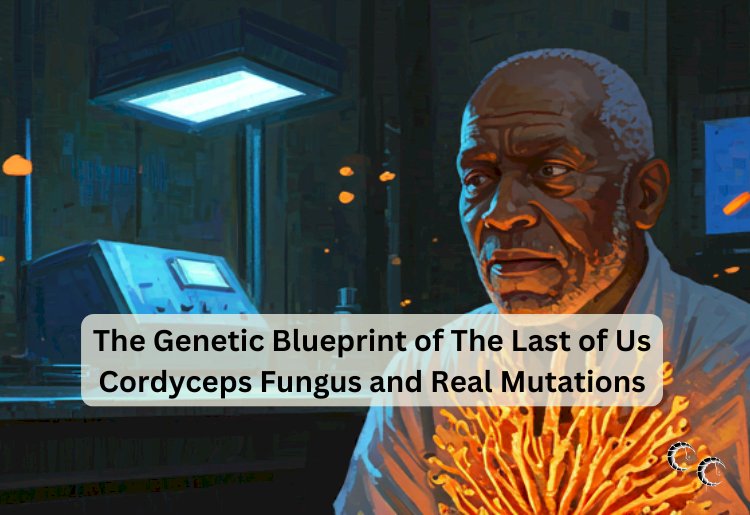
Few fictional pandemics feel as disturbingly plausible as the one depicted in The Last of Us. The idea that a real fungus could evolve to infect humans taps into a deep biological fear. After all, the inspiration is not imaginary. It is rooted in a real parasitic species: Ophiocordyceps unilateralis.
But how far would evolution have to go for an insect infecting fungus to become a human infecting neurological nightmare? Let us separate science from fiction and examine the genetic barriers that stand between reality and apocalypse.
The Real Cordyceps: A Specialist Parasite
Ophiocordyceps unilateralis infects ants. Once inside the host, it releases compounds that alter behavior, compelling the ant to climb vegetation and clamp down before dying. The fungus then grows from the corpse and disperses spores to infect others.
This process is precise. The fungus is highly specialized for one host type. It evolved over millions of years to exploit insect physiology, immune systems, and neural architecture.
The jump from ant to human would require enormous evolutionary change. Not small tweaks. Fundamental biological redesign.
Barrier One: Temperature Adaptation
Most fungi cannot survive at human body temperature, approximately 37 degrees Celsius. This is one of the reasons fungal pandemics in humans are relatively rare compared to bacterial or viral outbreaks. Our internal heat acts as a natural defense barrier.
For a cordyceps like organism to infect humans, it would need mutations in genes controlling heat shock proteins and membrane stability. These proteins help cells maintain structure and function under thermal stress.
Some fungi are already evolving greater heat tolerance due to climate change. For example, Candida auris has demonstrated unusual temperature resilience. However, adapting from insect optimal temperatures to sustained human body temperature would require multiple coordinated genetic shifts.
In evolutionary terms, that is possible. In short time scales, it is extremely unlikely without strong environmental pressure.
Barrier Two: Immune System Evasion
Ant immune systems are simple compared to ours. Humans possess layered immune defenses including innate responses, adaptive immunity, T cells, B cells, and antibody memory.
To infect humans successfully, a cordyceps derived organism would need to:
• Avoid early detection by macrophages
• Suppress inflammatory responses
• Resist antifungal peptides
• Adapt to human cellular receptors
This would likely require changes in surface proteins and secreted enzymes, allowing the fungus to mimic human molecular patterns or hide from immune surveillance.
Fungi such as Cryptococcus neoformans already demonstrate some immune evasion strategies, especially in immunocompromised individuals. But broad scale immune bypass in healthy populations would demand extensive evolutionary refinement.
Barrier Three: Neurological Hijacking
The most terrifying element of the fictional outbreak is behavioral control. In ants, Ophiocordyceps manipulates movement through chemical signaling and muscular control rather than true mind control. It does not think for the ant. It disrupts pathways that influence behavior.
Humans, however, possess vastly more complex nervous systems.
To replicate similar behavioral manipulation, a fungal pathogen would need to:
• Cross the blood brain barrier
• Interact with neurotransmitter systems such as dopamine or serotonin
• Modulate motor control regions
• Survive within neural tissue
Certain fungi can infect the brain, causing meningitis or encephalitis. However, controlled, coordinated behavioral manipulation on the scale seen in fiction would require a combination of neurotoxins, gene expression targeting, and possibly symbiotic viral components.
This level of precision would likely require horizontal gene transfer or hybridization with other microorganisms to evolve entirely new capabilities.
Could Horizontal Gene Transfer Bridge the Gap
Fungi are capable of horizontal gene transfer, meaning they can acquire genetic material from unrelated organisms. If a cordyceps like species acquired genes from heat tolerant fungi or neurotropic pathogens, it could theoretically accelerate adaptation.
However, gene acquisition alone does not guarantee functional integration. Genes must be properly regulated and expressed within the organism’s biology. Evolution does not simply stack abilities like building blocks. Each mutation must confer survival advantage.
A fungus attempting to infect humans would face repeated evolutionary bottlenecks. Most mutations would fail.
From Parasitic Cycle to Global Catastrophe
For a global outbreak to occur, several unlikely factors would need to align:
• Rapid human to human transmission
• Airborne spore stability in diverse climates
• Long incubation periods allowing spread
• Limited early immune detection
In reality, fungal infections tend to spread through environmental exposure rather than aggressive person to person contagion. Transforming a niche insect parasite into a pandemic capable human pathogen would demand a radical shift in transmission strategy.
In fiction, this leap happens quickly. In biology, such a shift would require evolutionary timescales or extreme ecological disruption.
Climate Change and Emerging Fungal Threats
While a Last of Us scenario remains highly improbable, the broader concern of fungal adaptation is real.
As global temperatures rise, fungi capable of surviving higher heat may become more common. This reduces one of humanity’s natural protective barriers. Increased global travel and habitat disruption also create new opportunities for pathogens to cross species boundaries.
Emerging fungal threats are scientifically plausible. Complete neurological takeover is far less so.
Where Science Ends and Horror Begins
The brilliance of The Last of Us lies in grounding horror in something real. Ophiocordyceps exists. Fungi do manipulate hosts. Climate change does influence pathogen evolution.
But bridging the genetic gap from insect parasite to human mind controlling superorganism requires coordinated mutations across temperature tolerance, immune evasion, neural interaction, and transmission strategy.
That is not impossible in the abstract sense. Evolution can produce astonishing outcomes.
It is, however, extraordinarily unlikely within human timeframes without unprecedented environmental pressures and biological convergence.
Final Thoughts
The real genetic blueprint of cordyceps tells a story of specialization, not universality. It is a master of ants, not a generalist predator of mammals.
To transform into the fungal nightmare of fiction, it would need to rewrite fundamental aspects of its biology. Heat resistance, immune stealth, neurological access, and pandemic transmission would all require precise and advantageous mutations.
The science reminds us of both nature’s limits and its creativity.
The apocalypse imagined in The Last of Us is compelling because it feels close to reality. But for now, the genetic barriers between ants and humans remain vast.