Minecraft and AI: What If Hostile Mobs Learned and Adapted to Players?
 Cordelia Cross
Jan 19, 2026 12:16
0
Cordelia Cross
Jan 19, 2026 12:16
0
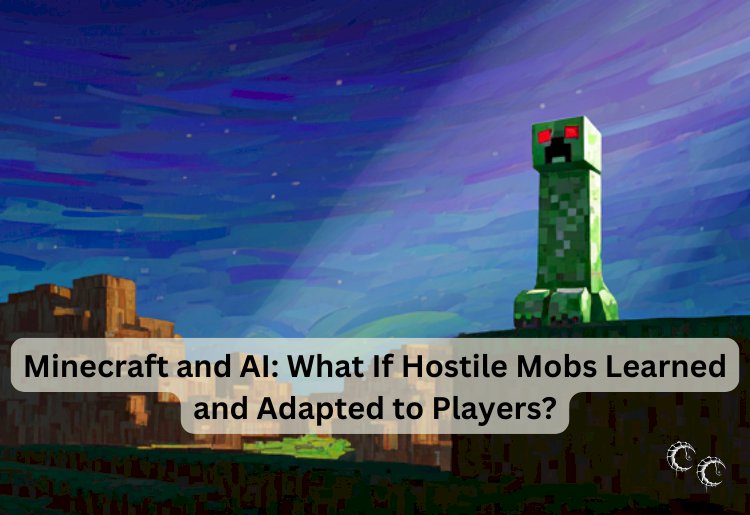
Minecraft has always thrived on a balance between creativity and danger. Players build, explore, and experiment while hostile mobs provide tension and challenge. Zombies wander at night, skeletons fire arrows from afar, and creepers punish inattention with explosive consequences. Yet these enemies behave in predictable ways. Once players understand their patterns, survival becomes routine. But what if that changed? What if hostile mobs could learn from players and adapt their behavior over time?
The Current State of Minecraft Mobs
Hostile mobs in Minecraft operate on simple behavioral rules. They react to proximity, light levels, and basic pathfinding. This simplicity is intentional. It keeps the game accessible and ensures that challenges remain fair and readable. Players can learn quickly and feel rewarded for mastering the environment.
However, predictability also reduces long term tension. Experienced players know when mobs spawn, how they move, and how to defeat them efficiently. The danger shifts from survival to resource management. Adaptive artificial intelligence could dramatically change that balance.
What Adaptive AI Could Look Like
Adaptive mobs would observe player behavior and adjust accordingly. If a player relies heavily on melee combat, zombies might begin to swarm more aggressively or approach from multiple angles. If a player favors ranged attacks, skeletons might seek cover or retreat to maintain distance.
Creepers could learn common building habits, waiting near doorways or hiding behind structures where players feel safe. Spiders might adapt to vertical builds, choosing ambush points near ladders or cliffs. Each encounter would feel less scripted and more reactive.
Learning From Player Patterns
One of the most interesting possibilities is pattern recognition. If mobs tracked repeated behaviors, such as preferred escape routes or frequently used bases, they could respond more intelligently. A player who always retreats to the same shelter might find enemies lingering nearby or cutting off access points.
This does not require human level intelligence. Simple data tracking and conditional behavior could create the illusion of learning. The result would be a world that feels aware of the player rather than merely populated by obstacles.
Increased Immersion and Tension
Adaptive enemies would heighten immersion. Players would no longer feel like the only intelligent presence in the world. Survival would demand creativity, flexibility, and situational awareness. Each night could feel different, even in familiar territory.
Tension would increase naturally. Instead of memorizing solutions, players would need to experiment and adapt. This aligns with the core spirit of Minecraft, where problem solving and creativity are central to the experience.
Balancing Challenge and Fairness
The greatest challenge of adaptive AI is balance. Minecraft appeals to a wide range of players, from casual builders to hardcore survival enthusiasts. Intelligent mobs could easily become overwhelming if not carefully tuned.
One solution would be difficulty scaling tied to player progression. New players would face simple behaviors, while advanced worlds could unlock adaptive traits gradually. Another option would be player controlled settings, allowing individuals to choose how intelligent and reactive hostile mobs become.
Impact on Building and Strategy
If mobs learned from players, building itself would become more strategic. Bases would need multiple exits, varied layouts, and defensive creativity. Trap designs might need to change regularly to remain effective. Static solutions would lose reliability.
This could breathe new life into survival gameplay. Builders would think not only about aesthetics but also about unpredictability and resilience. Every structure would tell a story of adaptation rather than permanence.
Multiplayer Implications
In multiplayer worlds, adaptive mobs could respond to group behavior. Large bases might attract coordinated attacks, while heavily traveled paths could become more dangerous over time. Players might need to work together not just against mobs, but against the consequences of their own habits.
This shared challenge could strengthen cooperation and storytelling within servers, making the world feel alive and responsive to collective actions.
The Risks of Too Much Intelligence
While adaptive AI sounds exciting, there is a risk of losing Minecraft’s charm. The game thrives on simplicity, approachability, and a sense of calm alongside danger. Overly intelligent enemies could make the world feel stressful rather than inviting.
The key would be subtlety. Adaptation should feel organic and surprising, not punishing or unfair. The goal is to enhance curiosity and engagement, not to turn survival into constant anxiety.
A New Kind of Survival Experience
Adaptive hostile mobs would transform Minecraft from a game of learned patterns into a game of evolving relationships between player and world. Survival would become a dialogue rather than a checklist. Players would feel seen, challenged, and occasionally outsmarted.
This evolution would not replace creativity; it would complement it. By making danger more dynamic, Minecraft could offer deeper immersion while preserving its core identity as a sandbox of endless possibility.
Conclusion
The idea of hostile mobs that learn and adapt opens fascinating possibilities for Minecraft’s future. It challenges players to think differently, build smarter, and remain flexible in a world that responds to their actions. While careful balance would be essential, adaptive AI could renew the sense of wonder and unpredictability that first made Minecraft so compelling.
A world that learns alongside the player is not just more dangerous. It is more alive.