Minecraft's Real-World Impact: Building Sustainable Communities Block by Block
 Cordelia Cross
Feb 4, 2026 01:40
0
Cordelia Cross
Feb 4, 2026 01:40
0
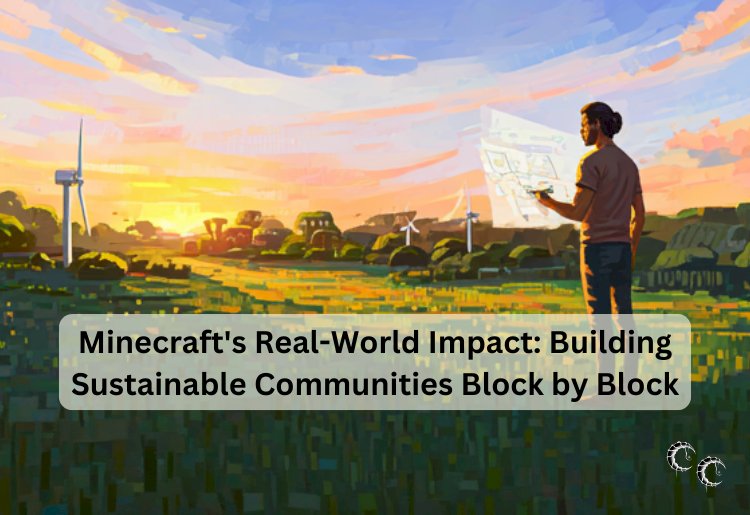
Minecraft started as a simple sandbox game where players punched trees, built shelters, and survived the night. Over time, it became something much bigger. Today, Minecraft is being used in classrooms, city planning conversations, community projects, and even sustainability education. It is proof that a game made of blocks can influence how people think about the real world, especially when it comes to building stronger, greener communities.
Why Minecraft Is So Powerful in the Real World
Minecraft works because it removes the fear of failure. In real life, designing a neighborhood, a farm, or a clean energy system comes with budgets, rules, and consequences. In Minecraft, you can test ideas instantly. You can build a solar powered town, realize the layout is inefficient, and redesign it in minutes.
This freedom makes Minecraft an ideal tool for learning. It turns sustainability from an abstract concept into something you can actually see, build, and improve.
Teaching Sustainability Without Making It Feel Like Homework
Sustainability education often struggles because it can feel too big or too distant. Climate change, resource management, and urban planning are massive topics. Minecraft breaks those topics down into hands-on experiences.
Instead of reading about deforestation, players can experience it by clearing a forest and watching how the landscape changes. Instead of hearing about renewable energy, players can design towns that depend on wind, water, or smart resource systems.
It becomes less about memorizing facts and more about understanding cause and effect.
Resource Management as a Built-In Lesson
One of the most underrated sustainability lessons in Minecraft is how naturally it teaches resource management.
Players learn quickly that resources are not infinite. Wood runs out if you keep cutting without replanting. Food takes effort to produce. Mining too aggressively can create dangerous environments. Even building large projects forces players to think about efficiency.
These small decisions mirror real life. Minecraft encourages long-term thinking, which is one of the core skills behind sustainable living.
Minecraft and the Future of City Design
Minecraft has also become a tool for visualizing communities and planning spaces.
In the real world, many people struggle to understand blueprints or architectural drawings. Minecraft makes planning more accessible because anyone can walk through a virtual version of a neighborhood and understand it immediately.
This is especially powerful for community involvement. People can explore proposed changes, suggest improvements, and feel like part of the process. Instead of city planning being something that happens behind closed doors, Minecraft opens the door for creativity and collaboration.
Building Empathy Through Shared Spaces
Sustainable communities are not just about solar panels and recycling. They are also about people. They are about accessibility, safety, shared resources, and designing spaces that help humans thrive.
Minecraft encourages this by making community building social. Players work together, divide tasks, and build systems that benefit everyone.
Even something as simple as building a shared farm teaches the value of cooperation and mutual support. Those lessons matter in the real world, where sustainability depends heavily on community effort.
Eco-Friendly Design Ideas That Minecraft Encourages
Minecraft makes it easy to explore concepts that are becoming more important in modern living, such as:
Passive housing layouts that reduce energy needs
Community gardens and local food systems
Walkable towns instead of car centered layouts
Water management systems using canals, reservoirs, and green spaces
Compact building design that reduces wasted land
Shared public spaces that improve mental health and connection
Players might not label these ideas as sustainable architecture, but they are practicing the same principles.
Minecraft as a Gateway to Real Skills
For many players, Minecraft becomes the first step into real careers and real interests.
A child who builds eco cities might grow up curious about architecture, environmental science, civil engineering, or renewable energy. A teenager who designs public transportation routes in Minecraft might become interested in urban planning. A student who learns about farming systems in the game might start thinking differently about food supply and sustainability.
Minecraft does not just teach ideas. It can spark identity and direction.
Why “Block by Block” Matters
Sustainability is often presented like a huge mountain people have to climb. Minecraft flips that narrative. It shows that big change can start with small choices. One block at a time. One design improvement at a time. One community project at a time.
This mindset is one of the most valuable takeaways Minecraft offers. It trains people to think in systems, build patiently, and keep improving.
A Game That Quietly Changed the World
Minecraft is more than entertainment. It is a creative tool that helps people understand the world and imagine better versions of it. It teaches sustainability in a way that feels natural, fun, and empowering.
In a time when the world needs more problem solvers, more collaboration, and more sustainable thinking, Minecraft is doing something rare. It is making people excited to build a future worth living in.