D&D’s Undead Biology: What Makes Zombies Move?
 Cordelia Cross
Sep 22, 2025 04:37
0
Cordelia Cross
Sep 22, 2025 04:37
0
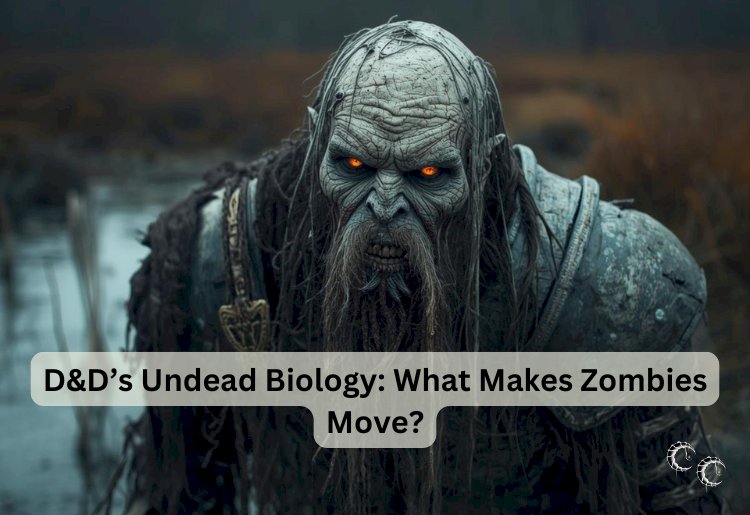
Zombies are some of the most iconic creatures in Dungeons & Dragons, shuffling relentlessly through dungeons, graveyards, and battlefields. Their slow, relentless motion and uncanny resilience make them terrifying foes and fascinating subjects for speculation. While fantasy treats them as magical constructs animated by necromancy, imagining them through a biological lens opens intriguing questions: what drives their movement, what sustains their “life,” and how could such creatures function in a real-world context?
At first glance, zombies defy basic biological rules. Dead tissue lacks circulation, neurons degrade rapidly, and muscles stiffen without energy. Yet, if we approach zombies as a thought experiment, we can imagine systems that allow movement without conventional life. Their muscles might be reanimated through magical enzymatic reactions or biochemical substitutes that mimic ATP, the energy molecule living cells use. This could allow contraction and relaxation of muscles long after natural death, producing the characteristic shuffling gait.
The nervous system of a zombie presents another puzzle. In living organisms, motion requires a central nervous system to coordinate signals between the brain, spinal cord, and muscles. In zombies, higher cognitive functions are absent, yet basic locomotion persists. One explanation might be a simplified neural network, magically sustained, that prioritizes essential motor patterns: walking, grasping, and biting. Reflexive responses could dominate, with sensory inputs like sight, smell, or hearing triggering instinctive behavior without conscious thought. In a way, zombies operate like automatons guided by survival imperatives encoded into their reanimated tissues.
Metabolism in undead creatures must also be reimagined. Traditional life relies on oxygen, nutrients, and waste removal. Zombies seem to function without digestion or respiration, often surviving for days or months in a decayed state. One possibility is that magic substitutes for metabolic processes, providing continuous energy directly to muscle fibers and neural circuits. Alternatively, a low-efficiency system could extract minimal energy from any organic matter consumed, creating a slow, persistent drive toward targets. This would explain why zombies move sluggishly compared to living creatures: energy supply is limited, prioritizing endurance over speed.
Infection or necrotic spread adds another layer to their hypothetical biology. Many D&D campaigns describe zombies as contagious, turning the living into undead. Biologically, this mirrors the idea of a pathogen hijacking host physiology. A magical “virus” could reprogram cells to maintain motion and basic functions while erasing higher cognition. This concept parallels real-world parasites that manipulate behavior in their hosts, such as fungi that compel insects to climb and spread spores. The undead version takes this to a supernatural extreme, but the underlying principle—biological reprogramming—remains surprisingly plausible within the rules of speculative biology.
Sensory perception in zombies is typically limited but functional. They respond to movement, noise, and even smell in some cases. This suggests that sensory organs are partially operational, wired to trigger motor responses rather than conscious analysis. Eyes might detect contrast, ears pick up vibrations, and olfactory sensors respond to decaying matter. This combination allows zombies to pursue prey with persistence even as cognition fades, making them effective hunters despite decayed bodies and slowed reflexes.
Population dynamics and ecosystem impact offer additional considerations. If zombies existed in the real world, they would require sources of energy to maintain movement and spread, influencing populations of prey species. They would likely function as apex scavengers or predators in a highly constrained niche, limited by magical energy or the availability of living tissue. Over time, natural systems would adapt: prey might evolve avoidance behaviors, and the undead population could stabilize based on environmental constraints.
Ultimately, zombies in D&D illustrate a blend of magical fantasy and pseudo-biological logic. Their motion depends on reimagined muscle function, simplified neural circuits, energy substitution, and sensory triggers, all sustained by the fictional force of necromancy. By exploring these ideas, we can bridge imagination and biology, finding ways to rationalize phenomena that defy natural laws. The undead become not just frightening adversaries but fascinating case studies in hypothetical physiology.
Thinking about zombies this way enhances both gameplay and storytelling. Understanding what drives them can inform tactics, inspire creative encounters, and enrich the narrative of campaigns. Players begin to see the undead not as mindless obstacles but as entities with an internally consistent, if fantastical, biology. The slow shuffle, relentless pursuit, and eerie resilience all gain a deeper significance when considered through the lens of speculative science, reminding us that even in fantasy, curiosity and reasoning can reveal hidden layers of wonder.