Fan Theories and Speculation: Unraveling the Mysteries of Ocarina of Time
 Cordelia Cross
Aug 20, 2025 05:24
0
Cordelia Cross
Aug 20, 2025 05:24
0
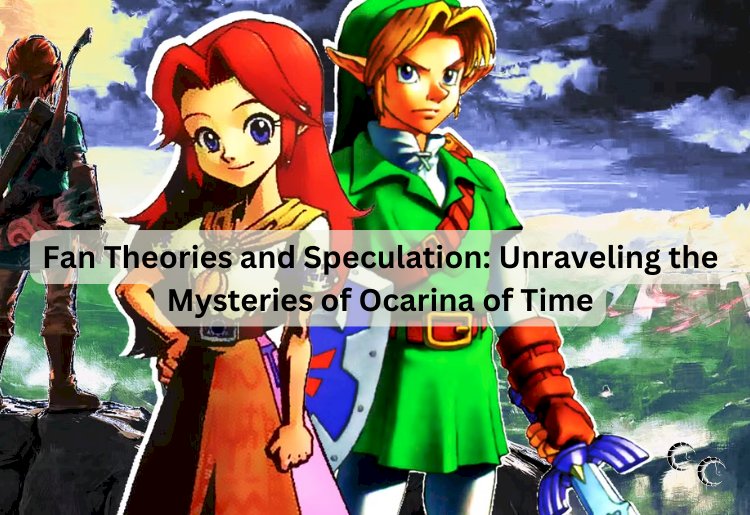
The Legend of Zelda Ocarina of Time is often praised for its groundbreaking gameplay and emotional storytelling, but part of its enduring legacy lies in the unanswered questions woven throughout its world. Decades after its release, fans continue to analyze its characters, symbols, and hidden details, crafting theories that expand and reinterpret the game’s lore. These speculations keep Hyrule alive far beyond the final battle with Ganondorf.
The Hero of Time and the Burden of Childhood
One of the most discussed theories centers on Link’s lost childhood. While the game presents a classic hero’s journey, fans often point out the emotional cost of time travel. Link is forced to grow up overnight, face horrors meant for adults, and then return to a childhood that no longer feels like his own. Some fans believe this explains Link’s silence, interpreting it not as a design choice but as a reflection of trauma and isolation.
This theory is often connected to Majora’s Mask, which many fans view as a direct exploration of Link’s unresolved grief and identity crisis after the events of Ocarina of Time.
The Truth Behind Sheik’s Identity
While the game eventually reveals Sheik as Princess Zelda in disguise, fans have long speculated about the deeper implications of this transformation. Some theories suggest that Sheik represents Zelda’s suppressed identity and inner strength, shaped by years of hiding and surviving under Ganondorf’s rule.
Others propose that Sheik is more than a disguise, possibly aided by ancient magic or Sheikah rituals that allow Zelda to fully embody another persona. This interpretation adds weight to the idea that Zelda sacrifices her own sense of self for the sake of Hyrule.
Is the Happy Ending Truly Happy
The ending of Ocarina of Time appears hopeful, with Ganondorf sealed away and peace restored. However, fans often point out the lingering consequences. Link is sent back in time, erasing the relationships he formed as an adult. Characters who relied on him no longer remember his sacrifices, leaving him as the only one aware of what was lost.
This has led to theories that the timeline split at the end of the game creates emotional fractures that echo throughout the series, shaping darker futures and alternate realities explored in later titles.
The Sheikah and Hidden Knowledge
The Sheikah tribe is shrouded in mystery, appearing only through Impa and subtle symbols scattered throughout Hyrule. Fans speculate that the Sheikah were once far more powerful and influential, possibly acting as guardians of forbidden knowledge related to time travel and the Triforce.
Some believe the Temple of Shadow holds secrets never fully revealed, hinting at ancient conflicts and experiments that predate the events of the game. These theories suggest that much of Hyrule’s history has been deliberately buried.
Ganondorf as a Tragic Figure
While Ganondorf is often viewed as a straightforward villain, many fans interpret him as a product of his environment. Born into a harsh desert with limited resources, he may see his actions as a means of survival and liberation for his people. This perspective frames him not as pure evil, but as a ruler driven by desperation and ambition twisted by power.
This theory adds moral complexity to the conflict and reinforces one of Ocarina of Time’s central themes, that power without balance leads to ruin.
Hidden Symbolism and Unanswered Questions
From the eerie atmosphere of the Forest Temple to the unsettling undertones of the Bottom of the Well, fans have long believed that Ocarina of Time contains symbolic layers never fully explained. Some interpret these locations as reflections of fear, memory, and the passage of time rather than literal places.
Small details like unused content, cryptic dialogue, and environmental storytelling continue to fuel speculation, inviting players to look beyond what is explicitly stated.
Why These Theories Endure
Ocarina of Time’s storytelling leaves just enough ambiguity to encourage interpretation without providing definitive answers. This openness allows each generation of players to discover new meanings and form personal connections to the story.
Fan theories do more than fill narrative gaps. They deepen emotional engagement, transform speculation into shared culture, and ensure that the mysteries of Hyrule continue to inspire curiosity long after the credits roll.