The Science of the Hook: Crafting Book Blurbs That Sell Your Novel Fast
 Cordelia Cross
Mar 6, 2026 04:58
0
Cordelia Cross
Mar 6, 2026 04:58
0
Why the Blurb Is Your Most Powerful Sales Tool
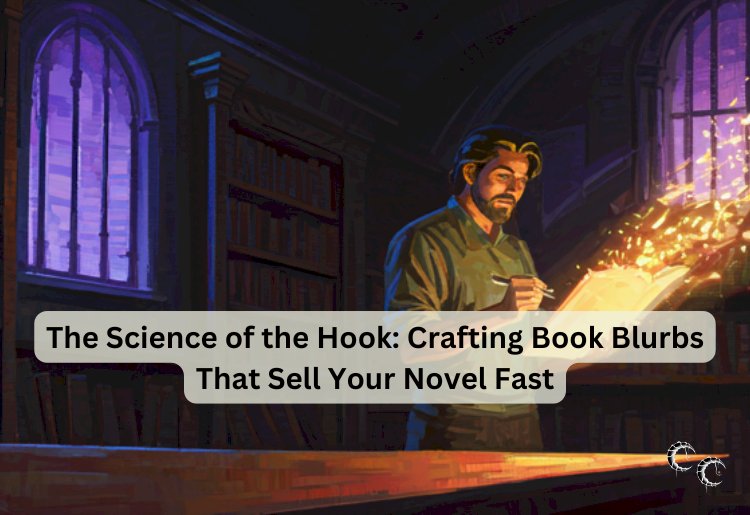
A book blurb is not a summary. It is a conversion engine. When a reader scrolls past dozens of titles in a digital storefront, the blurb becomes the decisive moment where curiosity either ignites or disappears.
The purpose of a blurb is not to explain the entire story. Its job is to trigger emotional momentum. It must persuade the reader that opening the book will deliver tension, mystery, or excitement worth their time.
In practical terms, the blurb functions like a high performance hook designed to transform casual browsing into immediate action.
The Psychology Behind a High Conversion Hook
Successful blurbs activate three psychological triggers within the first few sentences.
Curiosity makes the reader ask a question they want answered.
Conflict signals that something meaningful is at risk.
Urgency suggests that events are already moving and cannot be ignored.
When these triggers appear quickly, the reader feels pulled into the narrative world before they have time to scroll away. The hook must arrive immediately. Long introductions dilute momentum and weaken the initial impact.
Precision Over Description
Blurbs succeed through selective language rather than broad explanation. Every sentence must serve a purpose. Instead of describing a world in detail, focus on the specific tension that drives the story.
A weak sentence might explain background information about a kingdom, city, or era. A stronger sentence reveals the moment where stability breaks and the protagonist must act.
The reader does not need a full history lesson. They need the spark that starts the fire.
Verbs That Drive Momentum
The most effective blurbs rely on active verbs that communicate movement and danger. Words like uncover, betray, escape, hunt, and survive create immediate energy.
Passive phrasing weakens tension because it removes urgency from the narrative. When the language feels dynamic, the reader imagines events unfolding rapidly.
The goal is to suggest that the story is already in motion before the first page begins.
The Power of Clear Stakes
Once the hook captures attention, the next step is establishing what can be lost. Stakes transform curiosity into emotional investment.
Readers should quickly understand what the protagonist risks if they fail. This could involve survival, identity, relationships, or the fate of an entire world. The scale matters less than the clarity.
When the stakes are obvious, the reader instinctively wants to see how the conflict resolves.
The Strategic Use of Mystery
A common mistake in blurbs is revealing too much of the plot. The purpose of a blurb is not to solve the story but to raise irresistible questions.
Mystery works best when the blurb stops just before a critical turning point. The final sentence often introduces a dilemma or looming threat without revealing its outcome.
This technique creates narrative tension that only the book itself can resolve.
Structuring a High Impact Blurb
Most successful blurbs follow a simple progression that guides the reader through escalating intrigue.
The opening line introduces a compelling situation or disruption.
The middle section expands the conflict and raises the stakes.
The final line presents an unanswered question or dangerous choice.
This structure mirrors the opening arc of the story itself, giving readers a miniature version of the narrative journey.
Testing and Refining the Hook
Because blurbs function as marketing tools, they benefit from iteration and testing. Writers often experiment with different opening lines or stronger verbs to see which version creates the most engagement.
Small adjustments in wording can dramatically change the tone and impact. Replacing vague phrases with precise imagery often strengthens the hook instantly.
The process resembles fine tuning a complex mechanism. Each change sharpens the signal that reaches potential readers.
Turning Curiosity Into Commitment
The best blurbs operate with surgical efficiency. They introduce tension, raise stakes, and leave the reader standing at the edge of a story they cannot fully see.
When done correctly, the transition from browsing to buying happens almost unconsciously. The reader does not analyze the blurb in detail. They simply feel compelled to discover what happens next.
That moment of irresistible curiosity is the true goal. A perfectly engineered hook transforms a few carefully chosen sentences into the gateway that brings a novel to life for its audience.