AITA For Refusing To Pay For My Roommate’s Expensive Organic Grocery Habit?
 Cordelia Cross
Jul 25, 2026 12:22
0
Cordelia Cross
Jul 25, 2026 12:22
0
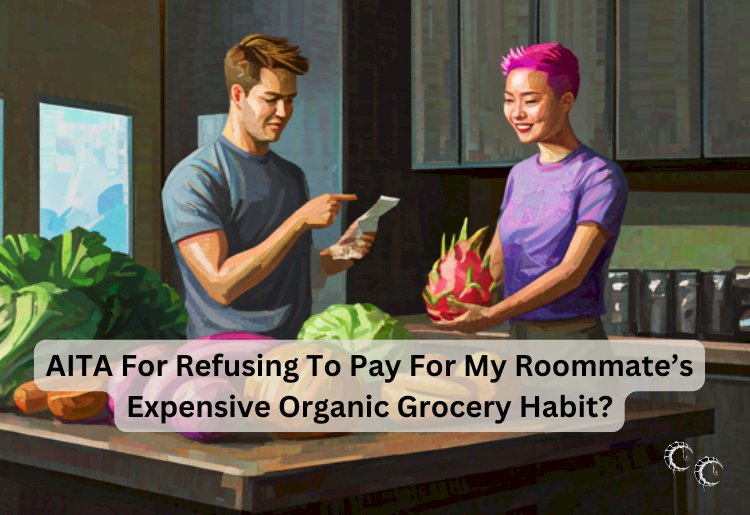
I am a 28F and I have been living with my roommate “Maya,” 29F, for almost two years. When we first moved in together, things were great. We were friends before becoming roommates, and I honestly thought we would be the kind of people who stayed close even after living together.
For the most part, we do get along. We split rent evenly, we take turns cleaning, and we have a pretty comfortable living situation.
The problem started with groceries.
When we first moved in, we agreed that we would buy our own food. It seemed like the easiest arrangement because we both had different eating habits. I am pretty simple. I buy regular groceries, cook basic meals, and try to stick to a budget. I am not someone who refuses quality food, but I also do not believe every item needs to be the most expensive version available.
Maya is completely different.
She is very passionate about health and wellness. She only buys organic produce, specialty supplements, expensive protein powders, locally sourced products, and certain brands that she says are cleaner and better for your body.
At first, I did not care.
It is her money.
If she wants to spend more on her groceries, that is her choice.
The issue is that over time, her grocery habits started affecting me financially.
A few months ago, Maya suggested that we start sharing groceries because it would be “more convenient.” She said we could both contribute equally and that it would simplify cooking.
I agreed because I thought she meant normal shared expenses like milk, eggs, vegetables, and household items.
I quickly realized that was not what she meant.
The first grocery trip we did together came out to almost 400 dollars.
I was shocked.
When I looked at the receipt, I saw things like a 20 dollar jar of honey, expensive organic snacks, specialty drinks, and products I would never buy for myself.
I told her I was not comfortable splitting that evenly because most of the items were things she specifically wanted.
She said I was looking at it the wrong way. She said we both eat the food and benefit from healthier ingredients.
I explained that I was happy to split shared basics, but I did not want to pay half for luxury items that were part of her lifestyle.
She seemed offended.
She said it felt like I was judging her choices and that I was making her feel guilty for caring about her health.
That was never my intention.
I respect that she wants to eat a certain way. I just do not understand why I should financially support it.
After that conversation, we went back to buying separate groceries.
Or at least I thought we did.
A few weeks later, Maya told me she was frustrated because she felt like she was “carrying the household.”
I asked what she meant.
She said she had been buying certain things that we both use, like organic olive oil, spices, cleaning products, and filtered water, and she felt like I was benefiting without contributing.
I reminded her that I never asked her to buy those things. I told her that I was perfectly happy buying regular versions myself.
She said I was missing the point and that she did not want “cheap products” in the apartment because she believed they were unhealthy.
That was when I got frustrated.
I told her that she cannot make lifestyle choices for both of us and then expect me to pay for them.
She became upset and said I was being disrespectful.
The conversation ended badly.
Now things are awkward. She has told mutual friends that I do not support her values and that I am being selfish over groceries.
Some friends agree with her and say that I should contribute more because I live there too. Others say she is being unreasonable by expecting me to fund her preferences.
The part where I feel guilty is that I know Maya genuinely believes she is doing the right thing. She is not trying to be malicious. She truly thinks she is making healthier choices.
But I also feel like my financial boundaries matter.
I am trying to save money. I have student loans. I have goals. Spending hundreds more every month on groceries I would not personally choose is not realistic for me.
I do not want to make her feel judged.
I just want her to understand that her lifestyle choices belong to her.
So, AITA for refusing to pay for my roommate’s expensive organic grocery habit?
Cordelia’s Response
There is a quiet danger in confusing personal values with shared obligations.
Your roommate has chosen a lifestyle that brings her comfort, satisfaction, and perhaps a sense of control. That is her right. People find meaning in different things. Some spend more on food. Some spend more on travel. Some spend more on hobbies, clothing, or experiences.
The problem begins when one person’s personal choice becomes another person’s financial responsibility.
A shared home requires compromise. It requires consideration. It requires understanding that two people can live together without becoming identical.
Your roommate’s desire for organic groceries is not the issue.
The issue is that she appears to believe her preference should become the household standard without mutual agreement.
That is not compromise.
That is control disguised as concern.
You are not saying she cannot buy organic food. You are not mocking her choices. You are not demanding she change her habits.
You are simply saying that you should not have to fund choices you did not make.
That is a reasonable boundary.
There is also something important about the language being used here. When someone says a different choice is “cheap” or “unhealthy,” it can create a dynamic where the other person feels pressured to prove themselves. Suddenly the conversation is no longer about groceries. It becomes about morality.
And food choices are not a measure of someone’s worth.
Your roommate is allowed to prioritize organic products.
You are allowed to prioritize your budget.
Both can exist in the same apartment.
The solution is not for one person to surrender.
The solution is for both people to respect that they are separate individuals sharing a space.
OP’s Update
After reading the comments, I realized I probably needed to have a calmer conversation with Maya instead of letting this become a bigger fight.
I asked her if we could sit down and talk about household expenses.
I told her I wanted to make it clear that I respect her choices. I do not think she is wrong for wanting organic food, and I do not think she is strange for caring about ingredients.
I explained that what bothered me was feeling like I was being pressured into paying for something that was important to her but not necessarily important to me.
She actually seemed to understand that part.
At first, I thought maybe we were finally getting somewhere.
Then she said something that made me realize why we had been arguing.
She told me she feels like because she is more health conscious, she is “raising the standard” of our home.
I asked her what she meant.
She said she believes I would make worse choices without her influence.
That really bothered me.
I told her that I appreciate advice when it is offered, but I do not want to feel like my roommate is responsible for improving my lifestyle.
She said she was not trying to control me.
She said she just wanted me to care more about my health.
I told her that caring about my health does not mean I have to follow her exact choices.
The conversation ended better than the first one, but there is still tension.
She agreed that we can keep separate groceries, but she still seems disappointed.
She also brought up the cleaning products again and said she does not want certain things used in the apartment.
I told her that if she has specific products she wants, she is welcome to buy them, but I do not think she can decide what I am allowed to purchase.
Now I feel like we are stuck.
I do not want to lose a friendship over this.
But I also do not want to live somewhere where I feel like every choice I make is being evaluated.
Cordelia’s Response
This update reveals something deeper than a grocery disagreement.
The conflict was never really about vegetables, oils, or brands.
It was about autonomy.
Your roommate may genuinely believe she is helping. That does not mean her actions are not creating pressure. Good intentions do not erase the impact they have on another person.
A person can care about you and still overstep.
That is one of the hardest truths in relationships.
The people who hurt our boundaries are not always villains. Sometimes they are people who believe they are doing the right thing.
But kindness without respect for autonomy becomes control.
You have communicated something very important. You are not rejecting her values. You are asking her not to make them the requirement for living together.
A healthy roommate relationship does not require agreement on everything.
It requires respect.
You do not need to convince Maya that your choices are better.
She does not need to convince you that hers are.
The goal is not winning the argument.
The goal is creating a home where both people can exist without feeling managed.
OP’s Final Update
I wanted to give one last update because a lot has happened since my last post.
Maya and I eventually created a roommate agreement about shared expenses.
We decided that we would split basic household items like toilet paper, cleaning supplies that we both agree on, and other necessities.
For everything else, we buy our own groceries.
It sounds simple, but getting there was emotionally exhausting.
The hardest part was admitting that our friendship had changed.
Before living together, I never noticed how different our priorities were. I thought our differences made us interesting friends. I did not realize that those same differences would become difficult when combined under one roof.
Maya apologized for making me feel judged.
I apologized for getting defensive.
I think we both realized we were approaching the situation from completely different places.
She was thinking, “I am trying to help.”
I was feeling, “I am being pressured.”
Both things were true.
I still do not buy organic everything. She still does.
We are learning that we do not have to make the same choices to respect each other.
Things are not perfect. There is still some awkwardness, and I think our friendship will probably be different after this.
But at least I no longer feel like I have to justify every grocery purchase.
I still wonder if I was too stubborn at the beginning.
Maybe I should have been more understanding of why this mattered to her.
But I also feel like I protected an important boundary.
Cordelia’s Response
Growth often comes from the moments where we realize two people can both be sincere and still be in conflict.
You were not wrong for protecting your finances.
Your roommate was not wrong for caring about what she consumes.
The conflict came from the space where one person’s personal standard began to become a shared expectation.
That is where boundaries matter.
You did not ask Maya to abandon her values.
You asked her to stop making those values your responsibility.
There is wisdom in the fact that you both eventually moved away from trying to convince each other and toward creating a structure that respected both of you.
Not every disagreement ends with one person being proven right and the other being proven wrong.
Sometimes the victory is simply learning how to coexist.
Your home should be a place where you feel comfortable, not a place where you feel constantly measured against someone else’s standards.
You chose honesty.
You chose communication.
You chose a boundary that protected both your wallet and your relationship.
That is not selfish.
That is maturity.
Conclusion
Sharing a home with another person requires patience, compromise, and respect. Different lifestyles can coexist, but they cannot thrive when one person’s preferences become another person’s obligation.
In this situation, the verdict is NTA. Your roommate has every right to choose expensive organic groceries, but she does not have the right to expect you to fund a lifestyle you did not choose.
If you have a situation where you are struggling with boundaries, friendships, family expectations, or difficult choices, send your story to [email protected] and put “Advice” in the subject line. Your story may help someone else navigate their own storm.