What Abandoned Game Dev Blogs Reveal About Gaming Industry Evolution
 Cordelia Cross
Jun 7, 2026 03:51
0
Cordelia Cross
Jun 7, 2026 03:51
0
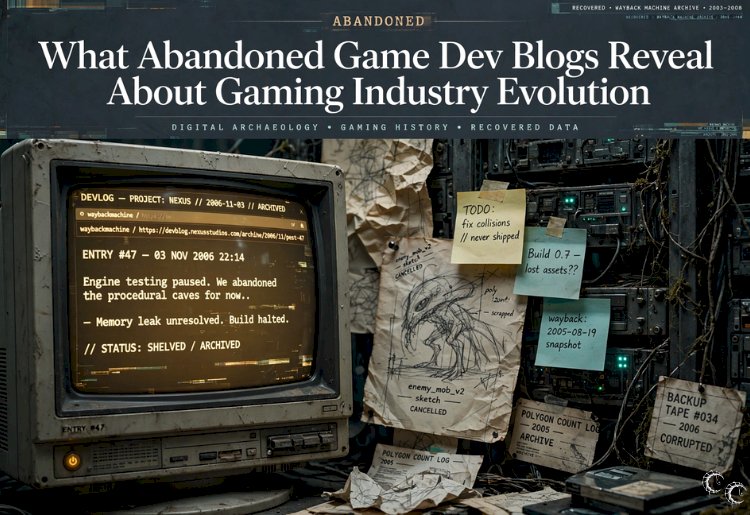
The internet is full of digital ghost towns.
Old forums sit frozen in time. Fan sites quietly gather virtual dust. Personal blogs that once buzzed with weekly updates now end with a post from years ago, as if the writer simply stepped away and never came back.
Among the most fascinating of these forgotten corners are abandoned game dev blogs.
At first glance, they might seem like relics of unfinished dreams or projects that never made it across the finish line. Spend a little time reading them, though, and they tell a much bigger story. Together, they capture how the gaming industry has changed, how development has evolved, and what it has always taken to turn an idea into a playable game.
A Snapshot of Another Era
Reading an old game dev blog is a bit like opening a time capsule.
Posts from the late 1990s and early 2000s often revolve around technical hurdles that feel almost unimaginable today. Developers celebrated getting a character to walk across the screen or rendering a handful of polygons without bringing a computer to its knees.
Those milestones might seem small now, but they represented major victories at the time.
Every breakthrough reflected the limits of the hardware and software available. Looking back, it's easy to see just how far game development has come.
When One Person Wore Every Hat
Many abandoned game dev blogs belonged to solo developers or tiny teams.
One day they'd be writing code. The next they'd be creating artwork, composing music, fixing bugs, designing menus, and answering community questions.
There was no massive studio with hundreds of specialists.
There was just one person trying to keep dozens of moving parts from falling apart at once.
Reading those posts gives you a new appreciation for independent developers. Building a game has never been just about writing code. It has always required creativity, patience, and an impressive willingness to learn new skills.
The Rise of Modern Game Engines
Older blogs often describe developers building nearly everything from scratch.
Physics systems.
Rendering tools.
Animation frameworks.
Even basic menus sometimes required weeks of work.
Today, powerful game engines provide many of those systems right out of the box. Developers can spend more time building worlds and refining gameplay instead of reinventing technology that already exists.
That doesn't mean making games has become easy.
It simply means today's challenges are different.
Instead of asking, "How do I make this work?" developers are often asking, "How do I make this stand out?"
Dreams That Never Became Games
Some abandoned game dev blogs document projects that were never released.
At first, that can feel disappointing.
Then you realize something important.
Not every creative project is meant to become a finished product.
Some ideas teach valuable lessons.
Some become stepping stones toward future careers.
Others quietly inspire entirely different projects years later.
Failure isn't always the end of the story. Sometimes it's just the chapter that no one expected to matter so much.
Communities Have Changed Too
Many early game dev blogs felt like conversations.
Readers left detailed comments offering suggestions, reporting bugs, or simply cheering the developer on. Small communities formed around projects that might only have a few hundred followers.
Today's developers have far more ways to connect with players through livestreams, social media, community platforms, and video updates.
The audience has grown dramatically.
So have the expectations.
Modern developers often juggle community management alongside development, balancing transparency with the pressure of constant public attention.
The Human Side of Development
One thing stands out across countless abandoned game dev blogs.
The people behind them genuinely loved making games.
They wrote excitedly about solving difficult problems, shared screenshots of tiny improvements, and celebrated milestones that outsiders might barely notice.
Sometimes those blogs ended because life changed.
A new job.
A growing family.
Financial realities.
Burnout.
The silence at the end of many blogs isn't failure. More often, it's a reminder that game developers are people first, and creating games is an enormous commitment.
What Hasn't Changed
Technology has advanced at an incredible pace.
Graphics are more realistic.
Tools are more powerful.
Distribution is easier than ever.
Yet the heart of game development remains remarkably familiar.
Every game still begins with an idea.
Someone has to solve problems that have never existed before.
Someone has to keep going when progress feels painfully slow.
Someone has to believe that players will eventually enjoy something that currently exists only as sketches, notes, and unfinished code.
That part hasn't changed at all.
Why These Forgotten Blogs Still Matter
Abandoned game dev blogs are more than archives of unfinished projects.
They preserve moments of experimentation, optimism, and honest creativity that might otherwise disappear. They remind us that every polished game we play stands on decades of trial, error, innovation, and countless ideas that never reached the finish line.
In a way, those forgotten blogs tell the story of the gaming industry just as clearly as the biggest blockbuster releases.
They show the people behind the pixels.
They reveal how much the craft has evolved.
And perhaps most importantly, they remind us that progress is rarely a straight line. Sometimes the projects that never launched still leave behind ideas that help shape the games we play today.
The next time you stumble across an abandoned game dev blog, don't think of it as a dead end.
Think of it as a snapshot of gaming history, frozen at the exact moment someone believed they were building the next great adventure.