Why Our Brains Crave the Companion Cube: The Psychology of Anthropomorphism in Gaming
 Cordelia Cross
Jul 24, 2026 01:51
0
Cordelia Cross
Jul 24, 2026 01:51
0
Why Our Brains Crave the Companion Cube: The Psychology of Anthropomorphism in Gaming
There is something slightly ridiculous about getting emotionally attached to a fictional object.
You know it is not alive. You know it cannot actually feel anything. You know that somewhere behind the screen, it is just a collection of textures, animations, dialogue, sound effects, and carefully programmed behaviors. And yet, somehow, you find yourself caring about it.
Gamers have spent years proving this point.
We have bonded with robots, animals, artificial intelligences, talking weapons, magical creatures, fictional horses, tiny floating companions, and, perhaps most famously, a weighted storage cube that does absolutely nothing.
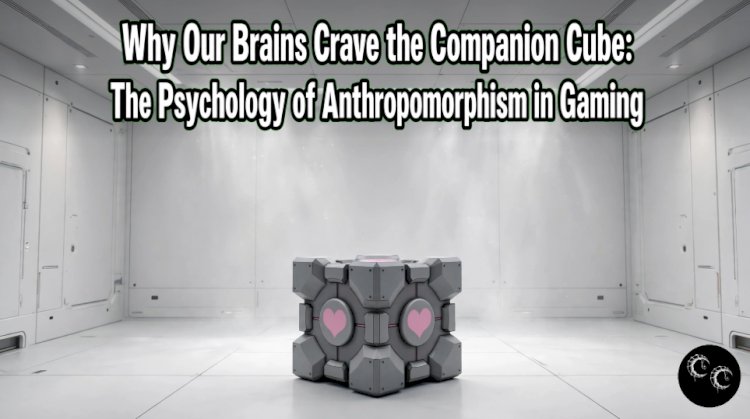
The Companion Cube from Portal should technically be one of the least emotionally complicated objects in gaming. It is a cube. It cannot talk. It cannot move on its own. It has no face, no personality, and no dialogue.
And yet, players remember it.
That is not because the cube secretly has incredible character development. It is because our brains are remarkably good at assigning meaning, personality, and emotional significance to things that do not necessarily possess any of those qualities.
This is where anthropomorphism comes in.
Why Do We Give Human Qualities to Things?
Anthropomorphism is the tendency to attribute human characteristics, intentions, emotions, or behaviors to non-human things.
It happens constantly.
We name our cars. We yell at computers. We apologize when we bump into furniture. We talk to pets as though they understand every word. We give weather personalities. We become convinced that our printer is deliberately malfunctioning because it knows we have a deadline.
Games take this natural human tendency and turn it into an incredibly effective storytelling tool.
A game does not necessarily need to tell you that something has feelings. It can simply give you enough cues for your brain to start filling in the blanks.
A character looks at you.
A creature reacts to your actions.
A companion follows you around.
A machine makes a particular sound when it is damaged.
An object is associated with a meaningful event.
Suddenly, the thing has a personality in your mind.
The game provided the ingredients.
Your brain did the rest.
The Companion Cube Is a Brilliant Example
The Companion Cube works because the game carefully manipulates your relationship with an otherwise ordinary object.
You are told that the cube is your companion. You carry it around. You use it to solve puzzles. You spend time interacting with it. The game even encourages you to treat it as something more than a piece of equipment.
There is no complex artificial intelligence inside the cube.
There does not need to be.
The emotional connection comes from the context surrounding it.
You are repeatedly told to think of the object as a companion, and your brain begins treating it as one.
Then the game creates an emotional consequence around losing it.
That is enough.
The cube does not need to give a heartfelt speech about your friendship. The player has already constructed that relationship internally.
And that is one of the cleverest tricks interactive storytelling can pull off.
Games Make Us Participants, Not Just Observers
One reason gaming can create particularly strong emotional attachments is that players are actively involved.
When you watch a movie, you observe a character making decisions.
When you play a game, you often make those decisions yourself.
That difference can change the emotional relationship.
You might choose to spend time with a companion. You might protect them during combat. You might feed them, customize them, name them, ride them, rescue them, or simply keep them around because you like having them there.
The character is not only part of the story.
They are part of your experience of the story.
That distinction can make emotional attachments feel surprisingly personal.
You remember what happened to the character because you were there for it, and in some cases, because your own decisions helped create the experience.
The Brain Loves Patterns
Humans are extremely good at detecting patterns.
That ability is useful for survival. We need to recognize faces, predict behavior, identify threats, and understand what other people might do next.
The same machinery can sometimes be applied to things that are not actually people.
If something moves in a way that resembles intentional behavior, we may interpret it as having intentions.
If something reacts to us consistently, we may assume it understands us.
If something makes a sound that resembles distress, our emotional systems can respond even when we intellectually know the sound is artificial.
Games can take advantage of these patterns by giving non-human characters recognizable behaviors.
A robot that tilts its head when confused suddenly feels curious.
A creature that hides when injured feels vulnerable.
A companion that becomes excited when you return feels happy to see you.
The game does not necessarily need to simulate a complete human mind.
It just needs to provide enough recognizable signals for the player's brain to build a model of one.
Why Animals in Games Can Hit So Hard
This is especially obvious with animal companions.
Players can become deeply attached to fictional dogs, horses, cats, dragons, wolves, and other creatures even when those animals have limited dialogue or personality.
Part of that comes from real-world associations.
Humans already have strong emotional responses to animals, especially animals we associate with companionship, loyalty, vulnerability, or affection. A game can build on those existing associations rather than creating them from scratch.
Give a player a dog that follows them around, reacts to danger, gets excited when they return, and occasionally does something adorable, and the emotional connection can happen remarkably quickly.
The player does not need the dog to explain its feelings.
The behavior is enough.
And if the game then puts that companion in danger?
Well.
Now the developers are playing emotional chess with a puppy.
Attachment Comes From Time
Another major factor is repeated interaction.
The more time players spend with a character or object, the more meaningful it can become.
A companion who appears for thirty seconds may be interesting.
A companion who travels with you for forty hours becomes part of your routine.
You learn how they behave. You recognize their voice. You anticipate their reactions. You develop memories associated with them.
That repetition creates familiarity, and familiarity can contribute to emotional attachment.
This is why losing a character near the beginning of a game may feel sad while losing a companion near the end can feel genuinely awful.
The amount of shared experience matters.
You have history together.
Even if that history exists entirely inside a fictional world.
Choice Makes Attachment Even Stronger
Games become particularly powerful when players are given choices about their companions.
Maybe you choose whether to help them.
Maybe you decide what they wear.
Maybe you select their dialogue.
Maybe you name them.
Maybe you choose which missions to take them on.
Maybe you decide whether to save them when things go wrong.
These decisions create a sense of ownership over the relationship.
The character is no longer simply "the developer's character."
They become part of your version of the story.
That is one reason players can have wildly different emotional reactions to the same game. Two people can play through the same events and come away with completely different relationships because they made different choices or simply interpreted the characters differently.
Interactive storytelling leaves room for personal meaning.
Anthropomorphism Helps Us Understand Complex Characters
Anthropomorphism is not always about pretending something is literally human.
It can also be a shortcut for understanding behavior.
If a game gives a machine a recognizable personality, players can immediately understand its role. A sarcastic robot feels different from a nervous robot. A cheerful artificial intelligence feels different from a cold one.
Giving something human-like characteristics allows players to interpret its behavior using concepts they already understand.
This can make complicated systems easier to emotionally process.
Instead of thinking, "This artificial intelligence has been programmed with a series of conditional behavioral responses," the player thinks, "This robot is being sarcastic again."
The second version is considerably more fun.
The Power of Voice
Voice acting can dramatically increase anthropomorphism.
Something as simple as giving an object a voice immediately changes how players perceive it. Suddenly, the thing can express humor, fear, anger, curiosity, confusion, or affection.
Even nonverbal sounds can accomplish something similar.
A particular beep can become recognizable as a character's emotional response. A mechanical noise can become associated with frustration. A musical cue can signal that a familiar companion has arrived.
Over time, those sounds become part of the character's identity.
You do not need a face if the audience has learned how to read your noises.
What Happens When the Game Takes That Companion Away?
Loss is one of the most powerful ways games demonstrate that an attachment has formed.
When a game removes a companion, the emotional response can be much stronger than players expect.
That is partly because the loss disrupts a routine.
The character who used to stand beside you is suddenly gone.
The familiar dialogue is gone.
The animations are gone.
The gameplay interactions associated with that character disappear.
The absence itself becomes noticeable.
This is particularly effective when the game has spent hours establishing the companion as part of the player's normal experience.
You do not just lose a fictional character.
You lose something that had become part of how you interacted with the game.
Sometimes We Care About Things Because They Represent Something
There is another layer to all of this.
Players do not always become attached to an object because of the object itself.
Sometimes it becomes symbolic.
A weapon might represent the beginning of an adventure. A vehicle might represent dozens of hours of exploration. A home base might represent safety. A particular item might remind you of a favorite character or a memorable moment.
The object becomes attached to the memories surrounding it.
This is why someone can become weirdly protective of a completely ordinary digital item.
To another player, it might be a piece of equipment.
To you, it might be the sword you used during the boss fight that took you six attempts and nearly destroyed your patience.
That is a very different relationship.
Why Developers Use This So Effectively
Game designers understand that players become attached to things they interact with repeatedly.
That gives developers an incredibly powerful storytelling tool.
A companion can provide emotional stakes.
A pet can make the world feel warmer.
A vehicle can make exploration personal.
A weapon can become part of the player's identity.
An artificial intelligence can provide humor and commentary.
Even an inanimate object can become memorable if the game gives it enough context.
The trick is not necessarily creating a deeply complicated character.
Sometimes it is simply creating a relationship between the player and the thing.
The Funny Part Is That We Know It Is Not Real
The fascinating thing about anthropomorphism is that knowing something is fictional does not necessarily prevent emotional attachment.
You can know that a character is made of pixels and still care about what happens to them.
You can know that a virtual animal does not actually experience fear and still panic when it runs toward danger.
You can know that a Companion Cube is literally an object and still feel betrayed by what happens to it.
There is no contradiction there.
Human emotions do not always require intellectual belief.
We can understand that something is fictional while still responding emotionally to the meaning we have assigned to it.
That is one of the reasons stories work at all.
Why the Companion Cube Sticks With Us
The Companion Cube is memorable because it demonstrates just how little information our brains sometimes need to create an emotional relationship.
It does not need a complicated backstory.
It does not need a face.
It does not need a voice.
It needs context, repetition, interaction, and emotional significance.
The player does the rest.
And that is the larger lesson behind anthropomorphism in gaming. We are constantly looking for intention, personality, emotion, and meaning. Games give us interactive environments filled with objects and creatures designed specifically to trigger those instincts.
Sometimes that results in an emotional connection to a beautifully written companion.
Sometimes it results in naming your virtual horse.
And sometimes it results in becoming emotionally devastated over a weighted storage cube.
Honestly, the cube probably had it coming.
After all, if a video game can make millions of people care about a box that cannot talk, imagine what it can do with a character who can look you directly in the eyes and say, "I trust you."
That is where the real power of interactive storytelling lives.
We do not just watch these worlds.
We participate in them.
And once our brains decide that something inside that world matters, the fact that it is made of pixels becomes surprisingly irrelevant.