Food Chemistry Inspired by Sci-Fi: Could Blue Milk Exist?
 Cordelia Cross
Oct 12, 2025 05:18
0
Cordelia Cross
Oct 12, 2025 05:18
0
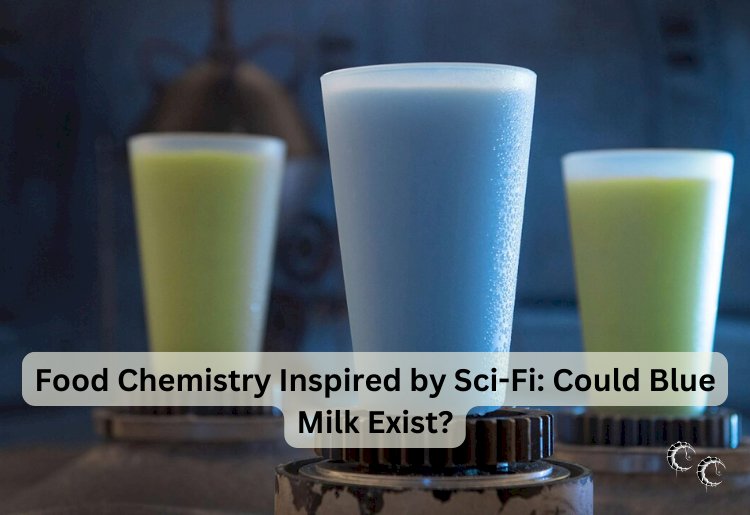
Blue milk is one of the most iconic foods in science fiction, instantly recognizable from the Star Wars universe. Its vibrant hue and creamy texture make it memorable, but it also raises an intriguing question: could a real-world version exist? Exploring this through the lens of food chemistry reveals both the challenges and possibilities of creating unusual colors, flavors, and textures in consumable products.
The first challenge is natural pigmentation. Milk is typically white due to the scattering of light by fat globules and proteins like casein. To create a truly blue milk, a pigment must be added without altering taste, safety, or stability. Anthocyanins, the compounds responsible for the colors in blueberries, purple cabbage, and blackberries, are one possibility. These molecules are safe to consume and produce vibrant colors, but they are pH-sensitive; slight acidity can shift the color toward purple or red, complicating formulation. Other options include spirulina extracts or food-grade dyes designed for stability in dairy products.
Texture and mouthfeel are equally important. Milk is valued for its creamy consistency and smooth flavor. Adding pigments or other ingredients must not disrupt these qualities. Emulsifiers, stabilizers, and homogenization techniques can help integrate colorants evenly, preventing separation or sedimentation. In professional food chemistry, achieving a uniform, appealing product requires balancing viscosity, fat content, and protein structure to maintain the sensory experience of conventional milk.
Taste is another critical factor. Blue milk in fiction appears neutral and palatable, not bitter or overly sweet. Many natural pigments carry inherent flavors; spirulina, for example, has a distinct marine taste. Masking or modifying flavor can involve natural sweeteners, flavor enhancers, or blending with neutral-tasting dairy or plant-based milk alternatives. The goal is a visually striking product that remains familiar and enjoyable to consume.
Stability over time is a key concern in real-world food production. Light, heat, and oxygen can degrade both pigments and nutrients, leading to fading or off-flavors. Food chemists use antioxidants, protective coatings, and optimized packaging to preserve color and quality. Achieving blue milk that retains its vibrancy through storage and handling is a significant technical challenge, especially if natural pigments are used instead of synthetic dyes.
Beyond chemistry, consumer perception plays a role. People are accustomed to milk being white or cream-colored; a blue variant may trigger curiosity or skepticism. Marketing, storytelling, and presentation can influence acceptance, turning novelty into a desirable experience rather than a surprising anomaly. Science fiction sets the stage for imagination, and careful attention to sensory appeal can make a seemingly impossible product feel plausible.
From a nutritional standpoint, adding colorants need not compromise health. Vitamins, minerals, and proteins can remain intact if processing is carefully controlled. Some formulations could even enhance the nutritional profile, fortifying the milk with additional calcium, plant-based proteins, or functional compounds while maintaining the signature blue appearance. This approach blends science fiction inspiration with modern food innovation.
In conclusion, blue milk could exist outside of science fiction with the right combination of pigments, stabilizers, flavor management, and careful formulation. Food chemistry provides the tools to translate imaginative concepts into real, consumable products, balancing color, taste, texture, and stability. What seems impossible in a galaxy far, far away becomes an achievable experiment in the kitchen or lab, showing how science can transform fantasy into reality.
Blue milk is more than a novelty; it is a lesson in the possibilities of culinary chemistry, demonstrating that creativity, chemistry, and careful design can bring the fantastical to the table.