The Science Behind Magical Artifacts: Could They Exist?
 Cordelia Cross
Dec 9, 2025 04:51
0
Cordelia Cross
Dec 9, 2025 04:51
0
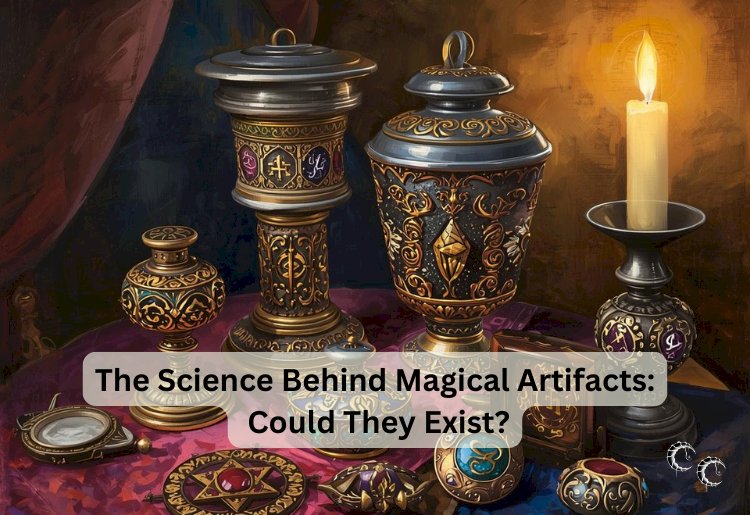
Magical artifacts are a staple of fantasy worlds. A sword that bursts into flame, an amulet that protects against harm, or a ring that bends time itself captures the imagination and drives countless stories. While their abilities are often described as impossible in our world, exploring how such objects might function through the lens of science and technology reveals fascinating possibilities and surprising parallels.
At the heart of every magical artifact is energy. Whether it manifests as light, heat, motion, or protection, something must power the effect. In Dungeons & Dragons, this energy is drawn from magic, but in a real-world scenario, one might imagine compact energy sources far beyond current technology. High-density batteries, nuclear micro-reactors, or hypothetical zero-point energy could theoretically supply sustained power for effects that seem supernatural. The challenge is not just generating energy but controlling it precisely to produce desired outcomes without harming the user or environment.
The manipulation of physical laws is another avenue to consider. Artifacts often perform actions that defy gravity, inertia, or conventional motion. A floating sword or a protective shield could be explained by advanced magnetic fields, force projection, or field manipulation. In physics, magnetic levitation allows objects to float and move without contact, while focused energy beams can exert pressure or create barriers. Translating these principles to a compact artifact requires miniaturization and sophisticated control systems, imagining technology so advanced that it would seem magical to an observer.
Materials science also plays a crucial role. Many artifacts exhibit durability, lightness, or adaptability that exceeds ordinary materials. Metals that are indestructible, fabrics that repair themselves, and crystals that store and release energy suggest a mastery of matter at the molecular or atomic level. Nanotechnology, metamaterials, and programmable matter offer a glimpse into how such properties could be achieved. By designing materials that respond dynamically to stress, temperature, or environmental conditions, an artifact could maintain structural integrity while enabling extraordinary functions.
Information processing and control are equally important. Complex magical effects require instantaneous responses to the user’s intentions. In a scientific analogue, this implies sensors, processors, and feedback systems embedded in the object. Thought-controlled or gesture-activated devices already exist in rudimentary forms, and extrapolating this to near-instantaneous, intuitive control suggests interfaces that bridge mind and machine, translating intention into precise action. This could explain artifacts that react immediately to danger, cast spells, or adjust to changing conditions without conscious manipulation.
Interaction with the environment and safety mechanisms are additional considerations. Artifacts in stories often protect users, repel enemies, or store vast amounts of energy safely. Any real-world counterpart would require safeguards to prevent accidental discharge, overheating, or uncontrolled reactions. Quantum confinement, energy shielding, and autonomous regulation could enable artifacts to manage extreme forces while remaining usable and portable. The balance between power and safety is critical to making the impossible seem practical.
Finally, the concept of artifacts influencing probability or fate touches on fields like chaos theory and complex systems. While true manipulation of chance or time remains firmly in the realm of imagination, small-scale interventions could produce effects that appear extraordinary. Subtle alterations in physical parameters, environmental conditions, or information flow could create outcomes that seem improbable, mimicking the narrative impact of magical artifacts without violating natural laws.
Magical artifacts succeed in fantasy because they condense wonder, utility, and danger into tangible objects. By exploring their hypothetical science, we see that energy management, material innovation, precise control, and environmental interaction are key components that make “magical” effects conceivable. Even if true magic remains fictional, thinking about artifacts scientifically reveals the extraordinary possibilities hidden within physics, engineering, and technology.
Ultimately, magical artifacts straddle the line between imagination and potential reality. They inspire creativity while reflecting the principles that govern energy, matter, and control. By imagining how these objects could function, we gain a deeper appreciation for the interplay between narrative, science, and human ingenuity, showing that what seems impossible may one day inspire innovation grounded in the laws of our universe.