How Gravity, Terrain, and Physics Affect Dungeon Design in Games
 Cordelia Cross
Dec 12, 2025 06:43
0
Cordelia Cross
Dec 12, 2025 06:43
0
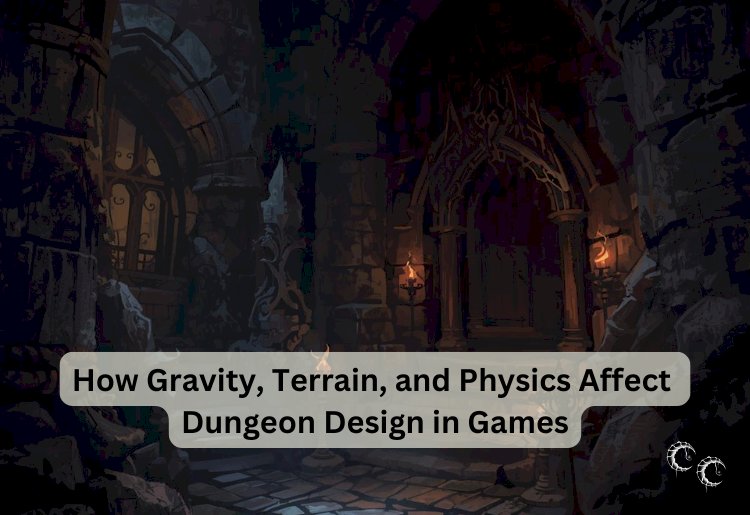
Dungeon design in games is often discussed in terms of aesthetics, enemy placement, or narrative, but beneath these elements lies an invisible framework shaped by gravity, terrain, and physics. Whether consciously or intuitively, designers rely on real-world physical principles to create spaces that feel believable, challenging, and satisfying to explore. When these forces are respected, dungeons gain weight, tension, and immersion that purely abstract layouts cannot achieve.
Gravity is the most fundamental influence. Players expect downward movement to feel natural and costly, while upward movement demands effort or resources. Staircases, ramps, ladders, and shafts guide progression because gravity gives them meaning. Falling damage, limited jump height, and momentum create risk, turning verticality into a strategic consideration. Deep pits, collapsing bridges, and multi-level chambers work because gravity introduces consequences that players instinctively understand without explanation.
Vertical dungeon design benefits from gravity-driven logic. Upper levels often feel safer or more strategic, providing sightlines and defensive advantages. Lower levels imply danger, pressure, and confinement. Designers use elevation changes to pace difficulty, reserving the deepest or highest chambers for critical encounters or rewards. This mirrors real-world instincts where depth suggests entrapment and height suggests exposure. Gravity turns elevation into emotional storytelling.
Terrain shapes movement and decision-making. Uneven floors, rubble, mud, ice, or water alter speed, balance, and combat effectiveness. Players adapt tactics when terrain restricts mobility or visibility. Narrow corridors limit flanking and favor defense, while wide chambers enable large-scale encounters. Slopes and stairways influence positioning, line of sight, and momentum, reinforcing the feeling that the dungeon exists as a physical space rather than a series of disconnected rooms.
Surface materials also matter. Stone feels stable and ancient, wood implies age or decay, metal suggests industry or artifice. Physics reinforces these impressions through sound, collision behavior, and environmental interaction. Crumbling floors, breakable walls, or collapsing ceilings rely on expectations of material strength and structural integrity. When terrain behaves according to its apparent composition, immersion deepens and player trust increases.
Physics-based interactions elevate dungeon complexity. Levers, counterweights, pressure plates, and rotating mechanisms work because players intuitively understand cause and effect. Objects roll downhill, liquids flow to low points, and unstable structures fail under stress. These interactions encourage problem-solving grounded in physical logic rather than arbitrary rules. Puzzles become intuitive when they align with real-world physics, reducing frustration while increasing satisfaction.
Environmental hazards rely heavily on physics. Traps involving falling rocks, swinging blades, flooding chambers, or rising lava all exploit gravity and momentum. These dangers feel fair when their behavior is predictable and consistent. Players learn to read the environment, spotting warning signs such as cracks, scorch marks, or unnatural silence. Physics becomes a language through which the dungeon communicates risk.
Dungeon layout also reflects structural plausibility. Load-bearing pillars, arches, and buttresses signal that the space is designed to support weight. Vast open halls feel impressive because players subconsciously recognize the engineering challenge they represent. Conversely, unsupported ceilings or impossible geometries break immersion. Respecting structural physics helps fantasy spaces feel ancient, deliberate, and functional rather than arbitrary.
Traversal mechanics are shaped by physical constraints. Limited stamina, encumbrance, and movement speed force players to plan routes and manage resources. Backtracking becomes meaningful when terrain and gravity impose cost. Elevators, lifts, or magical transport feel impactful because they override normal physical limitations, reinforcing their significance within the dungeon’s logic.
Combat design is inseparable from physics. High ground provides advantages, chokepoints funnel enemies, and environmental hazards influence positioning. Gravity affects projectiles, knockback, and area control. Players use terrain to gain leverage, turning the dungeon itself into a strategic tool. This transforms encounters from isolated fights into spatial challenges integrated with the environment.
In conclusion, gravity, terrain, and physics quietly shape every effective dungeon. They define movement, risk, pacing, and interaction, grounding fantasy spaces in familiar physical rules. When designers respect these principles, dungeons feel coherent, immersive, and rewarding to explore.
Dungeon design succeeds not by ignoring reality, but by selectively embracing it. Physics gives weight to choices, terrain creates meaningful constraints, and gravity turns space into story. Together, they transform dungeons from simple maps into living environments that challenge both strategy and imagination.