From Pokémon to Real Creatures: Evolutionary Biology Meets Fandom
 Cordelia Cross
Aug 24, 2025 04:24
0
Cordelia Cross
Aug 24, 2025 04:24
0
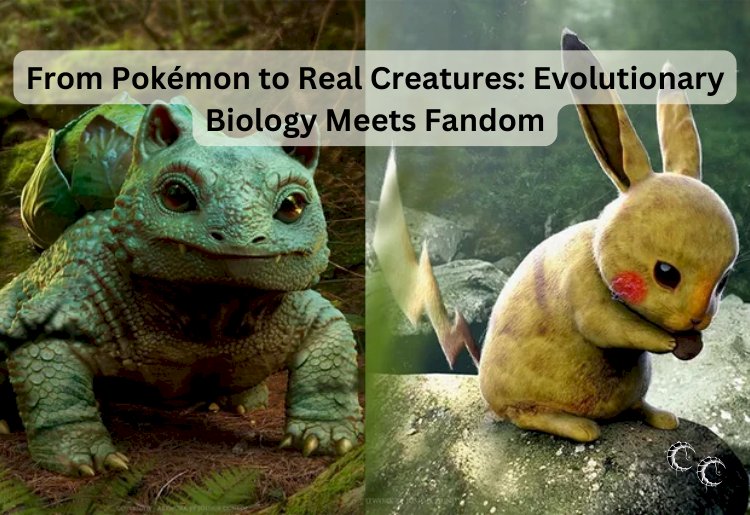
There is a unique thrill in watching a favorite Pokémon evolve. The anticipation, the transformation, the new abilities; it mirrors something deeper than the game itself. Beneath the surface of fantasy lies a reflection of reality: evolution. While Pikachu’s progression to Raichu exists in a digital universe, the principles that govern its change are grounded in biological truths that shape every living creature on Earth. The intersection of Pokémon and evolutionary biology offers a playful yet profound lens to explore adaptation, survival, and the endless creativity of life.
Evolution in nature is driven by variation, competition, and environmental pressures. Organisms with traits that enhance survival are more likely to reproduce, passing those traits to future generations. Over time, these incremental changes accumulate, creating species that are finely tuned to their ecosystems. Pokémon, though fantastical, often reflect these principles. Consider the progression of Magikarp to Gyarados; while exaggerated for dramatic effect, it hints at a common biological theme, the potential for dramatic transformation in response to ecological pressures. In reality, fish exhibit a surprising diversity of growth forms, life cycles, and survival strategies, demonstrating evolution’s endless creativity.
Fans often draw parallels between Pokémon types and real-world adaptations. Fire-types may remind us of thermophilic organisms that thrive in extreme heat; water-types resemble amphibians or aquatic mammals perfectly adapted to their environments. Grass-types echo the strategies of plants, fungi, and herbivores that rely on camouflage, symbiosis, or chemical defenses. Pokémon evolve to survive challenges, much like real species evolve over generations. This comparison not only enhances appreciation for the games but also sparks curiosity about biological processes and natural history.
One of the most fascinating aspects of evolution is convergent evolution. In nature, unrelated species often develop similar traits when facing comparable challenges. Penguins and dolphins, for example, share streamlined bodies for efficient swimming despite their distinct lineages. Pokémon frequently embody this principle in design; many creatures share functional similarities across different regions, reflecting a creative interpretation of natural selection. Fans intuitively recognize these patterns, highlighting how even fictional evolution can mirror real biological phenomena.
Developmental biology also plays a role in understanding evolution. The process of growth from juvenile to adult stages is a critical window for adaptation. In many Pokémon, pre-evolved forms are smaller, less capable, or seemingly incomplete, only reaching their full potential after gaining experience. In nature, similar principles apply. Caterpillars metamorphose into butterflies; tadpoles become frogs; juvenile animals gradually develop skills necessary for survival. Observing these transformations can cultivate an appreciation for the intricacy and timing of life’s processes.
Pokémon evolution also raises questions about environmental triggers and adaptability. In games, certain creatures evolve only under specific conditions, such as exposure to stones, friendship, or location. In nature, environmental factors such as temperature, resource availability, and predation pressure guide evolutionary change. While Pokémon simplifies these influences into game mechanics, the underlying concept mirrors real ecological relationships. Adaptation is context-dependent; survival often requires the right conditions at the right time, a principle that applies equally to digital monsters and living organisms.
Fandom brings another layer to the conversation. Fans dissect evolutionary lines, propose alternative adaptations, and even design fan-created species that fit within established ecosystems. This creative engagement mirrors scientific inquiry; it encourages exploration, hypothesizing, and iterative thinking. By analyzing Pokémon through a biological lens, fans practice critical observation and pattern recognition, skills that are fundamental to scientific study. The intersection of imagination and knowledge transforms entertainment into a gateway for learning.
The comparison between Pokémon and real-world creatures also fosters empathy for nature. Understanding how fictional creatures adapt to challenges can inspire curiosity about real ecosystems and the pressures faced by endangered species. It highlights the elegance of evolution and the fragility of environmental balance. Exploring these digital evolutions nurtures an ecological imagination; it connects fantasy with conservation awareness.
Ultimately, the allure of Pokémon evolution lies not just in gameplay but in its reflection of life’s principles. Transformation, adaptation, and survival are universal themes that resonate across digital and biological worlds. By examining Pokémon alongside evolutionary biology, we can appreciate the complexity of life in new ways. Each creature, whether imagined or real, tells a story of change, resilience, and the endless possibilities that arise when organisms respond to their surroundings. The magic of fandom becomes a bridge to understanding nature; evolution is both a scientific fact and a source of wonder.