Astrobiology Lessons from Star Wars and Star Trek Planets
 Cordelia Cross
Feb 6, 2026 01:18
0
Cordelia Cross
Feb 6, 2026 01:18
0
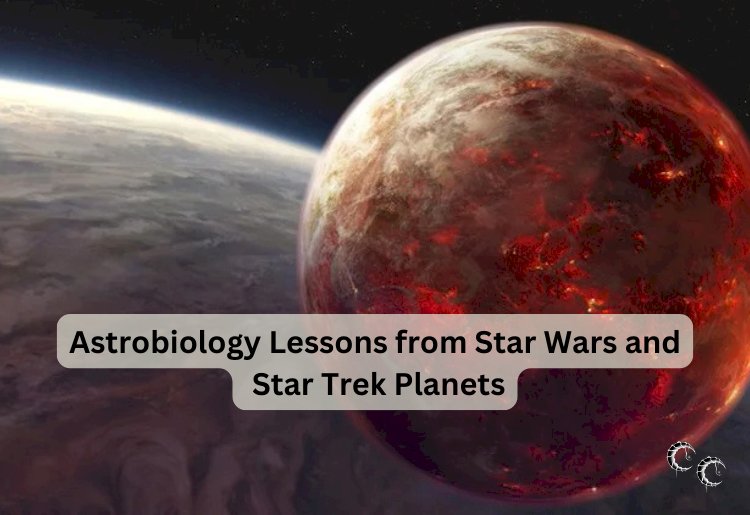
There is something deeply comforting about the way sci fi treats planets. You land, you breathe, you look around, and within five minutes you understand the entire ecosystem. Desert planet. Ice planet. Jungle planet. City planet. Done.
Star Wars and Star Trek have given us some of the most iconic worlds in fiction, and even when they stretch science past its breaking point, they still spark real questions. What would life actually need to survive on these planets. How would ecosystems evolve under different conditions. Could a planet really be covered in one biome. And why does every alien world conveniently have gravity that feels exactly like Earth.
Astrobiology, the study of life in the universe, sits right at the intersection of imagination and reality. It asks what conditions allow life to emerge, what forms it might take, and how we could recognize it. When you look at Star Wars and Star Trek through that lens, the fictional planets become something more than settings. They become case studies in what science thinks is possible and what storytelling needs to be fun.
The One Biome Planet Problem
Let’s start with the big one.
In both Star Wars and Star Trek, planets tend to be defined by a single environment. Tatooine is desert. Hoth is ice. Dagobah is swamp. Endor is forest. Mustafar is lava. Kamino is ocean.
Star Trek is slightly more varied, but it still leans into planets with dominant identities. When the Enterprise arrives somewhere new, the crew usually steps onto a surface that is immediately readable.
Real planets are messy.
Earth has deserts, tundra, rainforests, mountains, oceans, plains, and everything in between. Even Mars, which looks uniform from a distance, has wildly different geology depending on where you land. A planet can have a dominant climate, but a true single biome world would require very specific conditions, and even then it would likely still have variation.
If Tatooine were real, you would expect polar ice caps, seasonal weather patterns, and regions with different levels of humidity. If Hoth were real, you would still expect some geological diversity.
The one biome planet exists because it is efficient storytelling. It gives you instant atmosphere. It is also a perfect reminder that astrobiology is less about aesthetic categories and more about complex systems interacting over time.
Atmospheres That Should Not Work
Here is a recurring sci fi miracle. Humans step onto alien worlds and breathe like it is no big deal.
In Star Wars, almost every planet seems to have an Earth like atmosphere. Even when the environment is extreme, characters rarely need breathing gear unless the plot calls for it. Star Trek does this too, although it sometimes acknowledges atmospheric differences.
From an astrobiology perspective, breathable air is not just oxygen. It is the right pressure, the right composition, the right temperature, and the right chemistry. Even a small shift in atmospheric balance could be fatal.
For example, too much oxygen increases fire risk dramatically. Too little pressure causes severe physiological problems. Too much carbon dioxide becomes toxic. Even trace gases could trigger long term health issues.
So when you see characters casually breathing on a planet with volcanic activity, high radiation, or unusual gravity, you are watching pure narrative convenience.
But this is where the science gets fun. If we want to imagine a realistic version of these worlds, we start asking what atmosphere would actually match the environment.
Mustafar would likely have sulfur compounds and thick volcanic haze. Hoth might have a thin, cold atmosphere that would freeze lungs. Kamino would have intense storms and ocean based atmospheric chemistry.
In real astrobiology, atmosphere is one of the biggest clues we would use to detect life. The gases in the sky tell a story about what is happening on the surface.
Water Worlds and the Myth of Endless Oceans
Kamino in Star Wars is an iconic ocean planet. Star Trek has its own versions, including worlds dominated by water and storms.
The idea is visually stunning, but astrobiology asks a few practical questions.
First, where is the land.
A planet with no land at all is possible, but it changes everything. Land plays a major role in nutrient cycling. It provides minerals, creates varied habitats, and influences weather systems. Without land, life would need a different way to access essential nutrients.
Second, how deep is the ocean.
If the ocean is too deep, the pressure at the bottom becomes extreme. That does not prevent life, but it shapes what life can look like. Deep sea organisms on Earth already show us that life can thrive without sunlight, powered by chemical energy near hydrothermal vents.
This is where science and fiction actually overlap beautifully.
A Kamino like world could be a hotspot for microbial life, bioluminescent ecosystems, and vent based food chains. It might not look like sleek cloning cities on stilts, but it could absolutely be alive.
Desert Planets and the Limits of Life
Tatooine is one of the most famous planets in fiction, and it is also a perfect astrobiology thought experiment.
Could a desert planet support life. Yes.
Would it support bustling civilizations, agriculture, and moisture farms. That depends.
A planet with very little surface water would struggle to support large scale ecosystems unless it had:
-
A stable water source underground
-
A way to recycle moisture efficiently
-
An atmosphere that prevents water loss
-
Temperatures that allow liquid water at least part of the time
Life on a desert world would likely be highly adapted to conserving water. Plants might store water like succulents. Animals might be nocturnal. Microbes could dominate the ecosystem, living in rocks, under sand, or in protected caves.
In astrobiology, deserts are not considered dead zones. They are considered potential habitats. Earth’s driest deserts still contain microbial life.
So Tatooine is not impossible. It is just simplified.
Ice Worlds and Hidden Oceans
Hoth is the classic frozen planet, but it is not the most scientifically interesting ice world in sci fi.
The most exciting ice worlds are the ones with oceans beneath the ice.
In our own solar system, moons like Europa and Enceladus are considered strong candidates for life because they may contain subsurface oceans kept warm by tidal heating.
A Star Trek planet with an icy surface could realistically hide a thriving ocean ecosystem below.
This is one of the places where sci fi could actually undersell the science. A frozen surface does not mean a dead world. It could mean a protected world, shielded from radiation and meteor impacts.
If Hoth had a subsurface ocean, the planet could have complex life hidden beneath the ice, potentially far more interesting than what is visible on the surface.
Jungle Planets and the Illusion of Endless Forest
Dagobah and Endor represent the lush, wild side of sci fi planets. They are humid, green, and bursting with life.
The question is not whether jungle worlds could exist. They could.
The question is what conditions create a planet wide forest.
A world dominated by forests would likely have:
-
High rainfall
-
Stable temperatures
-
Strong atmospheric circulation
-
Abundant sunlight
-
Nutrient rich soil systems
But even then, you would still expect variation. Mountains create different climates. Oceans influence weather. Polar regions behave differently than equatorial ones.
Astrobiology reminds us that life is not evenly distributed. It clusters where conditions are favorable. A truly planet wide jungle would require an almost perfectly balanced climate system, which is rare.
Still, jungle planets are not just fantasy. They are a visual shorthand for biodiversity. And biodiversity is exactly what astrobiologists are hoping to find elsewhere in the universe.
Gravity and the Convenience of Human Bodies
Here is the quietest miracle in sci fi.
Every planet feels like Earth.
Gravity shapes everything about life. It influences bone density, muscle structure, circulation, movement, and even how plants grow. A high gravity planet would produce shorter, sturdier organisms. A low gravity planet might produce tall, delicate forms.
If humans visited a planet with significantly higher gravity, they would struggle to move, breathe, and function. On a low gravity world, they might experience muscle and bone loss quickly.
Star Trek occasionally addresses this with technology or story moments. Star Wars mostly ignores it.
From an astrobiology perspective, gravity is one of the most important planetary variables. It affects how an ecosystem evolves, how creatures hunt, and how they survive.
If you want to imagine truly alien life, you start with gravity.
What Sci Fi Gets Right About Alien Life
Despite the simplifications, both franchises do a few things surprisingly well.
They treat life as adaptable. They show that organisms can evolve into strange forms. They hint at worlds where life is shaped by environment.
Star Trek in particular often explores the ethical and philosophical implications of encountering life. It treats alien species as more than monsters. It asks how culture, biology, and environment interact.
Star Wars focuses more on myth and archetypes, but it still presents a galaxy where life is abundant and diverse. It suggests that the universe is not empty. It is alive.
That idea is at the heart of astrobiology.
The Biggest Astrobiology Lesson: Habitability Is a Spectrum
One of the most important concepts in modern astrobiology is that habitability is not a yes or no question. It is a spectrum.
A planet does not need to be Earth to host life. It just needs stable conditions where chemistry can build complexity over time.
Life might exist in environments we would consider extreme. It might thrive in subsurface oceans, deep underground, or in atmospheres that look hostile to humans.
Sci fi often treats planets as either habitable or not. Real science suggests there are countless shades in between.
That means the universe could be full of life that does not resemble anything in Star Wars or Star Trek. It might be microbial. It might be hidden. It might be quiet.
And that possibility is, in its own way, even more thrilling than a cantina full of aliens.
Conclusion
Star Wars and Star Trek planets are not scientifically accurate models of alien worlds, but they are incredible starting points for real astrobiology questions. They simplify ecosystems into recognizable categories, bend atmospheric rules for storytelling, and ignore gravity because nobody wants to watch a hero struggle to walk for two hours.
But beneath the narrative convenience is something genuinely valuable. These fictional worlds encourage us to think bigger about life, environment, and possibility. They remind us that planets are systems, that habitability is complex, and that life is more adaptable than we often assume.
In the end, the greatest lesson these franchises offer is not a specific scientific truth. It is curiosity.
And if astrobiology has taught us anything, it is that curiosity is how we eventually turn science fiction into science.