Science of Magic: Could Hogwarts Spells Make Sense?
 Cordelia Cross
Nov 9, 2025 05:41
0
Cordelia Cross
Nov 9, 2025 05:41
0
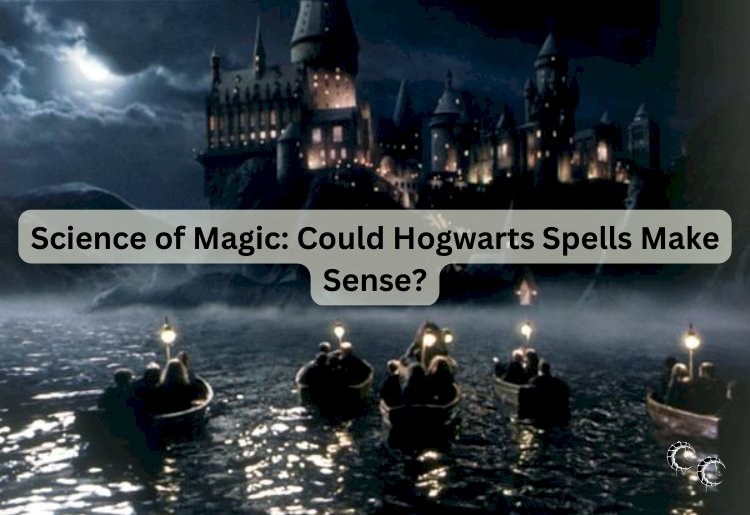
Hogwarts and its spells have captivated generations, from levitating objects with Wingardium Leviosa to conjuring fire with Incendio. While J.K. Rowling’s magic is fantastical, examining these spells through the lens of science opens fascinating questions: Could they make sense if we reimagined them in a physical or chemical framework?
At the core of many spells is energy manipulation. For instance, Incendio, which produces fire, requires rapid energy transfer to ignite fuel. In real-world terms, this could be seen as concentrated thermal or chemical energy delivered instantly to a target. Chemical reactions already produce fire and explosions, so a magical analog might involve a localized catalyst or energy release that initiates combustion without traditional ignition. While impossible for a human to generate this energy internally, the concept mirrors controlled reactions in chemistry and pyrotechnics.
Levitation spells like Wingardium Leviosa raise questions of physics and force. Lifting objects requires counteracting gravity, which in classical mechanics demands an upward force equal to the object’s weight. This could theoretically be achieved through magnetic fields, acoustic levitation, or directed energy, though these methods have severe practical limitations. In magical terms, the spell supplies an invisible force, converting intent into motion without observable mechanisms, effectively bypassing inertia and friction in a way that resembles telekinesis.
Transfiguration spells, which change one object into another, intersect with materials science and atomic structure. Altering matter at a molecular or atomic level is currently beyond practical capability. Even if one could rearrange atoms to create new materials, the energy required and the complexity of chemical bonding make it far beyond current technology. Spells that do this instantaneously suggest not just energy manipulation but also an underlying knowledge of molecular structures and stability, something that real-world science can only approximate with slow, deliberate chemical synthesis.
Spells that produce light, sound, or movement, such as Lumos, Sonorus, or Accio, involve forms of energy transfer already understood in physics. Lumos could be imagined as a controlled light-emitting reaction, while Sonorus amplifies sound through directional resonance. Accio, which summons objects, again implies an unknown force acting over distance, reminiscent of the theoretical physics behind telekinesis or force fields. These interpretations allow spells to be framed as extreme, fantastical applications of real principles rather than entirely impossible phenomena.
Magic also bypasses limitations that science imposes. Instant travel (Apparition), memory manipulation (Obliviate), or mental influence (Legilimens) suggest control over space, time, and consciousness. These areas intersect with theoretical physics and neuroscience. While manipulation of spacetime or cognition at a distance remains speculative, these spells highlight narrative flexibility: magic achieves results by circumventing natural constraints, compressing complex processes into immediate outcomes that serve storytelling rather than feasibility.
Interestingly, Hogwarts spells often involve intention, pronunciation, and wand motion. This mirrors the idea of precise control in engineering or chemistry. In science, small variations in conditions—energy input, timing, or catalysts—can dramatically affect outcomes. The magical components serve as a symbolic interface, ensuring precision and minimizing error, much like a lab procedure or safety mechanism. The wand acts as a conduit, channeling energy or force, reflecting the importance of tools in controlling complex reactions.
The predictable rules of magic in Rowling’s world also echo scientific principles. Spells have limits, require skill, and can fail if misapplied. This mirrors how experiments rely on controlled variables and reproducible conditions. Magic is structured, systematic, and subject to learning curves, making it conceptually analogous to applied science with unknown mechanisms.
Ultimately, while Hogwarts magic cannot exist in our physical reality, many spells can be interpreted as extreme, imaginative analogs of scientific principles. Fire, levitation, transformation, and energy manipulation all have real-world counterparts, even if magic bypasses the practical limitations of physics and chemistry. Reimagining spells in this way highlights creativity while grounding fantasy in conceptual plausibility.
Hogwarts spells remind us that magic thrives at the intersection of wonder and understanding. They are storytelling devices, yet they reflect principles of energy, force, and control. By exploring the science behind them, we see that fantasy and physics can coexist in thought experiments, enriching both our imagination and our appreciation for the laws that govern the real world.