The Psychology of Multiverse Beliefs
 Cordelia Cross
Oct 20, 2025 05:47
0
Cordelia Cross
Oct 20, 2025 05:47
0
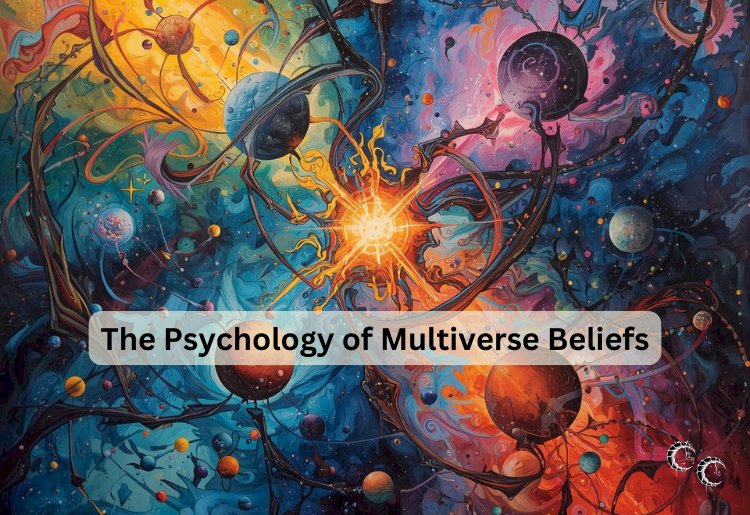
The concept of a multiverse—the idea that multiple, parallel universes exist alongside our own—has captivated both scientists and storytellers. From quantum mechanics to science fiction, the multiverse inspires awe, curiosity, and speculation. Beyond physics, however, belief in multiple realities also reveals fascinating insights into human psychology, cognition, and the ways we cope with uncertainty.
One key factor is cognitive comfort. The multiverse offers a framework to make sense of improbable or chaotic events. By imagining countless parallel outcomes, humans can reconcile randomness, misfortune, or existential uncertainty. Psychologically, this functions as a coping mechanism: if every choice or outcome exists somewhere, the stress of failure or regret may be reduced. The multiverse concept provides a sense of control and meaning in an otherwise unpredictable world.
Pattern recognition also plays a role. Humans are wired to detect causality and connections, even when events are random. Multiverse thinking extends this tendency, allowing people to mentally simulate alternative outcomes and scenarios. In cognitive psychology, this is linked to counterfactual thinking—the ability to imagine “what might have been.” Belief in parallel worlds externalizes this process, creating a literal space in which alternate versions of events or selves exist, reinforcing the mind’s natural tendency to explore possibilities.
Fantasy and storytelling amplify these beliefs. Exposure to science fiction, comics, and films introduces audiences to multiple timelines, alternate realities, and “what if” scenarios. These narratives provide familiar mental models, making the multiverse concept more accessible and emotionally compelling. Psychologists suggest that fiction shapes cognitive schemas, meaning repeated engagement with multiverse stories can influence real-world reasoning and beliefs about possibility.
Curiosity and the desire for exploration are also central. Humans are inherently driven to understand hidden structures of reality. The multiverse appeals to this desire, promising vast unknowns and endless opportunities for discovery. It satisfies the intellectual drive for novelty while providing a sense of wonder, linking cognitive motivation with imaginative reasoning. For many, entertaining the possibility of multiple universes mirrors the scientific pursuit of understanding the cosmos.
Existential reflection underlies multiverse beliefs as well. Concepts like infinite selves or alternate outcomes allow individuals to contemplate identity, morality, and choice in profound ways. By imagining that other versions of themselves exist in different realities, people can explore alternate paths, consider ethical dilemmas, or reframe personal decisions. This aligns with psychological theories suggesting that humans use imagination to test social, moral, and strategic scenarios safely.
Belief in multiverses is sometimes influenced by exposure to scientific theories. Quantum mechanics, cosmology, and string theory introduce genuine scientific models in which multiple universes are theoretically plausible. While the empirical evidence is speculative, understanding these ideas requires abstract reasoning and comfort with uncertainty. Psychologically, acceptance of multiverse concepts can signal cognitive flexibility and openness to novel frameworks of reality.
Anxiety and coping mechanisms further explain why multiverse thinking resonates. Facing mortality, loss, or uncertainty can provoke existential discomfort. Multiverse beliefs offer reassurance: somewhere, other versions of events or lives exist where outcomes differ. This can reduce stress and promote psychological resilience, providing a sense of continuity and possibility beyond the constraints of one tangible reality.
Finally, multiverse beliefs highlight the interplay between imagination and reasoning. They blend scientific concepts, philosophical reflection, and narrative experience into coherent mental models. Humans naturally seek patterns, project consequences, and simulate alternative realities. The multiverse formalizes these processes, making abstract thinking concrete and emotionally meaningful.
In conclusion, belief in multiple universes is not merely a fascination with science fiction or theoretical physics; it is deeply rooted in human cognition and psychology. It reflects our need to understand chance, cope with uncertainty, explore identity, and satisfy curiosity. By examining multiverse beliefs, we gain insight into how imagination, reasoning, and emotion interact, revealing that our minds are as expansive and exploratory as the universes we conceive.