How to Start Collecting Something Without Overspending
 Cordelia Cross
Oct 21, 2026 02:47
0
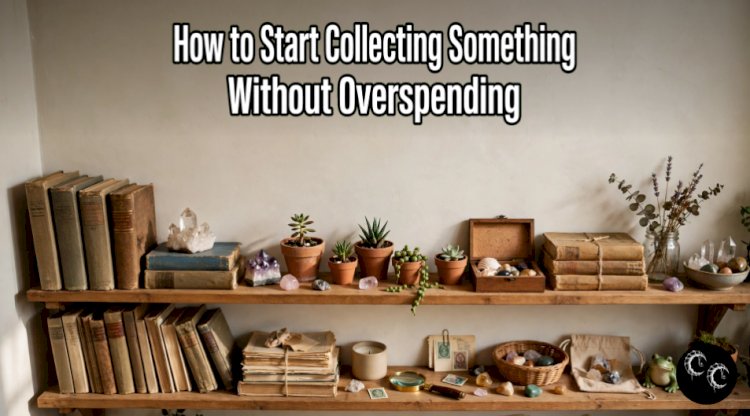
There is something exciting about starting a collection. Maybe you spot a beautiful vintage teacup at a thrift store, discover a series of fantasy books you want to own, or fall in love with tiny figurines that seem to have personalities of their own. Suddenly, one little treasure turns into a hobby you cannot stop thinking about.
Collecting can be a wonderful way to explore your interests, learn about history, express your personality, and find joy in discovering something special. But it can also become surprisingly expensive if every interesting item feels like a must have.
The good news is that you do not need a large budget to build a collection you love. With a little planning, some patience, and a few clever habits, you can enjoy the thrill of collecting without putting your finances under pressure.
1. Choose a Collection That Fits Your Budget

Before buying your first few items, think about what you genuinely enjoy. A collection should reflect your interests, not simply what is trending online or what other collectors say you should own.
Some hobbies naturally cost more than others. Rare trading cards, designer handbags, and vintage watches can become expensive quickly, while postcards, secondhand books, pressed flower art, and certain small decorative objects can be collected on a modest budget.
That does not mean every inexpensive hobby will always stay cheap. Almost anything can become costly when rare or highly sought after items enter the picture. The key is deciding which version of the hobby you want to enjoy.
Ask yourself a few simple questions:
-
What kinds of objects do I genuinely love?
-
Would I still enjoy collecting them if their resale value never increased?
-
Can I find affordable examples locally or secondhand?
-
Do I have enough space to store and display them?
Choose something that makes you happy even when you are not shopping for it. Reading about a collection, organizing your favorite pieces, and learning its history can be just as satisfying as adding another item.
2. Set a Spending Limit Before You Begin
One of the easiest ways to overspend is to start collecting without deciding how much you can comfortably afford.
A small purchase may not seem like a big deal, but several inexpensive items can quickly add up. Add shipping fees, display accessories, protective cases, and the occasional impulse purchase, and suddenly your relaxing hobby has become a budget problem.
Choose an amount that fits your financial situation. You might set aside $10, $20, or another comfortable amount each month. There is no ideal number that works for everyone.
Treat your collecting budget as a limit rather than a target you must spend. If you do not find anything worthwhile one month, keep the money for a future discovery.
It also helps to establish a few ground rules:
-
Never use money needed for bills, groceries, savings, or debt payments.
-
Avoid borrowing money to buy collectibles.
-
Include shipping, taxes, and other fees in the total cost.
-
Pause purchases when you reach your limit.
Having a budget does not take the fun out of collecting. It helps protect the enjoyment of your hobby by keeping financial stress out of the picture.
3. Start Small and Give Your Collection a Focus

When you first discover a collecting hobby, it is easy to want everything. You might begin with vintage postcards, then become interested in antique stamps, old photographs, decorative maps, and travel memorabilia.
Before long, you have several half started collections competing for your attention and money.
Instead, choose a manageable starting point.
If you love books, perhaps you collect illustrated editions of fantasy novels rather than every book that catches your eye. If you enjoy vintage ceramics, you might focus on blue and white pieces. If you collect figurines, you could limit yourself to a particular character, theme, or size.
A clear focus makes it easier to decide what belongs in your collection and what you can happily leave behind.
It can also help you become more knowledgeable about your chosen items. You will begin to recognize different styles, common flaws, fair prices, and the details that make one piece more interesting to you than another.
Remember, a smaller collection with a story behind each item can be more rewarding than a crowded shelf filled with things you bought simply because they were available.
4. Explore Thrift Stores, Flea Markets, and Secondhand Listings
New collectibles are often sold at premium prices, especially when they are marketed as limited editions or must have items. Shopping secondhand can open up a completely different world of possibilities.
Thrift stores, charity shops, flea markets, library sales, estate sales, and local online listings can all be useful places to discover affordable treasures.
You might find an older edition of a favorite book, an unusual ceramic ornament, a box of vintage postcards, or a collectible that has been overlooked by someone who does not recognize its appeal.
The trick is to shop with a plan rather than treating every bargain as an opportunity you cannot miss.
Before visiting a market or browsing listings, decide what types of items you are looking for and what you are willing to pay. Check the condition carefully, and compare prices when possible.
Be especially cautious with online listings that use words such as "rare," "exclusive," or "investment piece" without providing evidence. A seller's description does not automatically establish an item's value.
And remember that a bargain is only a bargain if you actually want the item. Spending $8 on something that does not interest you is still spending $8 unnecessarily.
5. Learn the Hobby Before Buying Expensive Pieces
A little research can save you a surprising amount of money.
Before making bigger purchases, learn about the different types of items in your chosen hobby. Look at examples of authentic pieces, common reproductions, typical condition issues, and the factors that influence prices.
For instance, collectors of vintage books may care about edition, printing, dust jacket condition, and completeness. Someone collecting trading cards might pay attention to authenticity, grading, centering, and surface damage.
You do not need to become an expert overnight. Start with a few basic questions and build your knowledge as your collection grows.
Useful habits include:
-
Comparing several listings before buying.
-
Looking at completed sales rather than relying only on asking prices.
-
Reading collector guides and community discussions.
-
Asking experienced collectors for advice.
-
Checking return policies and seller reputations.
If an item is expensive or claimed to be particularly rare, take extra time to verify its authenticity and condition.
Knowledge gives you confidence to recognize a good purchase, but it also makes it easier to walk away from something that is overpriced.
6. Try a Waiting Period Before Buying

You find something wonderful online. It is beautiful, it fits your collection perfectly, and the listing claims there is only one left.
Your first instinct might be to buy it immediately.
Instead, try giving yourself a waiting period.
For inexpensive items, wait a day or two. For larger purchases, consider waiting a week or longer. During that time, ask yourself whether you still want the item, whether the price fits your budget, and whether it adds something meaningful to your collection.
This simple habit can help separate genuine interest from the excitement of shopping.
It is particularly useful when dealing with limited time offers, auction countdowns, and social media posts that make collecting feel like a race. A hobby should not require you to make rushed financial decisions.
If the item sells before you decide, it may be disappointing. But another interesting piece will often come along, and you will have protected your budget in the meantime.
7. Make a Wishlist Instead of Buying Everything You Like
A wishlist gives your collecting hobby direction without requiring you to spend money every time something catches your attention.
Create a simple list of items you hope to find. Include the name, any details that matter, and the maximum price you would comfortably pay.
You might even divide your list into categories:
|
Priority |
What it means |
|---|---|
|
Must have |
An item that fills an important gap in your collection |
|
Nice to have |
Something you would enjoy but can easily live without |
|
Dream find |
A special piece you would consider if the right opportunity appears |
This approach makes shopping more intentional. Rather than browsing endlessly and buying whatever looks appealing, you can focus on finding pieces that fit your goals.
It also gives you something to look forward to. Searching patiently for a specific item can be part of the fun, especially when you finally discover one at a price that feels right.
Keep the wishlist flexible, though. Your interests may change as you learn more about the hobby, and there is no need to buy an item simply because you added it to the list months ago.
8. Connect With Other Collectors
Collecting does not have to be an expensive solo activity. Communities can help you learn, discover new interests, and enjoy your hobby without constantly making purchases.
Look for local clubs, library events, collector meetups, online forums, or hobby groups. Depending on the community, you may find people who share information, trade duplicate items, recommend affordable sellers, or organize swaps.
These connections can be particularly valuable when you are new to a hobby. Experienced collectors may explain which items are worth seeking out and which ones are commonly overpriced.
You can also learn from other people's collections without feeling that you need to own everything yourself.
Be thoughtful when trading. Agree on the condition and details of each item beforehand, and avoid sharing sensitive personal or financial information with strangers. For valuable trades, use a trusted method that offers appropriate protection.
The best collecting communities celebrate curiosity and shared interests, not just the size or monetary value of someone's collection.
9. Find Free and Low Cost Ways to Enjoy Your Hobby
Buying new items is only one part of collecting. There are plenty of other ways to enjoy your interest while keeping your spending low.
You could research the history of your favorite pieces, create a catalog, photograph your collection, or reorganize your display. If you collect books, you might explore the history of different cover designs. If you enjoy vintage objects, you could learn how to identify manufacturing marks.
You can also set personal challenges that do not require additional purchases.
For example, try learning about five items you already own, creating a display using only your current collection, or finding a creative way to photograph your favorite pieces.
These activities deepen your appreciation for what you have rather than making the next purchase feel like the only exciting part of the hobby.
Sometimes, the most satisfying moment is not finding something new. It is discovering a detail about an item you have owned for years and realizing there is more to its story than you knew.
10. Know When to Stop and Enjoy What You Have
Collecting can become a cycle of searching, buying, and immediately looking for the next item. The excitement of a new purchase fades, so you start chasing another one.
If that sounds familiar, it may be time to slow down and appreciate your existing collection.
Take a little time to arrange your favorite pieces, clean and care for them appropriately, or revisit the reasons you started collecting in the first place.
You can also review your collection occasionally and decide whether everything still belongs. Trading or selling items that no longer interest you may free up space and money for the parts of the hobby you enjoy most.
There is no rule saying a collection must grow constantly. A collection of ten carefully chosen items is still a collection. So is a collection that stays the same size for years.
Your hobby does not need to become bigger to become more meaningful.
A Simple Beginner Plan for Your First Month
If you are ready to start collecting but want to avoid spending too much, try this straightforward approach.
Week 1: Explore
Choose one collecting interest. Research different types of items, learn the basics, and decide what you want your collection to focus on.
Week 2: Set Your Budget
Decide on a comfortable spending limit and create a wishlist with maximum prices for the items you hope to find.
Week 3: Search Carefully
Explore secondhand shops, local markets, and reputable online listings. Compare prices and resist buying items simply because they are cheap.
Week 4: Organize and Reflect
Record what you have found, learn more about your favorite piece, and decide what you would like to look for next. You do not need to buy something every week.
By the end of the month, you will have a clearer idea of what interests you, what things typically cost, and how you want to approach your collection.
Final Thoughts
Starting a collection should feel exciting, not financially stressful. You do not need rare treasures, expensive editions, or shelves packed with beautiful objects to call yourself a collector.
Begin with something you genuinely enjoy, set a spending limit, learn before making larger purchases, and give yourself permission to wait for the right find. Look for affordable alternatives, connect with people who share your interests, and remember that you can enjoy collecting even when you are not buying anything.
Most importantly, let your collection grow at its own pace. The pleasure comes from the stories, discoveries, memories, and personal meaning behind the items you choose.
A thoughtful collection built slowly can be far more rewarding than an expensive one assembled in a hurry.