
The Small Business Holiday Survival Guide: How to Survive the Holiday Rush Without Losing Your Mind
 Cordelia Cross
Nov 15, 2026 08:55
0
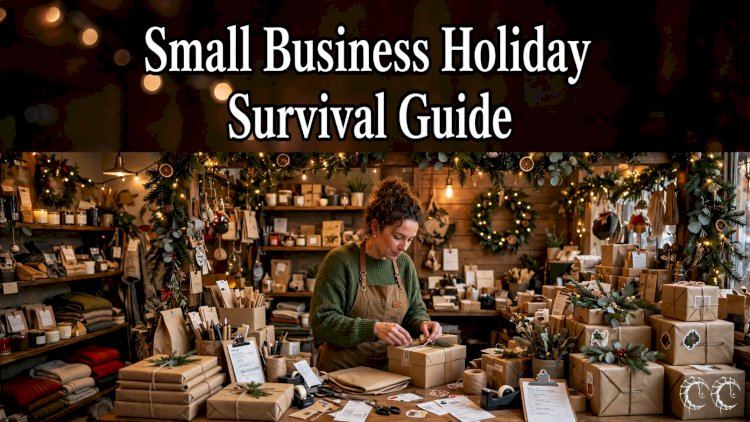
There’s something magical about the holiday season. Twinkly lights, festive window displays, cosy evenings, thoughtful gifts, and the lovely feeling of people choosing to shop small.
And then there’s the other side of the holiday season.
The sudden realisation that you have 47 orders to pack, your best-selling product is nearly out of stock, the postal deadline is tomorrow, someone has emailed asking where their parcel is, and you haven’t eaten lunch. Again.
Ah, yes. Christmas in small business land.
The holiday rush can be brilliant for independent businesses, but it can also be a lot. You're juggling customers, stock, packaging, shipping, marketing, and all the everyday jobs that don't magically disappear just because it's December.
The good news? A little planning can make a huge difference.
Whether you're running a tiny handmade shop from your kitchen table, a busy online store, or a lovely little bricks-and-mortar business, this guide will help you prepare for the busiest shopping season of the year without completely losing your festive sparkle.
Let's get organised!
1. Get Your Inventory Sorted Before the Rush Begins
Nothing puts a dampener on a busy sales day quite like discovering you've run out of the product everyone suddenly wants.
Inventory planning isn't the most glamorous part of running a small business, but it can save you a whole lot of stress later.
Start by looking at what happened last year. Which products sold particularly well? Were there certain colours, sizes, styles, or gift sets that disappeared faster than you could restock them? Are there products that tend to become popular as Christmas gets closer?
Your previous sales can give you some useful clues about what customers might want this year.
If this is your first holiday season, don't panic. You don't need a crystal ball. Start with your current bestsellers, ask customers what they'd love to see, and make sensible decisions based on your budget and storage space.
A few things to do now:
- Review your best-selling products and identify anything that needs restocking.
- Check supplier lead times, especially for products that take longer to arrive.
- Make a list of materials and packaging supplies you'll need.
- Set minimum stock levels for your most popular products.
- Keep an eye on products that are selling faster than expected.
- Consider creating a small amount of extra stock for unexpected demand.
One little tip: don't spend your entire budget stocking up on everything just because it's Christmas. It's tempting to imagine that every product will suddenly become a bestseller, but tying up all your money in stock can create problems of its own.
Focus on the products you know your customers love, and leave yourself a little breathing room.
2. Make Packaging Part of the Plan
We all love a beautifully packaged order. That little moment when a customer opens a parcel and finds something thoughtfully wrapped inside can make the whole shopping experience feel special.
But when you're packing dozens of orders a day, elaborate packaging can quickly turn into a logistical nightmare.
The trick is to create a packaging process that's lovely for customers but manageable for you.
Before the rush starts, gather everything you need and keep it somewhere easy to reach. Think boxes, mailers, tissue paper, stickers, tape, labels, thank-you cards, ribbon, and any other finishing touches that make your parcels feel like yours.
It's also worth preparing some packaging in advance.
You could:
- Pre-fold boxes and mailers.
- Print or organise thank-you cards.
- Prepare branded stickers and labels.
- Create simple gift-wrapping options.
- Set up a dedicated packing station.
- Keep commonly used packaging materials together.
If you offer gift wrapping, decide exactly how it will work before orders start rolling in. Make sure customers understand what's included, whether there's an extra charge, and whether gift messages are available.
And please, for the love of festive sanity, don't make every single parcel a complicated craft project.
Beautiful packaging doesn't have to take 20 minutes per order. Sometimes a simple, thoughtful presentation is more than enough.
3. Know Your Shipping Deadlines
Shipping is one of those things that can make or break the holiday shopping experience.
Customers want their gifts to arrive on time, and you want to get every order out the door without spending your entire December apologising for delayed parcels.
The best way to avoid shipping chaos is to plan ahead and communicate clearly.
Start by checking the holiday shipping deadlines for every service you use. Different carriers have different cut-off dates, and international deliveries often need much more time than domestic orders.
Don't leave this until the week before Christmas. Delivery networks get busy, and unexpected delays can happen.
Once you know your deadlines, make them easy for customers to find.
Add shipping information to your website, update your social media profiles, and consider including a reminder in your email newsletters. If you have a physical shop, display the information somewhere customers can see it.
You might also want to create a final order date for guaranteed Christmas delivery. Give yourself a little buffer rather than promising that an order placed at the last possible moment will arrive in time.
Your holiday shipping checklist:
- Confirm carrier deadlines for domestic and international orders.
- Check collection times and holiday opening arrangements.
- Order extra shipping labels and packaging materials.
- Make sure your printer and label supplies are ready.
- Update your website with clear delivery information.
- Decide when you'll stop accepting orders for Christmas delivery.
- Keep customers informed if delays occur.
And remember, shipping deadlines can change. Check directly with your delivery providers for the latest dates rather than relying on last year's information.
4. Prepare for the Customer Service Questions
The holiday season brings lovely customers, exciting orders, and occasionally a small avalanche of messages.
Where's my order? Can this arrive before Christmas? Do you offer gift wrapping? Can I change the delivery address? Is this product available in another colour?
All perfectly reasonable questions, but answering the same ones over and over can eat into the time you need for everything else.
A little preparation can help.
Think about the questions customers are most likely to ask and create a handy FAQ section on your website. Include information about delivery times, returns, gift wrapping, product availability, and how to contact you.
You can also prepare a few email or message templates for common situations.
For example, you might have a friendly response ready for:
- Customers asking when their order will arrive.
- Customers wanting to know whether an item will be restocked.
- Customers requesting gift wrapping.
- Customers asking about Christmas delivery.
- Customers who need help with an order.
Templates don't mean your customer service has to feel robotic. They're simply a starting point, saving you from typing the same information 30 times.
Most importantly, be realistic about your response times.
If you normally reply within a few hours but know you'll be busy processing orders, update your website or social media to let customers know. Clear expectations are much better than leaving people wondering whether their message has disappeared into the festive void.
5. Give Your Website a Little Holiday Health Check
Your website is often your hardest-working employee during the holiday season. It doesn't need a lunch break, it doesn't mind working weekends, and hopefully it doesn't ask for a Christmas bonus.
But it does need a little attention.
Before the busy period begins, take some time to walk through your website as though you're a customer visiting for the first time.
Can you find the products easily? Are the descriptions clear? Do the photographs show what you're selling? Is the checkout process straightforward?
A confusing website can cost you sales, especially when customers are shopping in a hurry.
Check the following:
- Product descriptions are accurate and up to date.
- Prices and stock availability are correct.
- Shipping costs and delivery information are easy to find.
- Your returns policy is clearly displayed.
- Your checkout works properly on mobile devices.
- Contact information is easy to locate.
- Seasonal offers and gift options are clearly explained.
It's also a good time to think about how customers might shop for gifts.
Could you create a gift guide? Group products by price? Highlight bestsellers? Put together a few ready-made gift bundles?
Make it as easy as possible for someone to find a lovely gift without needing to spend half an hour navigating your website.
6. Plan Your Holiday Marketing Before You're Too Busy to Think
When orders start coming in, marketing can easily slip down the priority list.
You tell yourself you'll post something tomorrow, then tomorrow arrives with 12 parcels to pack and a supplier email that needs answering. Before you know it, two weeks have passed.
Sound familiar?
Planning some of your holiday marketing in advance can help you stay visible without having to come up with fresh ideas every single day.
Start by thinking about the products you want to promote and the kind of content your customers might find useful.
You could share:
- Gift guides for different budgets.
- Your most popular products.
- Behind-the-scenes glimpses of holiday preparations.
- Gift-wrapping ideas.
- Customer reviews and kind messages.
- Small-business gift recommendations.
- Last-order-date reminders.
- A little look at what goes on behind the scenes of your shop.
You don't need to be everywhere, either.
Choose the platforms where your customers already spend their time and focus your energy there. A few thoughtful posts are often more useful than trying to maintain five social media accounts while simultaneously running an entire business.
If you can, schedule some posts ahead of time. That way, your marketing can keep ticking along while you're busy doing the actual work.
And don't forget to remind people why shopping small matters. Every order supports a real person, a real business, and often a whole lot of hard work happening behind the scenes.
That's worth celebrating.
7. Create a Realistic Holiday Work Schedule
Here's a little reminder that small-business owners are human beings.
You need to eat. You need to sleep. You need to occasionally leave your workspace and remember what daylight looks like.
It's easy to fall into the trap of thinking you have to work every waking hour during the holiday season. Especially when sales are coming in and you don't want to disappoint anyone.
But running yourself into the ground isn't a sustainable business strategy.
Instead, create a realistic schedule that gives you time for the most important tasks.
You might decide to:
- Pack orders at set times each day.
- Dedicate specific days to making or restocking products.
- Check emails at scheduled intervals.
- Set aside time for social media and marketing.
- Establish a clear cut-off time for work.
- Take at least one proper break during the day.
If you have help available, even occasionally, think about which tasks you could delegate. Perhaps someone can help with packing, preparing materials, updating stock, or organising orders.
And if you're doing everything yourself, look for small ways to simplify your workload.
Could you reduce the number of packaging options? Pause a particularly time-consuming product? Limit custom orders for a few weeks? Make your processes a little easier?
You don't have to offer absolutely everything all the time.
Protecting your energy is part of looking after your business.
8. Have a Plan for When Things Go Wrong
Because, let's be honest, something probably will.
A supplier might be late. A parcel might go missing. Your website might have a wobble. You might sell out of a bestseller three days before Christmas.
It's not necessarily a sign that you've done anything wrong. Sometimes the holiday season simply throws a few unexpected surprises your way.
Having a basic backup plan can make those surprises much easier to manage.
Think about the things that could disrupt your business and decide what you'll do if they happen.
For example:
- A popular product sells out: Can you offer a restock date, a waitlist, or an alternative?
- A supplier delivery is delayed: Do you have another supplier or a suitable replacement?
- A parcel is delayed: How will you update the customer and help them understand their options?
- You receive more orders than expected: Can you temporarily adjust processing times or pause certain products?
- You become unwell: Is there someone who can help with essential tasks, or a way to communicate temporary delays?
You don't need a complicated emergency manual. Even a few notes about what to do in common situations can help you feel more prepared.
And when something does go wrong, communicate with customers as soon as you can. A friendly, honest message goes a long way.
9. Don't Forget the Community Behind Your Business
One of the loveliest things about running a small business is the community that grows around it.
Your customers aren't just order numbers. They're people choosing to support independent businesses, discover something different, and buy from real humans rather than always heading straight to the biggest retailer.
The holiday season is a wonderful opportunity to nurture those relationships.
Thank your customers for their support. Share kind reviews. Celebrate other independent businesses. Connect with fellow shop owners and recommend their products when it feels right.
You could even collaborate with another small business on a gift bundle, giveaway, or shared holiday promotion.
Small businesses don't have to compete with one another all the time. There's room for collaboration, encouragement, and cheering each other on.
And if you're part of The Small Shop Society, this is exactly the kind of community spirit we love to see.
We're all navigating the same wonderfully chaotic season in different ways. Sharing ideas, experiences, and a little encouragement can make the busy months feel much less overwhelming.
10. Make Time to Enjoy the Season
This might be the most important point in the whole guide.
When you're busy running a business, it's easy to spend the entire holiday season preparing for everyone else's celebrations while barely noticing your own.
You work through the festive playlists, the cosy evenings, the decorations, and the excitement, only to look up on Christmas Eve and realise you've been running on coffee and leftover biscuits for three weeks.
Please don't let that happen if you can help it.
Set a few boundaries before the rush begins. Decide when you'll stop taking orders, when you'll close for the holidays, and how much time you want to spend away from your business.
You might not be able to switch off completely, and that's okay. Small businesses are rarely as simple as setting an out-of-office message and disappearing into a pile of mince pies.
But you can make room for small moments that have nothing to do with orders, sales, or spreadsheets.
Go for a festive walk. Watch a Christmas film. Have dinner without checking your emails. Spend time with the people you love.
Your business is important, but so are you.
Your Small Business Holiday Survival Checklist
Before the festive madness begins, here's a quick recap of the things worth getting sorted:
Stock and inventory
- [ ] Review last year's sales and identify bestsellers.
- [ ] Check stock levels and reorder essential products.
- [ ] Confirm supplier lead times.
- [ ] Set minimum stock levels for popular items.
Packaging and fulfilment
- [ ] Order boxes, mailers, labels, and other supplies.
- [ ] Prepare your packing station.
- [ ] Organise thank-you cards and branded packaging.
- [ ] Decide how you'll handle gift wrapping.
Shipping
- [ ] Check current holiday shipping deadlines.
- [ ] Confirm collection times and holiday schedules.
- [ ] Update delivery information on your website.
- [ ] Set your final order dates for Christmas delivery.
Customer service
- [ ] Update your FAQs.
- [ ] Prepare responses to common customer questions.
- [ ] Review your returns and delivery policies.
- [ ] Communicate realistic response times.
Marketing and website
- [ ] Check product descriptions, prices, and stock.
- [ ] Test your website checkout.
- [ ] Plan holiday promotions and gift guides.
- [ ] Schedule some social media content in advance.
Your own wellbeing
- [ ] Create a realistic work schedule.
- [ ] Set boundaries around working hours.
- [ ] Ask for help where you can.
- [ ] Plan some proper time off.
You've Got This, Small Business Superstar
The holiday season can be one of the most exciting times of the year for a small business. It's a chance to welcome new customers, reconnect with familiar faces, share the things you've worked so hard to create, and finish the year with a little festive magic.
It can also be messy, exhausting, unpredictable, and occasionally involve packing orders in your pyjamas at an hour when sensible people are asleep.
Both things can be true.
You don't need a perfectly organised business to have a successful holiday season. You don't need to post every day, offer endless discounts, or say yes to every request that comes your way.
You just need a plan that works for your business, a little flexibility when things don't go according to plan, and enough breathing room to enjoy the season yourself.
So get that stock organised, check those shipping deadlines, prepare your packaging, and give yourself permission to take a break when you need one.
And remember, every parcel you send represents someone choosing to support a small business. That's a pretty wonderful thing.
Here's to a busy, brilliant, slightly chaotic, but hopefully very joyful holiday season.
You've got this.