The Truth About Metabolism and Aging
 Cordelia Cross
May 7, 2026 05:53
0
Cordelia Cross
May 7, 2026 05:53
0
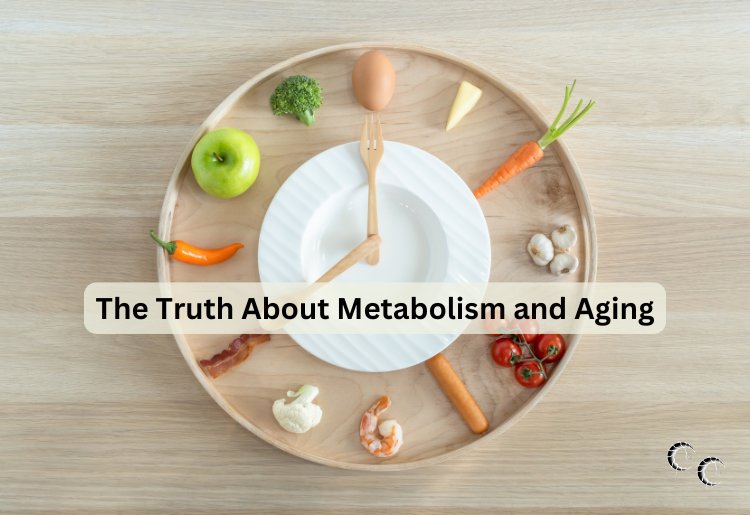
Metabolism is often talked about as if it is a single switch inside the body that slowly dims with age. It is blamed for weight gain, changes in energy, and the feeling that the body becomes harder to manage over time. While there is some truth to the idea that metabolism changes with age, the reality is far more nuanced than the simplified version that is often repeated.
Metabolism is not one system. It is the sum of all the chemical processes that keep the body alive. This includes how we convert food into energy, how we repair cells, how we regulate hormones, and how we maintain basic functions like breathing and circulation. Because it is so broad, it does not simply “slow down” in a uniform way.
What actually changes with age is not a single metabolic switch, but a combination of shifts in body composition, activity levels, hormone regulation, and cellular efficiency. Some of these changes are gradual, while others are influenced more by lifestyle than age itself.
One of the most important factors is muscle mass. Muscle tissue is metabolically active, meaning it burns energy even at rest. As people age, there is often a natural decline in muscle mass if it is not actively maintained. This change can reduce overall energy expenditure, which is sometimes interpreted as a slowing metabolism. In reality, the metabolic rate of the remaining tissue has not necessarily changed. There is simply less of it.
Activity level also plays a major role. Many people become less physically active over time due to work, responsibilities, or changes in routine. Reduced movement means fewer calories burned throughout the day. This shift is often gradual and can go unnoticed, but it has a meaningful impact on overall energy balance.
Hormonal changes also contribute to how the body uses and stores energy. Hormones help regulate appetite, fat storage, muscle maintenance, and energy distribution. As hormone levels shift with age, the body may respond differently to the same patterns of eating and activity. However, these changes vary widely between individuals and are influenced by many factors beyond age alone.
Cellular efficiency is another piece of the picture. Over time, cells may become less efficient at energy production and repair. This is a natural part of aging, but it does not occur at the same rate in everyone. Genetics, lifestyle, sleep quality, stress levels, and nutrition all play a role in how well these processes are maintained.
It is also important to separate perception from measurement. Many people feel like their metabolism has slowed because they notice changes in weight or energy. However, when researchers measure resting metabolic rate directly, the decline is often more gradual than expected until later in life. In many cases, the more immediate drivers of change are activity levels and body composition rather than metabolism itself.
This distinction matters because it shifts the focus away from something that feels fixed and unchangeable toward factors that can actually be influenced. While aging is inevitable, how the body ages is not entirely predetermined.
Lifestyle plays a significant role in shaping metabolic health over time. Regular physical activity, especially resistance training, helps preserve muscle mass. Consistent sleep supports hormonal balance and recovery. Nutrition provides the raw materials the body needs to maintain cellular function. Stress management also influences how efficiently the body regulates energy.
None of these factors can completely stop the natural processes of aging, but they can meaningfully influence how those processes are experienced.
Another important misconception is that metabolism inevitably leads to weight gain with age. Weight changes are more accurately explained by the balance between energy intake and energy expenditure. When activity decreases but eating habits remain the same, changes in body composition can occur. This is not solely a metabolic issue but a lifestyle balance issue.
Understanding metabolism in this way removes some of the fatalism that often surrounds aging. It shifts the narrative from something that happens to us to something that is influenced by a wide range of daily choices and conditions.
The truth about metabolism and aging is that it is not a simple decline, but a complex adjustment. Some processes slow, others remain stable, and many are shaped by behavior more than time alone. Aging does bring change, but it does not eliminate the body’s ability to adapt.
In the end, metabolism is less about a number that steadily decreases and more about a system that responds to how it is used. And while time plays a role in that system, it is not the only factor shaping how it functions.