The Physics of Lightsabers: Could Plasma Blades Ever Work?
 Cordelia Cross
Mar 22, 2026 05:23
0
Cordelia Cross
Mar 22, 2026 05:23
0
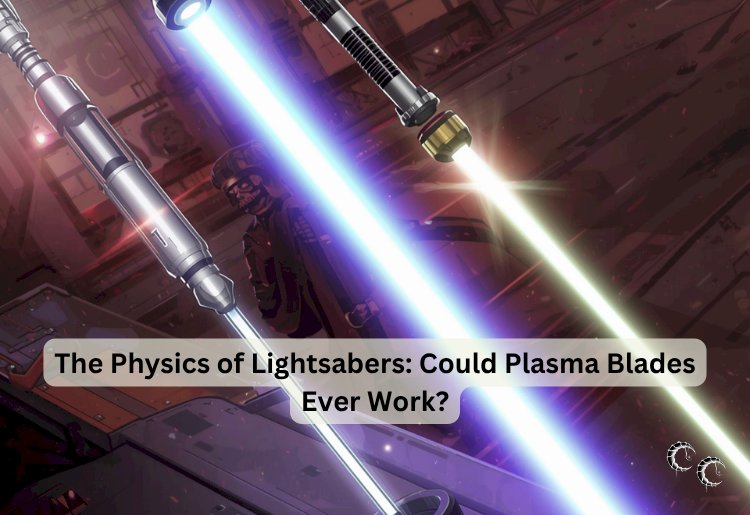
Lightsabers are one of the most iconic weapons in science fiction. A glowing blade of pure energy that cuts through almost anything, stops midair at a fixed length, and clashes dramatically with other blades. It feels futuristic, elegant, and just grounded enough in science to spark a real question. Could something like a lightsaber ever exist?
To answer that, you have to break the idea down into what a lightsaber actually is supposed to be. Most explanations describe it as a blade made of plasma, contained and shaped by some kind of energy field. That sounds scientific, but turning that idea into reality runs into several major challenges.
What Is Plasma and Why It Matters
Plasma is often called the fourth state of matter. It forms when a gas is heated so much that its atoms lose electrons, creating a mixture of charged particles. Plasma is extremely hot and highly energetic. It is what you see in lightning, stars, and certain types of experimental reactors.
So in theory, a plasma blade is not impossible as a concept. We already create plasma in labs and industrial tools. The real problem is not making plasma. It is controlling it.
The Containment Problem
A lightsaber blade has a defined shape. It extends outward to a fixed length and stops. In real physics, plasma does not behave that way. It expands, disperses, and follows magnetic and electric fields rather than holding a clean, sword-like form.
To make a stable plasma blade, you would need a containment system that keeps the plasma in a tight, consistent shape. This would likely involve powerful magnetic fields. The problem is that magnetic fields do not just stop in midair. They spread out and require large systems to maintain.
Creating a handheld device that can generate and precisely control a strong enough magnetic field to shape plasma into a rigid blade is far beyond current technology.
The Heat Problem
Plasma is incredibly hot, often reaching temperatures of thousands or even millions of degrees. A lightsaber blade would instantly ignite or melt most materials it touches, including the air around it.
This creates a huge issue for the user. The handle would need to be perfectly insulated from that heat. Even then, the surrounding air would heat up rapidly, potentially causing burns, fires, or shockwaves from rapid temperature changes.
In reality, simply turning on a plasma blade in a normal environment could be dangerous to the person holding it.
The Energy Requirement
A device like a lightsaber would require an enormous amount of energy. Sustaining plasma at high temperatures while also powering a containment field would drain power extremely quickly.
Modern batteries are not even close to providing that level of energy in a compact, handheld form. You would need something far beyond current energy storage technology, which is why science fiction often uses fictional power sources.
Why Lightsabers Stop at a Fixed Length
One of the most visually distinct features of a lightsaber is that the blade stops at a certain length instead of continuing like a beam.
In real physics, energy does not just stop in open space without interacting with something. For a plasma blade to stop, there would need to be some kind of boundary or loop that redirects it back. Some theories suggest a magnetic loop that curves the plasma back toward the hilt, but this would require extremely precise and powerful control systems.
Even then, maintaining that shape while swinging the weapon around would be incredibly difficult.
Blade on Blade Contact
Lightsabers can clash with each other, which raises another major question. Plasma does not behave like a solid object. If two streams of plasma met, they would likely pass through each other or interact unpredictably rather than forming a clean, solid collision.
For lightsabers to behave like swords, the containment fields themselves would need to interact and resist each other. That adds another layer of complexity, requiring fields that are not only stable but also capable of reacting dynamically to contact.
What Real Technology Gets Close
While true lightsabers are not realistic with current science, there are technologies that come somewhat close in specific ways.
Plasma cutters can slice through metal using extremely hot plasma, but they require a constant connection to a power source and do not form free-standing blades.
Experimental magnetic confinement systems can control plasma, but they are large and complex, not handheld.
High energy lasers can cut materials, but they behave like beams, not blades, and require significant power and cooling.
Each of these technologies captures one piece of the lightsaber idea, but none combine them into a single, compact device.
Could It Ever Be Possible
With current physics and engineering limits, a true lightsaber is not realistic. The main barriers are energy storage, plasma containment, heat management, and creating a stable blade shape in open air.
Future advancements could change parts of this equation. Breakthroughs in energy density, materials science, or electromagnetic control might allow for more compact and powerful devices. However, even with major progress, the classic lightsaber as seen in fiction would still face fundamental challenges.
A more realistic version might look very different. It could be a high energy cutting tool with a short plasma arc or a contained energy blade that only works in specific conditions. It would likely sacrifice the clean, glowing sword shape for practicality and safety.
Why Lightsabers Still Matter
Lightsabers are not just about physics. They represent a blend of science, imagination, and storytelling. They take real concepts like plasma and push them into a form that feels tangible, even if it is not achievable.
That balance between reality and imagination is what makes them so compelling. They are close enough to science to spark curiosity, but far enough to remain magical.
Final Thoughts
Could plasma blades like lightsabers ever work? Not in the way they are shown in fiction. The physics behind plasma, energy, and containment creates challenges that current technology cannot overcome.
But the idea itself continues to inspire real innovation. From cutting tools to experimental energy systems, the dream of harnessing and shaping energy into useful forms is very real.
Lightsabers may stay in the realm of science fiction, but the science they are built on continues to push forward, one discovery at a time.