Is It Acceptable for a Babysitter to Grab a Snack from the Fridge Without Asking First?
 Cordelia Cross
Apr 1, 2026 06:25
0
Cordelia Cross
Apr 1, 2026 06:25
0
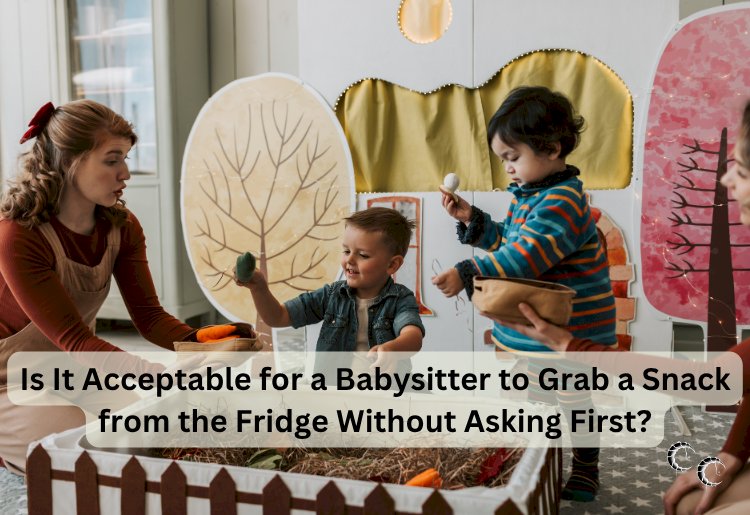
There is a particular kind of silence that settles over a home once the front door closes behind the parents. It is not just quiet. It is responsibility, humming softly in the background. A babysitter steps into that space carrying more than just the expectation to keep a child safe and entertained. They are stepping into a temporary role of trust, of care, of stewardship over someone else’s world. And somewhere between snack time negotiations and bedtime routines, a simple question emerges that seems small but carries surprising weight. Is it acceptable for a babysitter to grab a snack from the fridge without asking first?
The answer is yes.
Not reluctantly. Not softened into uncertainty. Yes, it is acceptable.
But like most things that happen inside someone else’s home, the reasoning matters more than the action itself. The difference between comfort and discomfort, between trust and unease, often rests in intention, awareness, and quiet respect.
A babysitter is not a guest in the traditional sense. They are not there to be hosted. They are there to work, to give their attention, their energy, and their presence. And in any other work environment, the idea of having access to basic necessities would not be questioned. No one expects a person to sit through hours of responsibility without the ability to eat or drink. It would be unreasonable. It would be unsustainable. And more importantly, it would quietly communicate that their needs are less important than the role they are filling.
When a babysitter opens a fridge, it is rarely about indulgence. It is about practicality. It is about staying present, fueled, and able to respond to whatever the evening requires. Hunger is distracting. It pulls attention away in subtle ways. It makes patience thinner, reactions slower, decisions less clear. A babysitter who feels comfortable enough to take care of their basic needs is a babysitter who can fully focus on the child in front of them.
There is also a deeper layer to consider. Allowing a babysitter the unspoken permission to access the kitchen is an extension of trust. It acknowledges that they are not an outsider hovering at the edges of the home but a temporary extension of the household itself. That kind of trust does not erode boundaries. It strengthens them. It creates an environment where the babysitter feels respected, and in return, they are far more likely to act with care and consideration.
Of course, there is a difference between taking a snack and treating the kitchen like a personal buffet. This is where awareness becomes essential. A babysitter who opens the fridge should do so with the same quiet mindfulness they would bring to any shared space. Choosing something simple, something reasonable, something that does not disrupt the household rhythm. A piece of fruit, a yogurt, a handful of crackers. The kind of choice that feels natural rather than excessive.
Consider a typical evening. A babysitter arrives just before dinner, the parents rushing out with quick instructions and a list of emergency contacts that no one expects to use. The child eats, plays, resists bedtime in the way children always do. Hours pass. The babysitter has not had a chance to eat since earlier in the day. The house grows quiet. The clock ticks toward a late hour. In that moment, opening the fridge is not an act of entitlement. It is an act of simple human need.
Or imagine a longer shift. A weekend afternoon that stretches into the evening. The babysitter spends hours engaged, attentive, patient. There is a natural lull at some point, a moment to breathe, to reset. Reaching for a snack becomes part of maintaining that steady presence. It allows them to return to their role without distraction, without the subtle strain of ignoring their own needs.
Some might argue that asking first is a sign of respect. And in certain situations, it absolutely can be. Especially in unfamiliar homes or with families who have not yet established a rhythm of trust. But there is also something to be said for the unspoken understanding that comes with repeated interactions. A babysitter who has been welcomed into a home multiple times, who knows the routines, the expectations, the small details that make the household function, should not feel like they need to pause and seek permission for something as basic as a snack.
In fact, requiring that level of permission can create an unnecessary distance. It can make the babysitter feel like they are constantly navigating invisible lines, second guessing what is acceptable and what is not. And that hesitation can spill over into other areas, making them less confident, less comfortable, less able to fully step into the role they have been given.
Parents, too, play a role in shaping this dynamic. A simple statement at the beginning of a shift can dissolve any uncertainty. A casual acknowledgment that the babysitter is welcome to help themselves if they need something. It does not need to be formal. It does not need to be detailed. Just a quiet assurance that their presence in the home includes the freedom to take care of themselves.
There is a certain grace in that kind of openness. It recognizes that care is not a one way exchange. The babysitter is there to care for the child, yes, but the environment should also support the babysitter in return. It is a small gesture that carries a larger message. You are trusted here. You are respected here. You are not expected to diminish your own needs to fulfill this role.
At the same time, a thoughtful babysitter understands the balance. They are aware of what feels appropriate. They pay attention to the patterns of the household. They avoid anything that feels overly personal or reserved. They clean up after themselves, leaving no trace beyond the quiet evidence of a job well done. It is not about taking advantage. It is about moving through the space with care.
There is also something inherently human about sharing food, even in its most understated form. It is one of the oldest gestures of trust and connection. To allow someone access to your kitchen, your fridge, the small details of your daily life, is to acknowledge them as more than just a temporary presence. It is to welcome them, even if only for a few hours, into the rhythm of your home.
And that matters.
Because the best caregiving does not come from a place of strict boundaries and rigid rules. It comes from a sense of ease, of mutual respect, of quiet understanding. A babysitter who feels comfortable is more likely to create a comfortable environment for the child. That sense of ease flows outward, shaping the entire experience in ways that are often felt more than they are seen.
So yes, it is acceptable for a babysitter to grab a snack from the fridge without asking first.
It is acceptable because they are human. It is acceptable because they are working. It is acceptable because trust, when given thoughtfully, tends to be honored rather than abused. And it is acceptable because the small act of allowing someone to meet their own needs can create a stronger, more respectful dynamic for everyone involved.
In the end, it is not really about the fridge. It is about what the fridge represents. Access, trust, belonging. And in a space built on care, those things should never feel out of reach.