Why Supermarket Simulator is More Addictive Than Modern Open World Games
 Cordelia Cross
Apr 22, 2026 10:07
0
Cordelia Cross
Apr 22, 2026 10:07
0
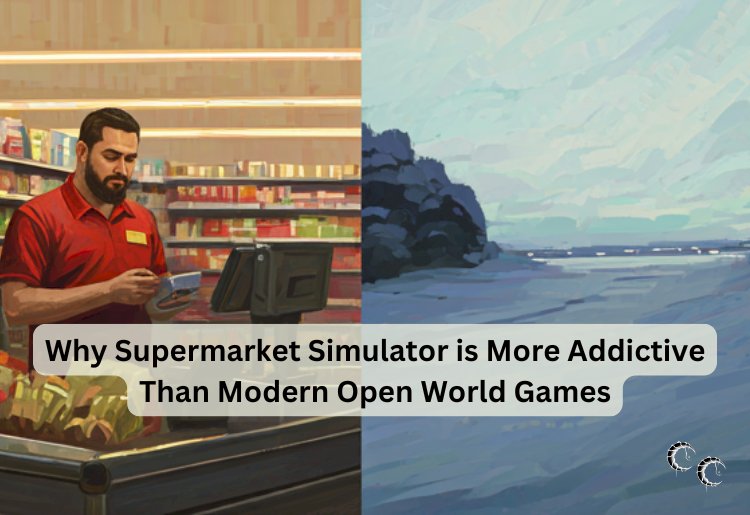
Open world games promise freedom. Vast maps, endless objectives, and the ability to go anywhere at any time. On paper, it sounds like the ultimate experience. In practice, that scale often comes with a hidden cost. Too many systems, too many markers, and too many competing objectives can turn freedom into noise. That is what makes the quiet pull of Supermarket Simulator so surprising. A game about stocking shelves and managing inventory should not be more compelling than slaying dragons, yet for many players, it is.
To understand why, it helps to look at what the game actually asks you to do. At its core, Supermarket Simulator is built on simple, repeatable actions. You order products, organize shelves, set prices, and respond to customer demand. None of these tasks are complex on their own, but together they form a loop that feels focused and satisfying.
The Power of a Clear Loop
The main difference begins with clarity. In Supermarket Simulator, the objective is always obvious. You are running a store, and every action ties directly back to that goal. When you stock a shelf, you immediately see the result. When customers buy items, you see the impact on your income. There is a direct line between effort and reward.
Modern open world games often stretch that connection. You might complete a quest, but the reward feels distant or diluted. Experience points, crafting materials, or vague progression systems can make it harder to feel the immediate impact of your actions. The loop exists, but it is buried under layers of abstraction.
Granular Control and Ownership
Another key factor is control. Supermarket Simulator gives you responsibility over small, meaningful details. You decide where products go, how your store is arranged, and how efficiently it runs. Every improvement is something you chose and implemented yourself.
This level of granular control creates a strong sense of ownership. The store is not just a backdrop. It reflects your decisions. When things run smoothly, it feels earned. When something goes wrong, you know exactly why.
In many open world games, control is broader but less personal. You can explore, fight, and complete objectives, but the world itself often remains unchanged. Your actions matter, but they rarely reshape the environment in a visible, lasting way.
Immediate Feedback and Momentum
Feedback is where Supermarket Simulator quietly excels. Every task produces a visible result almost instantly. You stock a shelf, and it is full. You sell an item, and your balance increases. You reorganize a section, and the space becomes more efficient.
This constant feedback creates momentum. There is always something to do, and every action feels like progress. Even small tasks contribute to a larger sense of growth.
Open world games often delay feedback. You might spend time traveling, completing objectives, or navigating systems before seeing a meaningful reward. That delay can weaken the sense of momentum, especially when combined with the scale of the world.
The Rhythm of Repetition
Repetition is often seen as a negative, but in the right context, it becomes a strength. Supermarket Simulator builds a steady rhythm through its tasks. Stocking, ordering, selling, and organizing create a cycle that is easy to understand and satisfying to repeat.
This rhythm reduces friction. You do not have to constantly relearn systems or shift focus between unrelated activities. Instead, you settle into a flow where each action naturally leads to the next.
In contrast, open world games frequently interrupt their own rhythm. Travel, cutscenes, combat, and side activities can pull the player in different directions. While this variety can be exciting, it can also break the sense of flow.
Progression You Can See
Progression in Supermarket Simulator is tangible. Your store grows. Shelves fill up. Inventory expands. The space becomes more efficient and more profitable over time. You can look at your store and see how far you have come.
This visual and functional progression reinforces the loop. It gives meaning to the repetition and keeps players engaged.
Open world games often rely on abstract progression systems. Levels increase, stats improve, and new abilities unlock, but the world itself may not reflect those changes in a meaningful way. The player becomes stronger, but the environment feels largely the same.
Why Simplicity Wins
The success of Supermarket Simulator highlights an important idea. More content does not always mean more engagement. By stripping away unnecessary complexity, the game focuses on what matters. Clear goals, immediate feedback, and a satisfying loop.
This does not mean open world games are flawed. They offer a different kind of experience, one built on exploration and variety. But when those elements become overwhelming, they can lose the sense of focus that makes a game truly engaging.
Final Thoughts
Supermarket Simulator is not trying to compete with large scale open world games on scope or spectacle. Instead, it succeeds by doing the opposite. It narrows its focus, refines its systems, and builds a loop that feels consistently rewarding.
Stocking virtual cereal boxes should not feel more compelling than epic adventures, but the way the game structures its feedback, control, and progression makes it easy to lose track of time. It is a reminder that engagement does not come from size alone. It comes from how well a game connects player actions to meaningful outcomes.
Sometimes, the most addictive experiences are not the ones that promise everything. They are the ones that do one thing exceptionally well and let you feel every step of the process.