Why Positive Thinking Isn’t a Cure
 Cordelia Cross
Apr 24, 2026 05:26
0
Cordelia Cross
Apr 24, 2026 05:26
0
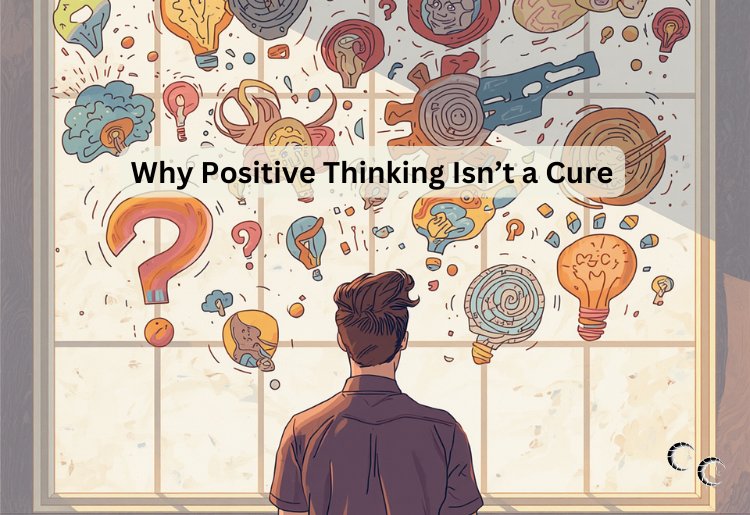
Positive thinking is often presented as a kind of universal solution. A mental switch that can turn difficulty into opportunity and stress into motivation. The idea is appealing because it suggests that mindset alone is enough to change outcomes. If you simply think positively, you will feel better, perform better, and overcome obstacles more easily. In practice, the reality is more complicated.
Thoughts do matter. Perspective influences behavior, and behavior influences results. But treating positive thinking as a cure for emotional distress, mental health struggles, or life challenges creates a misunderstanding of how the mind actually works. It reduces complex human experiences into something overly simplified, and that can lead to frustration rather than improvement.
Why Thoughts Alone Have Limits
The human mind is not isolated from the body or environment. It is influenced by biology, stress levels, sleep, past experiences, and external pressures. These factors shape how a person feels long before conscious thoughts are involved.
This means that simply trying to replace negative thoughts with positive ones does not always address the underlying cause of distress. If someone is exhausted, overwhelmed, or dealing with unresolved emotional strain, positive thinking alone cannot remove those conditions.
It can sometimes help shift attention or soften perspective, but it does not rewrite the situation itself. There is a difference between reframing an experience and resolving what is causing it.
The Pressure to Stay Positive
One of the unintended consequences of emphasizing positive thinking is the pressure it can create. When people are told to stay positive at all times, negative emotions can start to feel like failure rather than natural responses.
This can lead to suppression instead of processing. Instead of acknowledging stress, sadness, or frustration, individuals may feel obligated to push those emotions away. Over time, that can make emotional experiences feel heavier rather than lighter.
Healthy emotional regulation is not about eliminating negative feelings. It is about understanding them, responding to them, and allowing them to move through rather than building up beneath the surface.
Why Reality Does Not Always Match Mindset
Positive thinking assumes that mindset has full control over experience. In reality, many situations exist outside of personal control. Health issues, financial stress, relationship difficulties, and systemic challenges cannot be resolved by perspective alone.
A positive mindset can help someone navigate these situations more effectively, but it does not remove the challenges themselves. Expecting it to do so can create a sense of personal failure when circumstances do not improve.
This is where positive thinking can become harmful if misunderstood. When outcomes do not change, people may blame themselves for not thinking correctly rather than recognizing that some problems require practical solutions, support, or time.
The Difference Between Optimism and Avoidance
There is a meaningful difference between optimism and denial. Optimism acknowledges difficulty while still believing in the possibility of improvement. It allows space for both struggle and hope at the same time.
Avoidance, on the other hand, replaces discomfort with forced positivity. It attempts to bypass emotional reality rather than engage with it. While this may provide short term relief, it often delays processing what is actually happening.
Real resilience is not built by ignoring negative experiences. It is built by working through them in a way that includes both emotional honesty and forward movement.
What Actually Supports Mental Wellbeing
Mental wellbeing is shaped by a combination of factors. Thought patterns are part of it, but so are sleep, physical health, social support, environment, and access to resources.
Positive thinking can play a supportive role when it helps people notice possibilities, reduce catastrophic thinking, or encourage constructive action. But it works best as one tool among many, not as a standalone solution.
In many cases, practical steps such as improving routines, seeking support, setting boundaries, or addressing external stressors have a more direct impact than mindset alone.
Why Balanced Thinking Works Better
A more effective approach is not purely positive thinking, but balanced thinking. This means acknowledging difficulties without becoming defined by them. It allows space for both challenge and possibility.
Balanced thinking recognizes that situations can be hard and still changeable. That emotions can be uncomfortable and still valid. That progress can be slow and still meaningful.
This approach does not dismiss positivity. Instead, it places it within a more realistic framework where it can actually be useful rather than forced.
Final Thoughts
Positive thinking is not useless, but it is not a cure. It cannot replace emotional processing, practical action, or the complexity of real life experiences. When treated as a complete solution, it can create unrealistic expectations and unnecessary pressure.
A healthier perspective acknowledges both the value and the limits of mindset. Thoughts can influence experience, but they do not exist in isolation from the body, environment, or circumstances.
True mental wellbeing is not about staying positive at all times. It is about developing the ability to understand what you are feeling, respond to it thoughtfully, and move forward with both clarity and honesty.