Exoplanets in Fiction vs. Reality: How Sci-Fi Shapes Our Ideas
 Cordelia Cross
Jun 11, 2026 03:51
0
Cordelia Cross
Jun 11, 2026 03:51
0
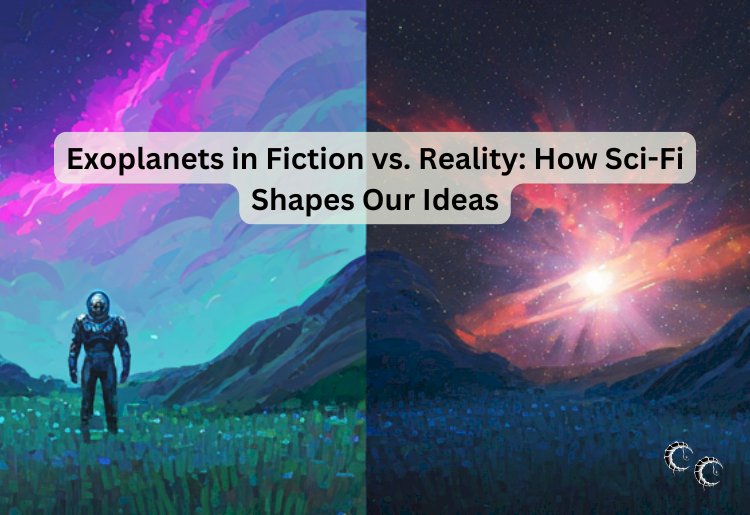
Few ideas capture the imagination quite like the discovery of another world. The thought that planets orbit distant stars, each with its own landscapes, atmosphere, and possibilities, has inspired generations of writers, filmmakers, and scientists alike. Long before astronomers confirmed the existence of planets beyond our solar system, science fiction was already exploring what life among the stars might look like.
Today, thousands of exoplanets have been discovered, turning what was once pure speculation into a rapidly growing field of scientific research. Yet despite these incredible discoveries, fiction continues to shape how many of us imagine these distant worlds.
The reality is every bit as fascinating, even if it looks very different from the planets we often see on screen.
What Exactly Is an Exoplanet?
An exoplanet is simply a planet that orbits a star other than our Sun. Some are rocky like Earth, while others are enormous gas giants larger than Jupiter. There are planets so hot that metals may exist as vapor, worlds locked in eternal daylight on one side and permanent night on the other, and icy planets that receive only a fraction of the sunlight Earth enjoys.
Every new discovery reminds us that planetary systems can be far more diverse than scientists once imagined.
Science fiction often focuses on Earth like worlds because they are familiar and easier to imagine. In reality, many of the planets discovered so far are unlike anything found in our own solar system.
Why Fiction Loves Habitable Worlds
Movies and novels usually take us to planets that humans can walk on with little more than a breathing mask, if any equipment at all. Forests, oceans, mountains, and recognizable weather make these settings feel believable and relatable.
The problem is that truly Earth like planets may be relatively uncommon, and even those that appear promising could have atmospheres that are toxic, crushing pressures, or temperatures far beyond what humans could survive.
This does not make them less interesting. In many ways, it makes them even more remarkable because they challenge our assumptions about what a planet can be.
Alien Life May Be Nothing Like We Expect
Science fiction has introduced audiences to countless intelligent alien civilizations, many of which resemble humans in surprising ways. While this makes storytelling easier, biology does not necessarily follow familiar patterns.
If life exists elsewhere, it may have evolved under conditions completely unlike Earth's. Different gravity, chemistry, radiation levels, and atmospheric composition could produce organisms that look nothing like the creatures we imagine.
Some scientists even suggest that the first evidence of extraterrestrial life could be microscopic rather than intelligent. Discovering simple organisms on another world would still rank among the greatest scientific breakthroughs in history.
The Challenge of Distance
One aspect where science fiction often takes creative liberties is travel.
Characters frequently jump between star systems in a matter of hours or days, making the galaxy feel surprisingly small. Reality tells a different story.
Even the nearest known exoplanets are so far away that traveling to them with today's technology would take tens of thousands of years. The distances between stars are almost impossible to comprehend on a human scale.
This enormous separation is one of the biggest challenges facing future space exploration.
How Scientists Actually Find Exoplanets
Many people imagine astronomers pointing powerful telescopes directly at distant planets. In reality, most exoplanets are detected indirectly.
Scientists often observe tiny changes in a star's brightness as a planet passes in front of it. Others are discovered by measuring the subtle wobble a planet creates as its gravity pulls on its parent star.
These techniques allow researchers to estimate a planet's size, orbit, and even some characteristics of its atmosphere without ever seeing the planet clearly.
It is an extraordinary achievement that relies on careful observation rather than dramatic exploration.
Fiction Inspires Real Science
Although science fiction is not always scientifically accurate, it has played a major role in inspiring scientific curiosity.
Many astronomers, engineers, and astronauts have spoken about how books and films sparked their interest in space from an early age. Fiction encourages people to ask bold questions about what might exist beyond our own world.
Sometimes these imagined possibilities even influence future research by encouraging scientists to investigate ideas that once seemed impossible.
Reality Can Be Stranger Than Fiction
One of the most surprising lessons from modern astronomy is that the universe often exceeds our imagination.
Scientists have discovered planets where a year lasts only a few hours, giant worlds orbiting two stars, and planets with conditions so extreme they challenge existing theories of planetary formation.
These discoveries remind us that nature is under no obligation to match our expectations. The universe is perfectly capable of producing worlds more unusual than anything writers have invented.
Why Exoplanets Continue to Fascinate Us
Exoplanets represent possibility. Every new discovery expands our understanding of how planets form, how solar systems evolve, and whether life could exist elsewhere in the universe.
Even if humanity never visits these distant worlds, studying them helps answer some of our biggest questions about our own place in the cosmos.
Every planet discovered is another reminder that Earth is only one small part of a much larger universe waiting to be explored.
Final Thoughts
Science fiction has shaped the way we imagine exoplanets for decades, filling the galaxy with familiar landscapes, thriving civilizations, and adventurous possibilities. While reality is often less convenient for storytelling, it is no less extraordinary.
The real universe is filled with planets that challenge our understanding of physics, climate, and planetary evolution. As technology improves and new discoveries continue, the line between imagination and science grows a little thinner with every passing year.
Fiction gives us worlds to dream about. Science gives us worlds that actually exist. Together, they inspire one of humanity's greatest adventures, the search for what lies beyond our own sky.