The Beginner’s Guide to Creating a Business Plan You’ll Actually Use
 Cordelia Cross
Jul 5, 2026 04:11
0
Cordelia Cross
Jul 5, 2026 04:11
0
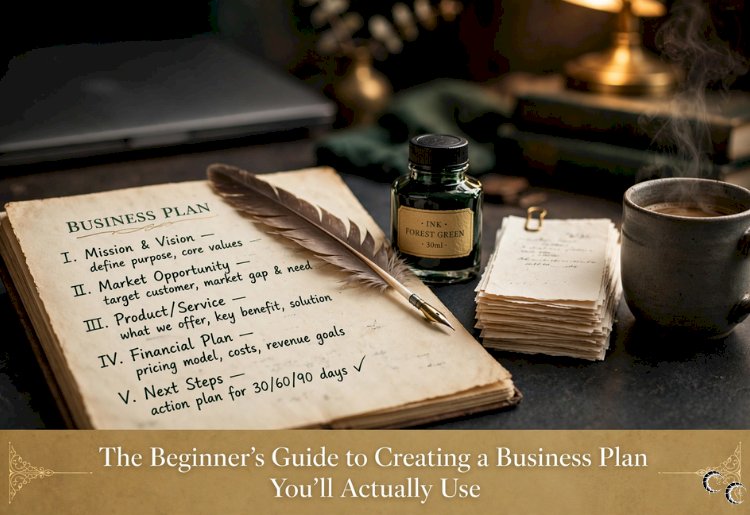
There is a reason the phrase "business plan" makes many new entrepreneurs immediately think of complicated documents, endless spreadsheets, and a stack of paperwork that gets created once and then forgotten in a computer folder forever.
A lot of people treat a business plan like a requirement they have to complete before they are allowed to start.
But a good business plan is not supposed to be a corporate homework assignment.
It is supposed to be a map.
When you are building a business, there are thousands of decisions competing for your attention. What should you focus on first? Who are you trying to reach? How much money do you actually need? What happens if your first idea changes?
A useful business plan helps answer those questions.
It is not about predicting the future perfectly. Nobody can do that. It is about creating a clear direction so you can make smarter decisions as you grow.
A Business Plan Should Help You Think, Not Just Impress Someone
One of the biggest mistakes beginners make is creating a business plan they think other people want to see instead of one they will actually use.
They fill it with impressive words, unrealistic growth projections, and complicated explanations that sound professional but do not reflect reality.
A business plan should be honest enough to challenge you.
If your numbers do not work on paper, that is valuable information.
If your target audience is unclear, that is something worth figuring out.
If your idea needs to change, discovering that early is much easier than discovering it after investing months or years.
The best business plans are not written to make you look successful.
They are written to help you become successful.
Start With the Problem You Are Solving
Every strong business begins with a reason to exist.
Before worrying about logos, websites, or marketing campaigns, ask a simpler question:
What problem does this business solve?
People do not usually buy something just because it exists. They buy because it makes their lives easier, better, faster, more enjoyable, or less frustrating.
Maybe you are creating a product that fills a gap in the market. Maybe you are offering a service that saves people time. Maybe you are creating something based on a personal experience that others can relate to.
The clearer you understand the problem, the easier it becomes to explain why your business matters.
Know Who You Are Building For
One of the hardest lessons new business owners learn is that trying to appeal to everyone usually means connecting deeply with no one.
A business plan should include a clear picture of your ideal customer.
Not just basic information like age or location, but the things that actually influence their decisions.
What do they need?
What frustrates them?
What are they already trying?
What would make them choose your solution over another option?
Understanding your audience changes the way you create products, write marketing messages, and make decisions.
A business becomes stronger when it knows who it is speaking to.
The Money Section Does Not Need to Be Scary
Many beginners avoid the financial side of business planning because numbers can feel intimidating.
But your financial plan does not need to be a perfect prediction.
It needs to be realistic.
Start with the basics.
How much will it cost to start?
What expenses will you have every month?
How much do you need to earn to keep going?
What price makes sense for your product or service?
These questions help you understand whether your idea can become sustainable.
A great idea without financial planning can become stressful very quickly. A simple idea with a solid financial foundation has room to grow.
Your Marketing Plan Is Really Your Connection Plan
Marketing can sound complicated, especially with so many platforms and strategies competing for attention.
But at its core, marketing is about answering one question:
How will people find you?
Your business plan should outline where your audience spends time and how you will reach them.
Maybe that means social media.
Maybe it means building relationships in your community.
Maybe it means creating helpful content that attracts people over time.
There is no single correct strategy. The right approach depends on your audience, your industry, and your resources.
A small business with a strong connection to its customers can often compete with much larger companies.
Leave Room for Change
A business plan is not a contract with the future.
It is a starting point.
Markets change.
Customers change.
Ideas evolve.
The version of your business you start with may not be the version you end up building.
That is normal.
Many successful businesses discovered their best direction after testing, learning, and adjusting along the way.
A flexible business plan allows you to make changes without losing sight of your overall goals.
The plan is there to guide you, not trap you.
The Best Business Plans Get Used
The difference between a business plan that helps and one that collects digital dust is simple.
You come back to it.
You update it.
You compare your goals with your progress.
You use it to make decisions.
A business plan is not valuable because it is long. It is valuable because it helps you understand what you are building and why.
The process of creating one forces you to slow down and think through the details that are easy to ignore when you are excited about a new idea.
And that excitement matters.
Starting a business requires creativity, courage, and a willingness to learn as you go. A business plan simply gives that energy somewhere useful to go.
You do not need a hundred-page document filled with complicated language.
You need a clear vision, realistic goals, and a plan you are actually willing to follow.
Because the best business plan is not the one that looks the most impressive.
It is the one that helps you build something real.