The Small Retail Store SOPs You Actually Need
 Cordelia Cross
Jun 6, 2026 08:21
0
Cordelia Cross
Jun 6, 2026 08:21
0
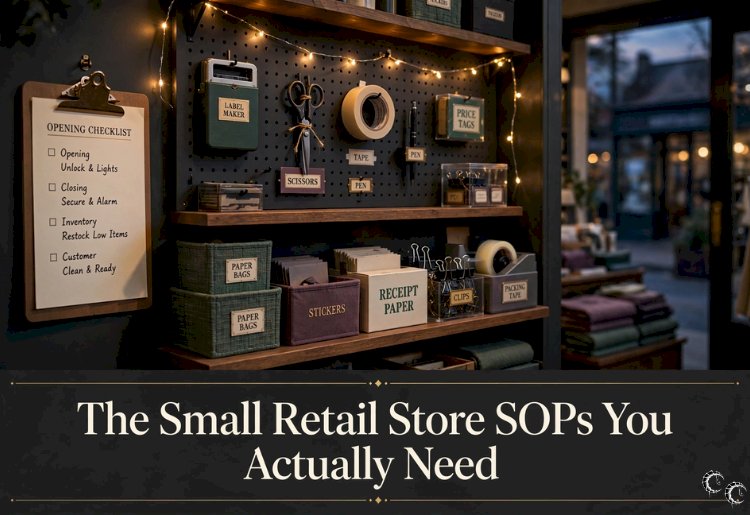
Running a small retail store has a funny way of turning you into the person who knows how to do absolutely everything. You can sell a product, answer a customer question, receive a shipment, clean a display, count the register, deal with a return, restock a shelf, and somehow still be expected to remember whether someone checked the back room for more medium sized hoodies.
That flexibility is part of what makes small businesses work. It can also become a problem when everything depends on someone remembering what to do.
This is where retail store SOPs become useful.
Standard operating procedures, or SOPs, are simply written instructions for recurring tasks. They do not need to be enormous manuals written in corporate language. For a small retailer, an SOP might be one page explaining how to open the store, a checklist for receiving inventory, or a simple process for handling an angry customer without turning the sales floor into a reality television episode.
The point is consistency. When everyone knows how something should be done, fewer things get forgotten, important details are less likely to disappear during a busy shift, and new employees have something to reference instead of having to learn everything through trial and error.
The trick is knowing which procedures are actually worth writing down.
Opening the Store
Opening procedures are some of the easiest SOPs to overlook because experienced employees tend to perform them automatically. They unlock the doors, turn on the lights, check the register, straighten the merchandise, look around the store, and get everything ready for customers.
The problem appears when someone new takes the opening shift or when the regular opener is unexpectedly unavailable.
A useful opening SOP should cover the things that need to happen before customers arrive, including unlocking the building, turning on necessary equipment, preparing the point of sale system, checking the cash drawer, inspecting the sales floor, and making sure displays and high priority areas are ready.
It should also include anything specific to your business, such as checking online orders, reviewing appointments, looking for overnight messages, or confirming that promotional signage is correct.
The goal is not to create a checklist so detailed that opening the store takes an extra hour. It is to make sure the important things happen every time.
Closing the Store
Closing procedures deserve just as much attention because this is when employees are often tired, customers have just left, and everyone is thinking about going home.
That is precisely when things get missed.
A closing SOP can cover the final customer sweep, register procedures, cleaning, restocking, securing valuable merchandise, shutting down equipment, checking doors and windows, setting alarms, and locking the building.
Cash handling should have its own detailed procedure rather than being buried somewhere inside a general closing checklist. Employees should know exactly what happens with the register at the end of a shift, who counts the money, how discrepancies are recorded, and where deposits or cash bags are secured.
A good closing process should make it difficult to accidentally leave the front door unlocked or discover the next morning that someone forgot to prepare the register.
Receiving Inventory
Receiving is one of those tasks where a small mistake can create problems that show up weeks later.
A shipment arrives. Someone signs for it, carries the boxes inside, opens everything, and puts the products wherever there happens to be room. A few days later, the inventory system says there are 40 units of something available, but nobody can find them.
Now everyone gets to play retail hide and seek.
A proper retail store SOP for receiving should explain how shipments are checked against the purchase order or packing slip, how damaged products are documented, how discrepancies are reported, and when inventory should officially be entered into the system.
The process should also establish where newly received merchandise goes before it is counted, labeled, priced, and moved onto the sales floor or into storage.
The important part is creating a clear chain from "the supplier says they shipped it" to "we physically received it" to "the inventory system says we have it."
Those three things are not always the same.
Returns
Returns can become awkward very quickly when employees are unsure what they are allowed to do.
One employee accepts almost anything. Another refuses everything. A third calls a manager for every return involving a receipt that is slightly crumpled.
Customers notice those inconsistencies.
A returns SOP should clearly explain your store's policy, including acceptable return windows, receipt requirements, product condition, exchanges, refunds, store credit, damaged merchandise, and any exceptions. Employees should also know when they can handle a return themselves and when a manager needs to get involved.
The policy should be easy for employees to understand and consistent with whatever customers have been told through signage, receipts, your website, or other communications.
There is another important reason to document returns: they can reveal patterns.
If the same product keeps coming back because customers find it confusing, defective, poorly described, or different from what they expected, those returns are telling you something. The SOP handles the immediate transaction, but the information collected through the process can help improve the business.
Cash Handling
This is one area where "everyone knows what to do" is not good enough.
Cash handling procedures should be specific, consistent, and easy to audit. Employees should know who is responsible for the register, how cash is counted, how starting drawers are prepared, how transactions are corrected, what happens when the register is short or over, and how deposits are secured.
Avoid creating a system that depends on trust alone. Good procedures protect the business and the employees working in it.
If a cash discrepancy occurs, the process should focus on documenting what happened rather than immediately turning the situation into an accusation. A consistent procedure makes it easier to identify patterns and determine whether a problem is a counting error, a transaction issue, a training problem, or something more serious.
Cash handling should feel boring.
That is a compliment.
Restocking
Restocking sounds simple until you realize how many different ways people can manage to do it.
Someone puts new products wherever they fit. Another person fills the shelves but forgets the back stock. Someone else notices an empty display but assumes somebody else already checked the storage area.
A restocking SOP can establish when shelves should be checked, how products should be rotated, where back stock belongs, how empty displays should be handled, and what employees should do when an item is missing from its expected location.
If your products have expiration dates or other freshness considerations, the process should also explain appropriate rotation methods.
The goal is not just to make the store look full. It is to make sure available inventory is actually available to customers and that employees can find products when they need them.
A beautifully organized back room is surprisingly valuable when someone can find the product they are looking for in thirty seconds instead of twenty minutes.
Cleaning
Cleaning is another task that tends to become "someone else's problem" unless responsibilities are clearly assigned.
A cleaning SOP does not need to become a hotel housekeeping manual. It simply needs to establish what gets cleaned, how often, and who is responsible.
That might include floors, bathrooms, counters, mirrors, fitting rooms, displays, checkout areas, shelves, door handles, and employee areas.
Daily tasks can be separated from weekly or monthly cleaning so employees know what actually needs attention during a normal shift.
It is also worth identifying areas that customers interact with most. A spotless storage room does not make much difference if the fitting room mirrors are covered in fingerprints and the checkout counter looks like it has survived three separate snack attacks.
Cleanliness is part of the customer experience, even when customers never consciously think about it.
Customer Complaints
Every retailer eventually encounters an unhappy customer.
The question is not whether it will happen. The question is whether your employees know what to do when it does.
A complaint SOP should give employees a basic framework rather than forcing them to memorize a script. They should know how to listen to the customer, clarify the problem, explain what they can do, and recognize when the situation needs to be escalated.
The employee should also know what they are authorized to offer. Can they issue a refund? Provide a replacement? Offer store credit? Give a discount? Call a manager?
Without clear boundaries, employees may either promise things they cannot deliver or refuse reasonable solutions because they are afraid of making the wrong decision.
The best customer complaint procedures create consistency without making employees sound like robots.
People generally want to feel heard before they want to hear a policy.
Keep Your SOPs Useful
The biggest mistake small businesses make with retail store SOPs is writing them once and then forgetting they exist.
A procedure that no longer matches the way your store operates is not particularly useful. If the point of sale system changes, update the cash handling procedure. If the return policy changes, update the returns SOP. If the layout changes, make sure the restocking process still makes sense.
It can also help to have employees participate in reviewing procedures. The person actually performing a task every day may notice problems that are invisible to the person who originally wrote the instructions.
And keep the language simple.
Your employees should not need a dictionary to understand an SOP about cleaning the bathroom.
You Don't Need a Manual the Size of a Novel
A small retailer does not need dozens of pages covering every imaginable situation.
Start with the recurring tasks where consistency matters most: opening, closing, receiving, returns, cash handling, restocking, cleaning, and customer complaints. Those procedures cover a surprising amount of the daily operation and can eliminate many of the little uncertainties that slow down a store.
From there, add procedures when you notice recurring problems. If employees constantly ask how to handle online pickups, write an SOP. If shipments are repeatedly being entered incorrectly, create one for receiving. If closing the store always takes longer than it should, examine the process and document it.
The best SOPs are living documents. They should make work easier, not create another administrative chore that everyone quietly resents.
A small retail store does not need to operate like a giant corporation to benefit from structure. In fact, clear procedures can give a small team more freedom because employees spend less time guessing and more time actually doing their jobs.
The goal is not to remove the human element from your store.
It is to make sure the same eight basic tasks do not have eight completely different versions depending on who happens to be working that day.