How To Structure Your First TikTok Live Without Feeling Awkward On Camera
 Cordelia Cross
Apr 13, 2026 06:37
0
Cordelia Cross
Apr 13, 2026 06:37
0
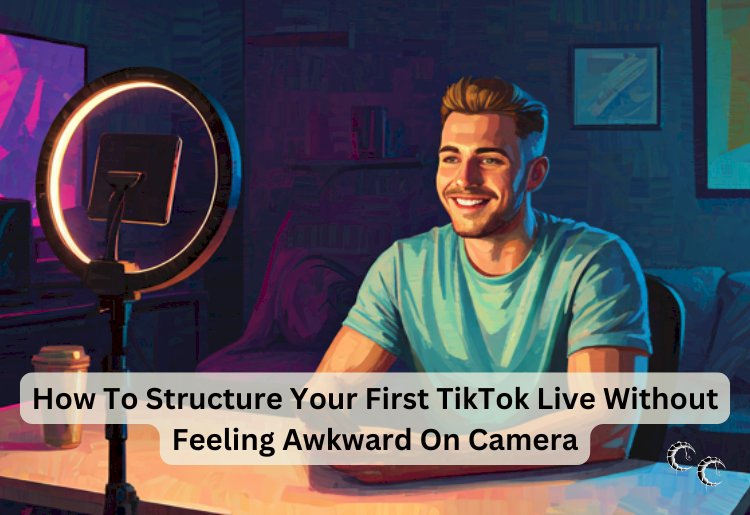
The first TikTok Live is often less about technical skill and more about psychological pressure. The moment the stream goes live, the absence of editing creates a kind of exposure that short form content never demands. There is no cut, no reset, and no opportunity to refine a moment after it happens. For many small creators and businesses, that blank broadcast screen feels heavier than the content itself.
The mistake most people make is trying to perform immediately. They assume the Live needs to be entertaining from second one, which creates forced energy and uncomfortable silence. In reality, successful Lives are not built on constant performance, but on structure that removes the need to improvise every moment.
One of the most effective ways to reduce awkwardness is to stop treating the Live as a stage and start treating it as a system. Instead of focusing on being watched, the focus shifts to doing something repeatable and structured while being observed. This changes the entire emotional dynamic of the session.
For creators in gaming, reselling, crafting, or product based businesses, this is where a loop based structure becomes powerful. A loop gives the Live a rhythm that continues regardless of viewer count. It creates predictability, which reduces pressure and makes commentary easier to sustain.
In a gameplay context, this might look like a cycle of resource farming, upgrading, and progression milestones. The activity itself becomes the backbone of the stream. Instead of trying to fill silence with commentary, the commentary naturally forms around what is already happening. The game becomes the anchor, and the streamer becomes a guide through that process rather than the sole source of entertainment.
For product based or business Lives, the same principle applies. Instead of randomly presenting items, the session follows a repeating structure such as introduction, demonstration, comparison, and recap. Each cycle gives new viewers a clear entry point and gives the host a predictable pattern to fall back on when uncertainty appears.
This looping structure is important because it removes the need for constant invention. Awkwardness usually comes from not knowing what to say next. When the next step is already defined by the format, silence becomes less threatening. It becomes a transition rather than a failure.
Another key shift is reframing the camera itself. Instead of treating it as a judgmental audience, it becomes a secondary presence inside the activity. In gaming, it is a teammate observing the grind. In selling, it is a quiet observer of the process. This mental repositioning reduces self awareness and makes speech feel more natural because it is no longer directed at an abstract crowd but at an ongoing situation.
Pacing also plays a major role. First time streamers often rush to fill space, which creates tension and burnout within the first few minutes. A more stable approach is to allow natural gaps between moments of commentary. Not every second needs to be filled. In fact, moments of silence can help reinforce the authenticity of what is happening.
The presence of an audience should also be understood as fluid rather than static. Viewers enter and leave continuously, especially in the early stages of a Live. This means there is no single “start point” that needs to be perfect. Instead, the stream functions as a rotating entry environment where structure matters more than timing.
This is why repetition is not a weakness in Live content. It is a stabilizer. Reintroducing what is happening, what the goal is, and where the stream is in its cycle helps new viewers orient themselves quickly. It also reduces pressure on the host to constantly escalate energy.
Over time, confidence in Live comes less from charisma and more from familiarity with structure. Once the loop becomes second nature, attention shifts away from self consciousness and toward interaction with the process itself. That is when the awkwardness begins to fade, not because the performance improves, but because the need to perform decreases.
In the end, a successful first TikTok Live is not about being endlessly engaging. It is about creating a stable framework where engagement can happen naturally. When the structure carries the weight of the session, the creator is free to simply participate in what is already unfolding rather than constantly trying to fill the space between moments.