How Magical Creatures Could Fit Into Real Ecosystems
 Cordelia Cross
Sep 26, 2025 04:35
0
Cordelia Cross
Sep 26, 2025 04:35
0
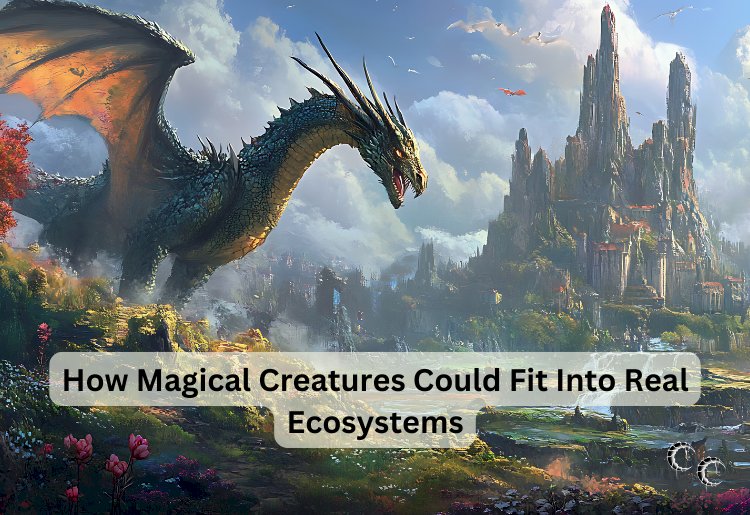
The idea of magical creatures has captured human imagination for centuries. Dragons soaring through mountain ranges, unicorns grazing in enchanted forests, and griffins patrolling cliff edges seem like fantasies that exist only in stories. Yet if we imagine these beings as real organisms, we begin to see fascinating ways they could interact with natural ecosystems, shaping and being shaped by the environments around them. Exploring this concept blends ecology, evolution, and creativity, offering a playful yet scientific perspective on worlds where magic exists alongside nature.
Every ecosystem depends on balance. Energy flows from producers to consumers, species compete for resources, and populations are regulated by predation, disease, and environmental limits. Introducing magical creatures into such systems would require imagining them within these constraints. For example, a dragon that feeds primarily on large herbivores would need a sustainable prey population; otherwise, it risks overhunting and destabilizing the ecosystem. Its presence might even influence the behavior and evolution of other species, just as apex predators do in real-world environments.
Diet and habitat are crucial factors. A unicorn might resemble a large herbivore adapted to open plains or forest clearings, feeding on plants and fruits while avoiding predation. Its magical traits, such as healing abilities or camouflage, could be viewed as evolutionary adaptations enhancing survival. Fire-breathing dragons could rely on thermally rich habitats, perhaps volcanic regions, where heat and mineral-rich resources support their energy needs. Even in fantasy, energy efficiency, reproductive success, and survival pressures shape how these creatures might realistically exist.
Reproduction and population dynamics would also determine how magical species integrate into ecosystems. Many mythical creatures are depicted as rare or solitary; in ecological terms, this could reflect slow reproduction rates or highly specialized niches. A griffin nesting on cliffs might produce few offspring but exert strong influence as a predator, controlling prey populations and indirectly supporting plant diversity by limiting herbivore numbers. Such interactions mirror keystone species in nature, whose presence or absence significantly affects ecosystem structure.
Interactions with humans add another layer of complexity. In stories, magical creatures are often hunted, revered, or domesticated. In real ecosystems, human activity profoundly affects species survival, distribution, and behavior. A magical creature would face pressures similar to endangered species today, with habitat loss, hunting, and climate shifts shaping populations. Conservation strategies might need to account for unique magical traits, such as enhanced senses, extraordinary mobility, or niche-specific diets, blending ecology with imaginative problem-solving.
Symbiotic relationships could further define magical species’ roles. A dragon might host smaller creatures in its scales or lair, much like birds or insects live in and around large animals. Unicorns could form mutualistic bonds with plants, dispersing seeds through grazing or creating nutrient-rich zones through magical influence. By imagining these interactions, we see how fantasy creatures could occupy functional roles in ecosystems, maintaining balance while adding layers of complexity.
Migration and territoriality would also shape ecosystems. Large magical creatures may require extensive ranges to find sufficient food and mates, influencing spatial patterns and community interactions. Seasonal movements could redistribute nutrients and affect vegetation growth, just as large herbivores or predatory birds do in real life. Understanding these dynamics highlights the importance of space, resources, and social behavior in sustaining populations, whether magical or real.
Even magical abilities could be interpreted ecologically. Flight, elemental powers, or healing effects could be viewed as exaggerated adaptations to environmental pressures. Flight expands access to resources, reduces predation risk, and aids in dispersal. Elemental abilities might reflect specialized hunting strategies or defensive mechanisms. Healing or regenerative traits could enhance longevity and reproductive success, influencing population stability and genetic diversity. In this way, fantasy traits take on functional ecological roles, fitting into a framework that respects natural principles.
Considering magical creatures in ecosystems also sparks curiosity about evolutionary pathways. How might dragons, unicorns, or griffins evolve over millennia to occupy specific niches? What pressures would select for wings, horns, fire-breathing, or other fantastical traits? Imagining these scenarios encourages exploration of adaptation, speciation, and co-evolution, bridging creativity with scientific thinking. It is a reminder that evolution, even in hypothetical contexts, follows patterns of survival, efficiency, and opportunity.
Ultimately, thinking about magical creatures in real ecosystems transforms them from simple symbols of wonder into participants in complex ecological networks. They would interact with prey, competitors, plants, and the environment, shaping landscapes and influencing the survival of other species. By blending imagination with ecological principles, we can envision a world where magic and nature coexist, each enhancing the richness of the other. These exercises in creativity deepen our understanding of real ecosystems while reminding us that the line between wonder and reality is only as rigid as our imagination.