Signs You’re Mentally Exhausted (Even If You’re Functioning)
 Cordelia Cross
Jun 15, 2026 12:30
0
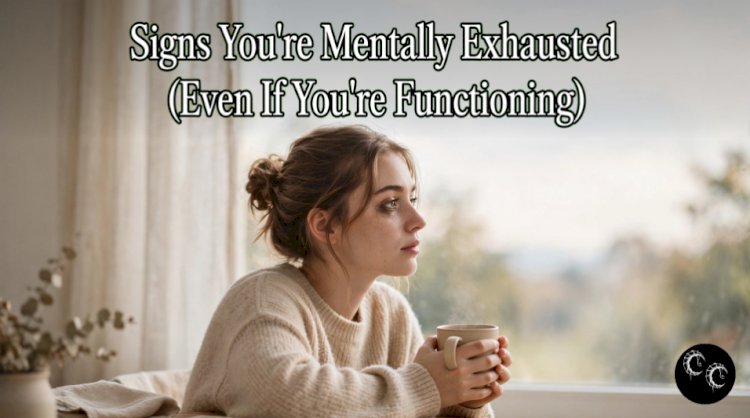
There is a particular kind of exhaustion that does not necessarily stop you from getting out of bed, going to work, answering messages, or taking care of the things that need your attention. You can still show up, keep your appointments, make dinner, pay your bills, and even laugh at a joke while quietly feeling like you have absolutely nothing left in the tank. From the outside, you might look like you are handling life just fine. On the inside, though, everything feels harder than it should, and even the smallest inconvenience can feel like one more thing you simply do not have the energy to deal with.
Mental exhaustion can be difficult to recognize because we tend to associate being overwhelmed with visibly falling apart. We picture someone who cannot get out of bed, has stopped doing their usual activities, or has reached a point where daily responsibilities become impossible. Sometimes that is what it looks like, but mental exhaustion can also hide behind productivity, reliability, and a carefully maintained appearance of being okay. You might be the person everyone depends on, the one who always gets things done, or the friend who listens to everybody else's problems. The trouble is that functioning is not the same thing as feeling well, and being able to push through your day does not mean the effort is sustainable.
You’re Getting Everything Done, but Nothing Feels Easy
One of the most overlooked signs of mental exhaustion is how much effort ordinary tasks begin to require. Things you used to do without thinking, such as responding to an email, folding laundry, deciding what to eat, or making a quick phone call, suddenly feel like complicated projects. You might stare at a simple task for twenty minutes before starting it, not because you do not care, but because your brain seems unwilling to cooperate. Even deciding what to watch at the end of the day can feel like too much work when you have already spent hours making decisions, solving problems, and responding to other people's needs.
This can be especially confusing if you are still meeting your responsibilities. You may wonder why you feel so drained when nothing particularly dramatic has happened, or why you need so much recovery time after a normal workday. Mental fatigue can build gradually through prolonged stress, poor sleep, emotional strain, and the constant pressure of having too much to manage. Eventually, the things that once fit comfortably into your day begin to feel like they require every available ounce of energy. You are still doing them, but the effort it takes to keep everything moving has become exhausting in itself.
Small Things Are Getting Under Your Skin
Maybe you are becoming irritated by noises that never used to bother you, feeling unusually impatient when someone asks a simple question, or getting disproportionately upset when plans change at the last minute. Perhaps you snap at someone you care about and then spend the next hour feeling guilty about it. These reactions can be uncomfortable, especially if you usually consider yourself patient or easygoing, but they may be a sign that your emotional capacity is running low.
When you are mentally exhausted, there is often less room between experiencing a frustration and reacting to it. A minor inconvenience can feel like the final straw because your mind has already been carrying a dozen other things you have not had time to process. That does not mean every angry reaction is justified, and it does not mean exhaustion excuses hurting other people. It does mean that persistent irritability is worth paying attention to instead of automatically labeling yourself as difficult, dramatic, or bad at handling stress. Sometimes the problem is not the last small inconvenience. It is everything that came before it.
You Have Time to Rest, but You Don’t Feel Rested
You finally get a quiet evening, cancel a plan, or spend a few hours doing absolutely nothing, expecting to feel better afterward. Instead, you finish your break feeling just as depleted as before. You might scroll through your phone for hours because it requires very little effort, only to realize that you do not feel refreshed or particularly entertained. Or you might sleep for a reasonable amount of time and still wake up feeling as though your brain has been working an overnight shift without asking your permission.
Mental rest is not always the same as physical inactivity. If your body is sitting on the couch while your mind is replaying conversations, worrying about tomorrow, planning next week's responsibilities, and reminding you about the one thing you forgot to do, you may not be getting much psychological relief. Constant stimulation can also leave you feeling scattered rather than restored, particularly when your downtime is filled with notifications, upsetting news, and an endless stream of content demanding your attention.
This does not mean you need to turn relaxation into another self-improvement project. You do not need a perfect morning routine, an elaborate wellness ritual, or an expensive weekend retreat to prove you are taking care of yourself. Sometimes it helps to have a little quiet, spend time outside, do something enjoyable without trying to be productive, or talk to someone with whom you do not have to pretend everything is fine. If exhaustion continues despite adequate rest, however, it is worth considering whether stress, sleep problems, a medical condition, or another issue might be contributing.
Your Brain Feels Foggy, Even When You’re Trying Your Best
Mental exhaustion can affect your ability to concentrate, remember details, and make decisions. You may walk into a room and forget why you went there, reread the same paragraph several times, lose track of what someone is saying, or struggle to find a word that you know perfectly well. Tasks that require sustained attention can feel especially difficult, and switching between responsibilities may leave you feeling as though your brain has too many tabs open and at least three of them are frozen.
When this happens, it is easy to become frustrated with yourself. You might worry that you are becoming lazy, losing your abilities, or somehow less capable than you used to be. But concentration and memory are affected by many things, including stress, sleep quality, anxiety, low mood, and physical health. If your mind is already occupied with worrying, managing emotions, and keeping track of endless responsibilities, it has fewer resources available for the task in front of you.
Try noticing when the fogginess appears rather than immediately judging yourself for it. Does it get worse after a long day of meetings? Does it show up when you have several difficult decisions to make? Are you constantly interrupted, leaving your brain to restart the same task over and over? Recognizing these patterns can help you identify what might be draining your attention. New, severe, or persistent problems with concentration or memory deserve medical attention, particularly if they interfere with your everyday life.
You’re With People, but You Feel Emotionally Checked Out
Another sign of mental exhaustion is feeling disconnected from people and activities that normally matter to you. You might care about your friends but have no energy to reply to their messages. You may attend a family gathering and spend most of the time wishing you were home, not because you dislike anyone there, but because even pleasant conversation feels demanding. Sometimes you become quieter and withdraw. Other times, you continue participating in everything while feeling strangely detached, as though you are going through the motions instead of really being present.
Emotional withdrawal can happen when you have been giving more than you have had a chance to replenish. If you spend much of your time supporting other people, handling conflict, or managing expectations, social interaction can begin to feel like another responsibility rather than a source of connection. You may find yourself avoiding messages because you cannot face another conversation, even when the person reaching out has done nothing wrong. That can create a frustrating cycle: you need support, but you feel too tired to ask for it or explain what is happening.
You do not have to disappear from everyone's life to get some breathing room. It is okay to tell a trusted person that you are having a difficult week, that you may be quieter than usual, or that you would appreciate company without having to do much talking. Healthy relationships should leave room for honesty about your capacity. If the disconnection becomes persistent, or you lose interest in nearly everything you once enjoyed, consider speaking with a mental health professional. Emotional exhaustion and depression can overlap, and you deserve support in understanding what you are experiencing.
You Feel Guilty Whenever You Stop Being Productive
For some people, the most revealing sign of mental exhaustion is not how tired they feel while working. It is how uncomfortable they feel when they are not working. Sitting down to rest brings up a list of unfinished tasks. Taking a day off triggers thoughts about everything that will fall behind. Even enjoying a hobby can come with the nagging sense that there is something more useful you should be doing.
When productivity becomes tied to your sense of worth, rest can start to feel like something you must earn. You may tell yourself that you can relax after the house is clean, after the inbox is empty, after everyone else is taken care of, or after you finally catch up. The problem is that life rarely hands you a permanent state of being caught up. There will always be another chore, another message, another responsibility, or another person who needs something. If rest is only allowed when nothing remains unfinished, you may never feel entitled to take it.
It is worth asking yourself what you believe will happen if you slow down. Are you worried someone will be disappointed? Do you feel responsible for preventing every possible problem? Have you become so used to being dependable that you no longer know how to exist without proving your usefulness? These patterns can develop for many reasons, and they are not always easy to change. But you are still a person when you are not producing something. Your value does not disappear when you take a break, and caring for yourself is not a reward reserved for people who have completed an impossible to-do list.
You’re Living on Autopilot
You might get through an entire day and struggle to remember much of it. You follow your usual routine, complete familiar tasks, and respond to whatever needs your attention, but everything feels repetitive and strangely distant. Days blur together. You stop looking forward to things, not necessarily because something is terribly wrong, but because you are too depleted to feel much excitement about anything. You may catch yourself thinking, "Is this all I do now?" before immediately returning to the next responsibility.
Routine can be helpful, especially when life is stressful, but there is a difference between having a steady rhythm and feeling as though you are merely moving through the hours. When you are overwhelmed for long periods, your attention may narrow toward getting through the next task rather than noticing how you actually feel. You become good at managing the day while losing touch with whether the way you are living is working for you.
Sometimes the first step toward reconnecting with yourself is surprisingly small. Notice what you look forward to, what drains you, and what you have stopped making room for. It might be a creative project you abandoned, a walk you used to enjoy, music you have not listened to in months, or conversations that do not revolve around work and obligations. You do not need to overhaul your entire life overnight. The point is to make room for experiences that remind you that life is more than a series of things to get through.
You Keep Telling Yourself That Other People Have It Worse
You know you are tired, but you also know that other people are dealing with serious problems. Someone else has a harder job, a more demanding family situation, financial worries, or challenges that seem far bigger than yours. So you tell yourself to stop complaining, be grateful, and get on with it. Maybe you even feel embarrassed admitting that you are struggling because, on paper, your life looks relatively stable.
Gratitude and exhaustion can exist at the same time. You can appreciate the people in your life and still need more support. You can recognize that you have things to be thankful for while acknowledging that your current workload, stress level, or emotional responsibilities are wearing you down. Struggling is not a competition, and you do not have to reach a dramatic breaking point before your needs become legitimate.
Minimizing your own distress can make it harder to recognize when something needs to change. Instead of asking whether you have a good enough reason to feel exhausted, try asking what the exhaustion is telling you. Are you carrying responsibilities that should be shared? Have you been ignoring your own needs to keep everyone else comfortable? Is there a problem you keep postponing because addressing it feels more difficult than continuing to tolerate it? You do not have to prove that things are terrible before you are allowed to make them better.
What to Do When You Recognize the Signs
If several of these signs feel familiar, the answer is not necessarily to push harder or become more efficient. You may already be spending most of your energy trying to keep up. A more useful starting point is to identify what is consuming your capacity and where you have some room to make changes. That might mean renegotiating a deadline, sharing a responsibility, setting a boundary, taking a real lunch break, or admitting to someone you trust that you are not doing as well as you have been pretending. Not every pressure can be removed, especially when caregiving, money, work, or family responsibilities are involved, but even a small reduction in what you are carrying can matter.
It can also help to pay attention to the basics without turning them into another list of ways to fail. Consistent sleep, regular meals, movement that feels manageable, and time away from constant demands can support your well-being. So can reducing unnecessary decisions, taking short breaks before you reach your limit, and giving yourself permission to do some things adequately rather than perfectly. These changes are not magic fixes for chronic stress, and they cannot solve every difficult situation. Think of them as ways to support yourself while you figure out what needs to change more substantially.
If the exhaustion persists, affects your ability to function, or comes with ongoing low mood, anxiety, sleep disruption, or loss of interest in things you usually enjoy, consider reaching out to a healthcare professional or therapist. Mental exhaustion is not a formal diagnosis on its own, and similar symptoms can have different causes, including physical health conditions. Getting help is not an admission that you have failed to cope. It is a way to understand what is happening and find support that fits your circumstances.
If you are experiencing thoughts of harming yourself or feel unable to keep yourself safe, seek urgent help. In the United States, you can call or text 988 to reach the Suicide and Crisis Lifeline.
You Don’t Have to Fall Apart to Deserve a Break
One of the hardest things about mental exhaustion is that it can become part of your normal routine. You adapt to feeling tired, work around your lack of focus, lower your expectations for how much energy you should have, and keep going because stopping does not feel like an option. After a while, you may forget what it feels like to move through a day without constantly negotiating with yourself to get through the next thing.
But functioning is not proof that everything is fine. You can be dependable and overwhelmed, capable and emotionally drained, grateful for your life and still in need of a change. You can meet your responsibilities while recognizing that the way you are meeting them is taking too much out of you.
You do not need to wait until you miss work, abandon your responsibilities, or reach a breaking point before you take your mental health seriously. Pay attention to the small signs, especially when they keep showing up. Your exhaustion is not a character flaw, and you do not have to earn the right to take it seriously. Sometimes the most responsible thing you can do is stop treating yourself like a machine that should be able to run indefinitely without maintenance.