Everything You Need to Know About Energy, Stamina, and Daily Planning in Starsand Island
 Cordelia Cross
Apr 9, 2026 02:08
0
Cordelia Cross
Apr 9, 2026 02:08
0
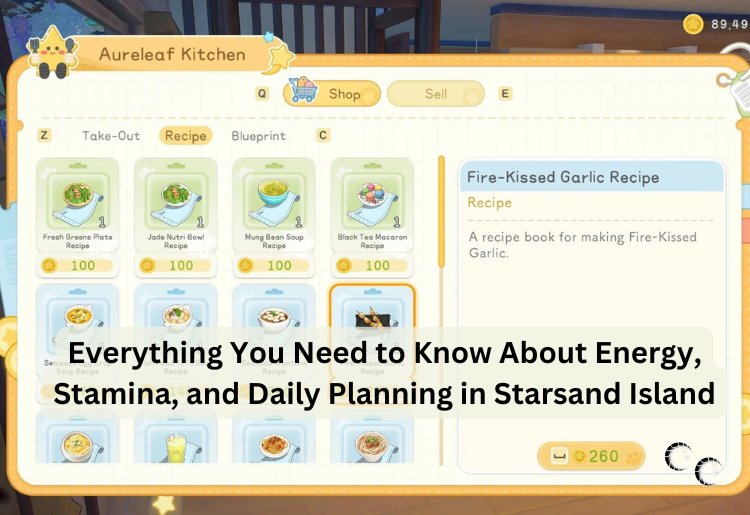
Energy and stamina systems in Starsand Island are not just limitations on how much you can do in a day. They are the underlying structure that shapes your entire progression rhythm. Every action, from farming to gathering to crafting, feeds into how efficiently you can use a single in game day. Understanding this system is less about optimization tricks and more about building a sustainable daily loop that avoids waste and burnout.
At its core, stamina is a pacing mechanic. It prevents unlimited action and forces you to prioritize what matters most in a given cycle. Beginners often misinterpret this as a restriction, but in practice it is a guide. It encourages structure by making every decision about time and energy meaningful.
The biggest early mistake is treating stamina as something to fully exhaust every day. Many players try to squeeze maximum activity into a single cycle, draining energy completely and then ending the day without a clear structure. This approach feels productive in the moment but creates inefficiency over time. When stamina is spent without planning, valuable time is often wasted on low priority tasks.
A more effective approach is to think in terms of priority tiers. High value tasks like crop management, tool usage, or resource gathering should always come first. Medium value tasks like exploration or crafting should fill the remaining energy window. Low value tasks should only be done if there is leftover stamina and no higher priority goals remain.
Daily planning begins before the day actually starts. A strong routine is built around a repeatable checklist. This does not need to be complex. It can be as simple as checking crops, gathering nearby resources, completing one focused objective, and preparing for the next cycle. The key is consistency. When your actions follow a predictable structure, energy usage becomes efficient by default.
One of the most overlooked aspects of stamina management is movement efficiency. Walking across the map repeatedly for small tasks consumes both time and energy indirectly. Every unnecessary trip reduces the number of meaningful actions you can complete in a day. Grouping tasks by location is one of the simplest ways to extend effective stamina without changing any game mechanics.
Another important factor is timing. Not every action needs to be completed immediately. Some tasks are better grouped together into a single route rather than handled individually. For example, combining resource gathering with farming and crafting in a single loop reduces wasted transitions and keeps stamina usage focused.
Players also often underestimate the impact of recovery windows. Ending a day with completely depleted energy can limit flexibility for unexpected opportunities. Leaving a small buffer of stamina allows for adaptability, whether that means finishing a late task, adjusting to a new objective, or responding to in game events without disruption.
Daily planning also connects directly to long term progression. Players who approach each day as a structured cycle tend to scale faster because their systems remain stable. Crops are managed consistently, resources are collected predictably, and crafting progresses without interruption. This creates compounding efficiency where each day builds cleanly on the last.
In contrast, unstructured days create irregular progress. One day might be overly focused on farming, another on exploration, and another on crafting, without any cohesive rhythm. This inconsistency slows down resource accumulation and makes it harder to track progress effectively.
The ideal daily loop is simple, repeatable, and adaptable. It does not require perfection. It requires rhythm. Once you understand your typical energy capacity and how long tasks actually take, you can begin to naturally optimize without overthinking each decision.
Ultimately, stamina in Starsand Island is not a barrier. It is a framework. It forces structure where chaos would otherwise exist. When you align your daily planning with that framework instead of fighting against it, progression becomes smoother, more predictable, and significantly more efficient.
The players who progress fastest are not the ones who do the most in a day. They are the ones who make every unit of energy count toward something that actually moves them forward.