Bubble Bobble vs Bust a Move: A Tale of Two Classic Puzzle Games
 Cordelia Cross
Dec 8, 2025 07:25
0
Cordelia Cross
Dec 8, 2025 07:25
0
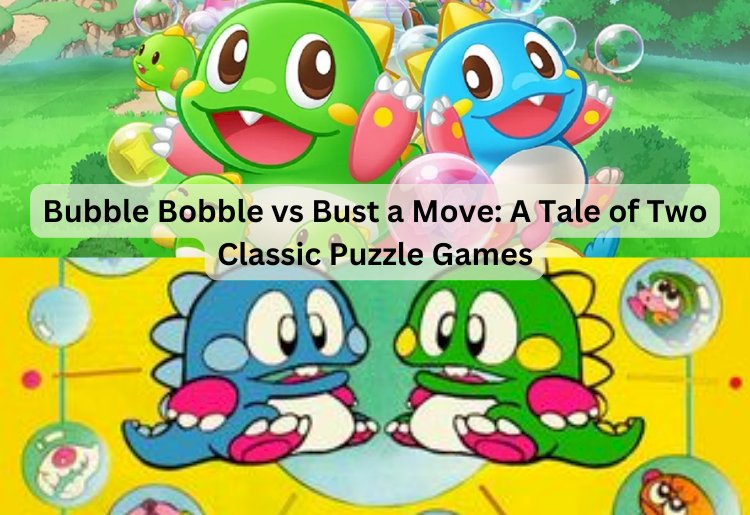
Arcade and console gamers of the late 80s and 90s will instantly recognize the charm and challenge of Bubble Bobble and Bust a Move. Both games captured the imagination of players with their colorful visuals, addictive gameplay, and cooperative modes, yet they approach the puzzle and action genres in very different ways.
Gameplay Mechanics
Bubble Bobble, released in 1986, is primarily an action-platformer with puzzle elements. Players control Bub and Bob, two cute dinosaurs who trap enemies in bubbles and then pop them to clear each level. The game emphasizes timing, precision, and strategic movement, as players must avoid enemies while creating opportunities to eliminate them. Power-ups, bonus items, and hidden secrets add layers of strategy, encouraging players to explore each stage fully.
Bust a Move, also known as Puzzle Bobble, launched in 1994 as a spin-off of the Bubble Bobble universe. It is a pure puzzle game, focusing on matching colored bubbles to clear the screen. Players aim and shoot bubbles from the bottom of the screen, forming clusters of three or more to make them disappear. Unlike Bubble Bobble, Bust a Move requires careful planning and spatial reasoning, with an increasing emphasis on chain reactions and combo strategies as the game progresses.
Visuals and Presentation
Bubble Bobble is defined by its cute, vibrant art style and whimsical stages. Each level features unique layouts, enemies, and backgrounds, reinforcing the arcade charm of the game. The characters’ playful animations and bubbly aesthetic make the game approachable for all ages, while the hidden secrets and varied level design keep it challenging for seasoned players.
Bust a Move retains the bright, cheerful art of Bubble Bobble but presents it in a more static, puzzle-focused format. The backgrounds are simpler, designed to keep attention on the bubble formations, while the characters—Bub, Bob, and their friends—add personality and continuity for fans of the original series. The visual clarity is essential, as players must quickly identify colors and patterns to succeed.
Difficulty and Strategy
Bubble Bobble challenges players with timing, enemy behavior, and precise platforming. Success depends on reflexes and careful observation, with cooperative play offering a shared dynamic that can increase both fun and difficulty. Boss fights and secret rooms reward exploration and experimentation, adding replay value.
Bust a Move, on the other hand, tests patience, planning, and problem-solving. Players must think several moves ahead, anticipate how bubbles will fall, and create chain reactions for maximum effect. The difficulty increases through faster descents and more complex bubble arrangements rather than enemy AI, making it a cerebral challenge rather than a reflex-based one.
Legacy and Impact
Bubble Bobble helped define the action-puzzle hybrid genre, inspiring countless arcade games and spin-offs. Its cooperative gameplay and addictive mechanics made it a staple in arcades and home consoles. Bust a Move, while a spin-off, carved out its own identity as one of the most iconic puzzle games of its era. Its influence is seen in later tile-matching games and competitive puzzle formats, proving the staying power of strategic, color-based gameplay.
While both games share characters and a bubbly aesthetic, Bubble Bobble excels as an action-oriented arcade experience, and Bust a Move shines as a thoughtful, strategy-based puzzle challenge. Together, they highlight the versatility of the Bubble Bobble universe and continue to entertain new generations of gamers with their timeless charm.