Mastering the Best Layout for High Yield Crops in Each Season in Starsand Island
 Cordelia Cross
Apr 14, 2026 01:55
0
Cordelia Cross
Apr 14, 2026 01:55
0
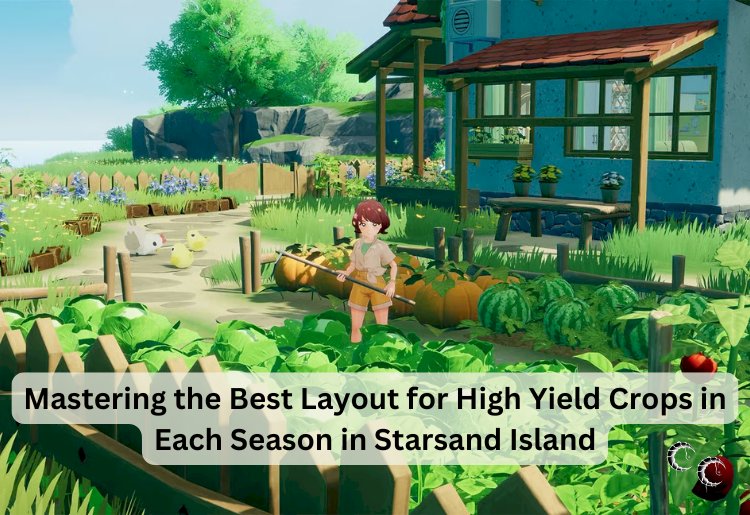
Farming in Starsand Island is not just about planting seeds and waiting for harvest. It is about structure, timing, and how intelligently you use space across changing seasons. A high yield farm is not defined by how large it is, but by how efficiently it cycles production without wasted time or wasted tiles.
The biggest mistake most players make is treating their farm as a static grid. In reality, the most effective layouts behave more like rotating systems. Each season has different crop priorities, and your layout should adapt around those priorities instead of forcing everything into one permanent shape.
The foundation of a strong farm starts with the idea of separation. Instead of one massive field, you want your land divided into functional zones that each serve a purpose. One zone is actively producing seasonal crops. One zone is being reset or prepared for the next rotation. One zone supports infrastructure like storage paths, sprinklers, and special crop clusters. This structure prevents chaos when seasons change and keeps your workflow smooth.
Spring is the season of setup and early efficiency. This is where compact layouts perform best. Tight grids allow you to manage crops quickly while still leaving room for experimentation. Spring is also the best time to establish your long term infrastructure because it is easier to adjust early layouts than to rebuild later. The focus should be on fast growing crops and clean spacing that will not interfere with future expansion.
Summer is where scale becomes important. Crop density increases, and your layout should shift into longer, more organized rows. Straight lines reduce travel time during harvest and make watering or automated systems more effective. This is also the season where high value crops become the core of your income, so your layout should prioritize efficiency over aesthetics. Movement paths become just as important as planting space.
Autumn introduces complexity. This is the season where mixed crop cycles become more valuable, and a rigid layout can actually slow you down. Breaking your farm into medium sized sections allows you to stagger harvest times and avoid overwhelming bursts of workload. This also helps you manage different crop types without them interfering with each other. Autumn layouts work best when they feel modular rather than uniform.
Winter is the most compact and controlled season. Crop variety is lower, and growth cycles are slower, which means efficiency comes from minimizing movement. Everything should be closer together. Dense layouts reduce wasted time and make harvesting more manageable. Winter is also the ideal season to reorganize your farm, rebuild inefficient sections, and prepare for the next full cycle.
Across all seasons, the most important structural element is the use of controlled clusters. Small grouped planting zones allow you to experiment with higher yield mechanics without disrupting your entire farm. These clusters should never dominate your layout. Instead, they function as concentrated zones of opportunity inside a larger, stable system.
Flow is another critical factor that often gets overlooked. A strong layout is not just about what you plant, but how you move through it. If your harvesting route constantly forces you to backtrack or cross empty space, you are losing efficiency. The best farms allow you to move in clean loops or straight paths that naturally guide you through every active crop zone.
Ultimately, mastering crop layout in Starsand Island is about thinking in systems rather than plots. Each season is a cycle, not a reset. When your farm is designed to rotate, adapt, and maintain structure across those cycles, your yield increases not because you are working harder, but because your design is working smarter.
A well structured farm removes friction. And in a game built around timing and growth, reducing friction is what turns a good farm into a consistently high yield one.